



A row of illuminated white colonial houses photographed at twilight along a tree-lined road with a stone wall in the foreground.

Furnace Repair in Westerly, RI

Tell us about the job

Takes about a minute. No obligation.

RepairFurnace or heatingWashington County, RI
Step 1 of 2

What ZIP code is the job in?

September is worth a look before heat season starts. Furnaces in Westerly run from October through May, about eight months straight, and whatever is weak in yours tends to show itself in the first cold snap. A cracked heat exchanger, a failing igniter, a blower motor on its way out. These don't usually cause trouble sitting idle all summer. They cause trouble when the furnace has to work. If yours is already acting up now, that's the sign showing itself early, and it's worth having looked at before the house needs heat every day.

8 months
October through May, your furnace is on duty
24°F
the average winter night it heats against
31 winter storms
in ten years, the nights a failure hurts most
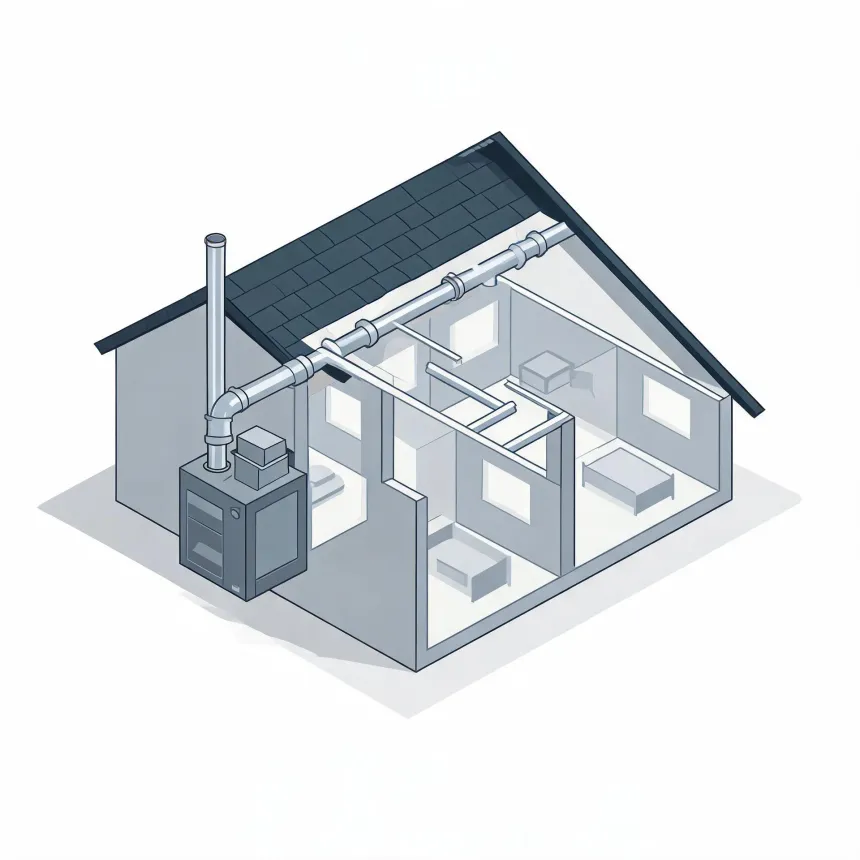
Isometric cutaway illustration of a small house showing interior rooms, ductwork running through the attic, and a furnace unit with a vertical flue pipe on the exterior wall.
Your furnace works hardest from November through March.

NOAA nClimDiv, 1991–2020 normals

Furnaces in Westerly run about eight months a year, October through May.

A weak igniter or a failing blower motor has a long stretch to stay hidden in a Westerly furnace.

Westerly sees its share of wind and winter storms, but nothing here wears out a furnace faster than cold weather already does

166 severe weather events from 2015 to 2024
12% of homes statewide lost power a day or more in 2024
111 damaging wind events from 2015 to 2024

Westerly homes heat with a mix of fuels, and a good number still run on oil. Oil furnaces fail the same way everywhere. A clogged nozzle, a bad igniter, a dirty filter choking the airflow. None of that has anything to do with being in Westerly specifically. If your furnace is giving you trouble, it's worth getting a straight answer on what's actually wrong rather than guessing. A contractor can tell you in one visit whether you're looking at a quick fix or something bigger, and that's worth knowing before the cold really sets in.

The fix usually has nothing to do with how old the house is

Half the homes in Washington County were built in 1977 or earlier, half in 1977 or later. Furnace trouble doesn't track with that. An old house can have a furnace installed last year, and a new one can still be running the original unit. What matters is what's actually failing in yours, not how old the house is. Get it looked at and you'll know which one you're dealing with.

Find a contractor
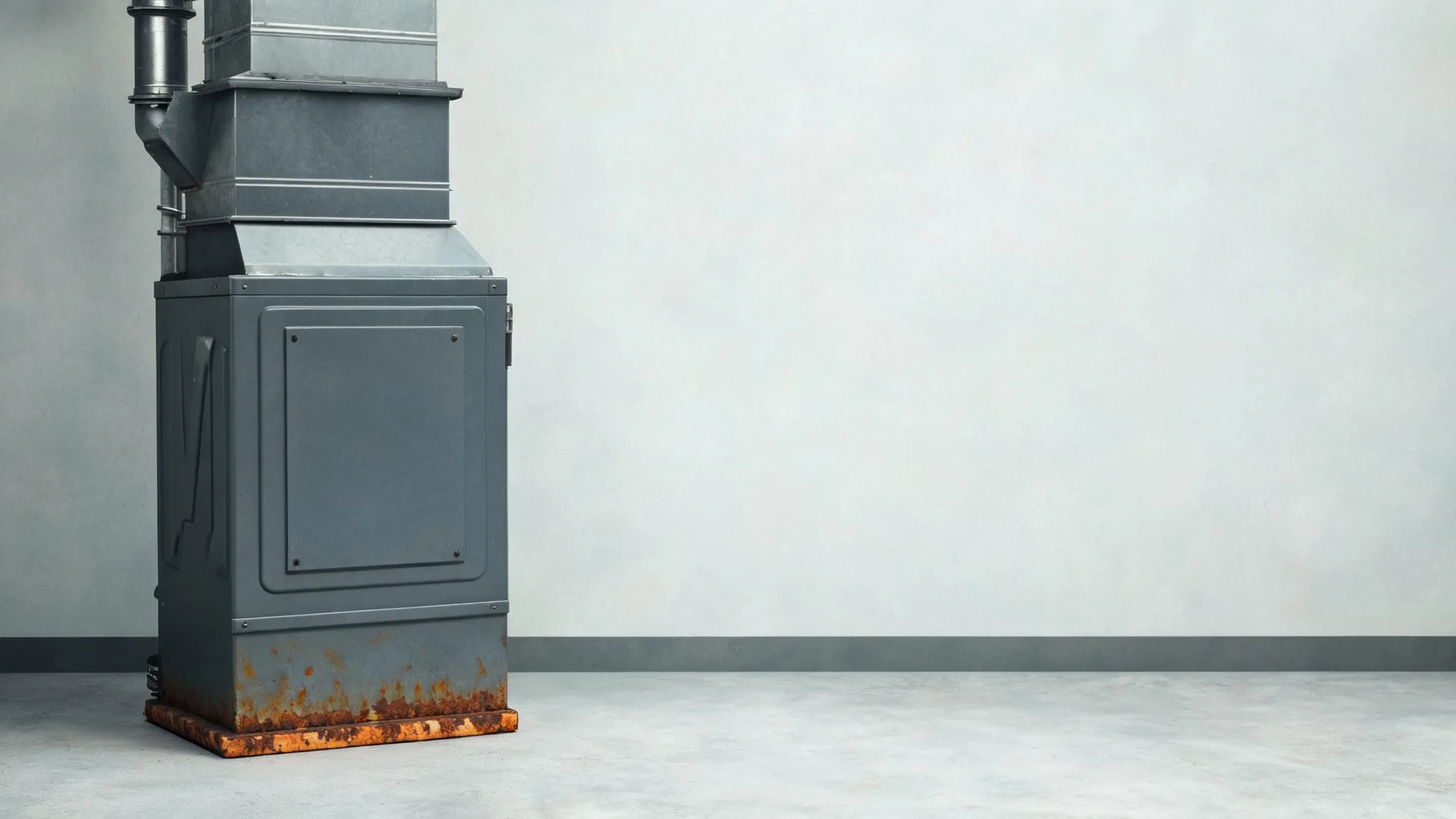
A gray high-efficiency gas furnace installed in an unfinished basement, surrounded by gas lines, a condensate drain, and sheet-metal ductwork.

Most of what fails is wearing out, not breaking

Most furnace failures trace back to one part reaching the end of its life while everything else is still fine. An igniter cracks after so many heat cycles. A blower motor's bearings wear out from spinning for years. A flame sensor gets a coating of oxidation until it can't sense the flame anymore. These aren't failures caused by a defect, they're just the parts that wear on a schedule, and that schedule runs on cycles, not calendar time. A furnace that fires on and off all day gets through that schedule faster than one that runs in long, steady stretches. The part doesn't know how old the furnace is. It just knows how many times it's been asked to do its job.

What you can check yourself

Look at the thermostat first. Make sure it's set to heat and the set point is actually above room temperature, and swap the batteries if it takes them. Check the air filter and replace it if it's gray or clogged, since a blocked filter can starve the furnace of airflow and shut it down on its own safety switch. Go to the furnace and make sure the switch on or near it, the one that looks like a light switch, is flipped on. Check the breaker it runs on too. If you have a gas furnace, look for a reset button on the unit and press it once, but don't hold it down or keep pressing it repeatedly.
What to leave alone

Don't take the burner compartment apart or go near the igniter and flame sensor. Don't keep resetting a furnace that trips off again right after you reset it, that's the limit switch doing its job and telling you something's wrong downstream. If you smell gas, don't flip any switches or try anything at all, get out and call the gas company from outside. A furnace that resets once and holds is worth watching. One that won't stay running needs a contractor to find out why before anything else gets pushed past where it's supposed to stop.

Most calls start with something simple. The furnace runs but the air coming out isn't warm, or it's lukewarm at best, which usually points to a burner that isn't firing right or a limit switch cutting things short. Short cycling is another one, where it kicks on, runs a couple minutes, and shuts off before the house warms up. That's often the flame sensor failing to prove the flame is lit, so the control board shuts the gas back off as a safety measure. A furnace that's noisy is telling you something too. A rhythmic squeal usually means a motor bearing is wearing out. A bang when it first fires is usually delayed ignition, where gas builds up for a second before it catches. And if the furnace is cycling on and off rapidly without ever really running, that's often a dirty flame sensor or a draft problem pulling the flame around. None of these fix themselves, and all of them get worse the more the furnace runs.

Repair or replace comes down to what's failing and what else is close behind it. A furnace is a handful of parts that wear on their own schedule. An igniter, a blower motor, a heat exchanger, a control board. One of those going bad on an otherwise sound furnace is a repair, plain and simple, and most calls end there. It's a different question when the part failing is the heat exchanger, since that's the one part that's built into the furnace's frame rather than bolted to it, and replacing it often costs close to what a new furnace would. It's also a different question when a contractor opens it up and finds the thing that just failed isn't the only thing close to failing. A furnace that's needed a repair every winter for the past few years is telling you something a single repair bill doesn't capture. None of that means replace it automatically. It means ask the contractor straight what they found and let that answer, not the furnace's age, decide it.