




What the cold actually does to a heat pump here
Winter here is the long season, not the hard one. Heat runs eight months a year, October through May, and the overnight low averages 24 degrees in January. That number matters more than any single cold snap, because it tells you where a heat pump is working most nights, not just on the worst one.
A standard heat pump starts losing ground below 40 degrees. It stops putting out its full rated heat, and somewhere around 35 degrees it usually needs backup heat to make up the difference. Both of those marks sit above this county's winter average. About 125 nights a year here, roughly half of the nights the heat runs, fall at or below freezing. Every one of them is colder than both marks.
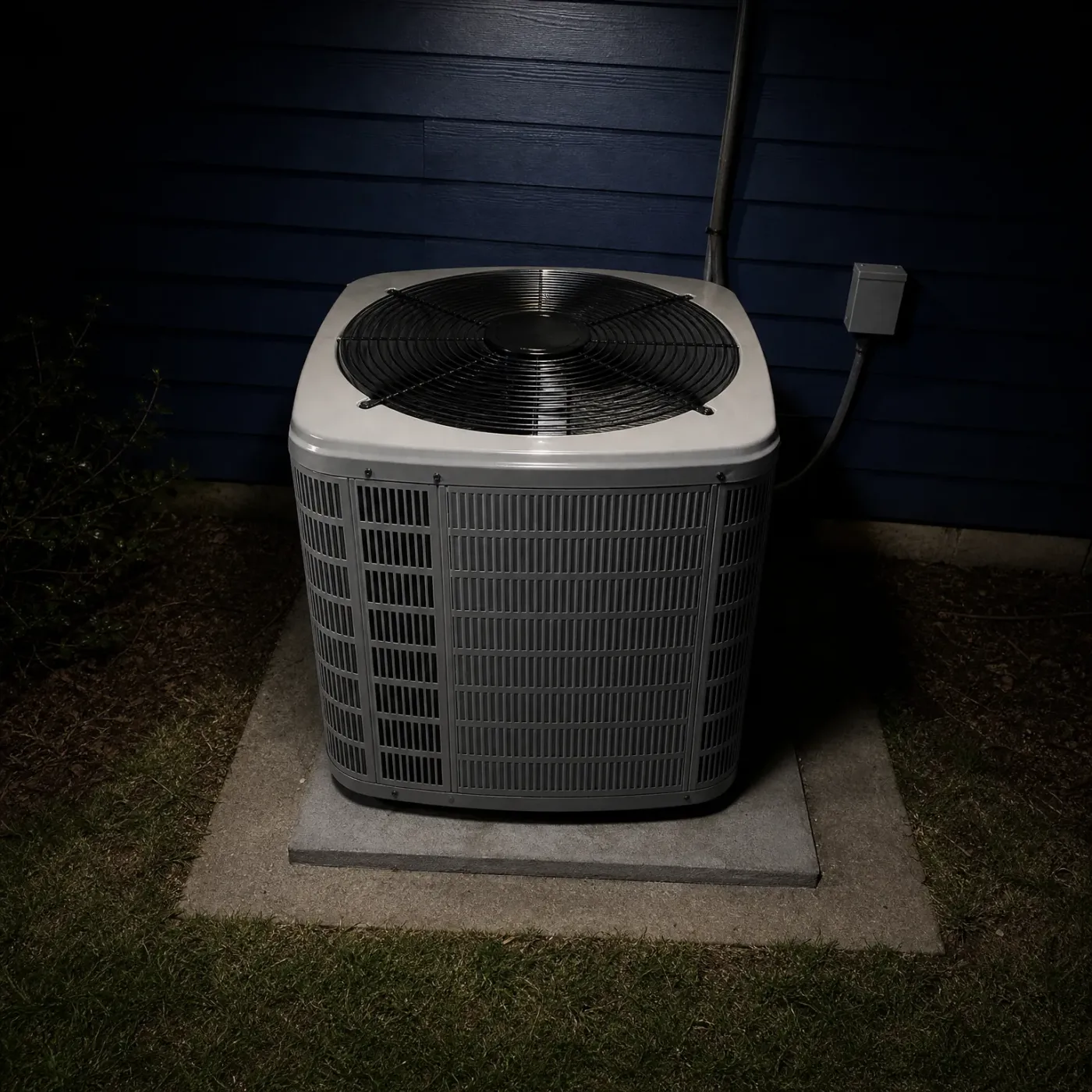
That does not mean a heat pump fails here. It means it is running in its weaker range most of a typical winter, not just on a handful of nights. The 0-degree nights that would really test it are rare, about 3 a year, and a two-winter field test of cold-climate heat pumps in occupied homes found that even between 0 and 35 degrees, backup heat only carried a small share of the load, and the system almost never ran on backup alone above 0 degrees. If you go this route, look for the ENERGY STAR Cold Climate designation. To earn it, a heat pump has to keep making real heat, at least 1.75 units out for every unit of electricity in, at 5 degrees, and hold onto most of its 47-degree capacity at that temperature. A standard model is not built or tested to that mark.