Boiler carbon monoxide signs in Rhode Island

Say what's going on with your boiler, and a pro who works on them reaches out.

Find a boiler pro

What are the signs of carbon monoxide from my boiler?

A boiler that's leaking carbon monoxide won't announce itself with a smell or a cloud of smoke. Most people only find out something's wrong once someone in the house feels sick, or a detector goes off. If you're asking this question, you probably want to know what to watch for before it gets to that point, and whether what you're noticing in your own house is normal or a warning sign.

Soot stains, a sick feeling that fades when you leave the house, and a yellow flame instead of blue

Carbon monoxide comes from combustion gas that isn't venting the way it should, so the signs show up around the boiler and in how you feel, not in the air itself. Look for soot or yellow-brown stains near the boiler or the flue pipe, a flame that burns yellow or orange instead of blue, and excess moisture on nearby windows. Headaches, nausea, or feeling drowsy when you're home, then better once you've been outside for a while, is one of the clearer signs something's off. A working carbon monoxide detector near the boiler is the only way to know for certain, since by the time you notice these other signs, gas has likely been escaping for a while.

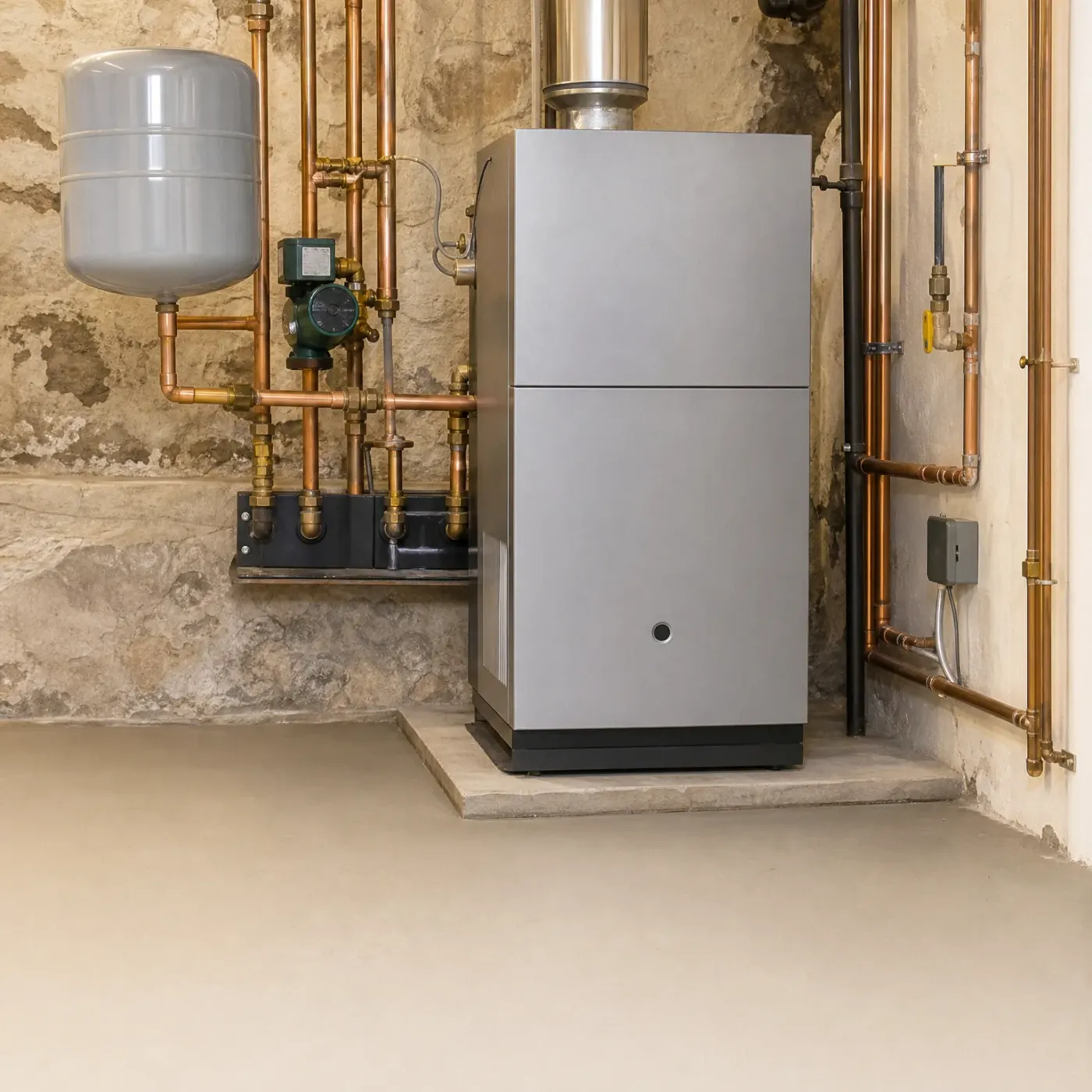
A gray boiler unit with a flue pipe stands on a concrete pad in a basement, surrounded by copper piping, a circulator pump, an expansion tank mounted on a stone wall, and an electrical outlet.

Running the way it should

A boiler that's venting properly sits connected to its flue pipe, running straight up through the ceiling with a tight seal at every joint. The flame inside burns blue. No soot, no scorch marks, no staining on the jacket or the pipes around it.

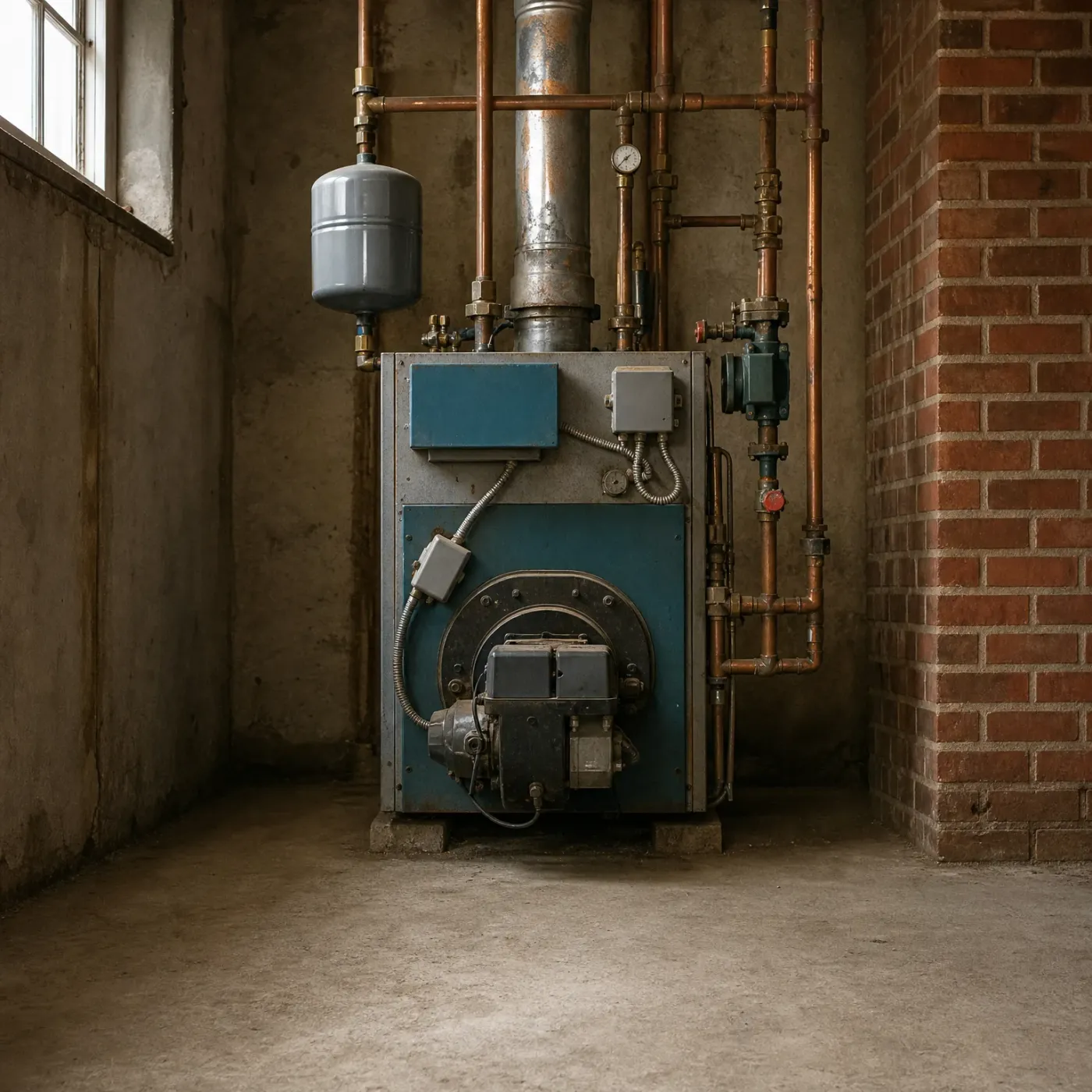
A blue cast-iron boiler with a burner unit, gauges and copper piping stands in a concrete-floored basement room beside a red brick pillar and a window.

Signs something's wrong

Streaks of soot around the draft hood or where the flue meets the boiler mean exhaust is escaping instead of venting outside. Rust on the jacket or the pipes, a yellow or flickering flame, or moisture pooling nearby all point the same way.

Call Now or Schedule a Checkup

Call a contractor now

  • A CO detector near the boiler has gone off, even once, even if it stopped on its own.
  • Anyone in the house has had headaches, nausea, or felt drowsy only when they're home and it clears up when they leave.
  • The flame at the burner is yellow or orange instead of blue, or you see soot collecting around the unit.
  • There's staining or scorch marks on the jacket, or moisture pooling near the flue connection.
  • The flue pipe has come loose, is rusted through, or was never sealed tight at the joints.
  • Several people in the house have had flu-like symptoms at the same time with no fever.

Schedule a checkup soon

  • The boiler is due for its yearly service and nothing seems wrong, but it hasn't been inspected this year.
  • You just moved into the house and don't know when the flue or venting was last checked.
  • The pilot light or burner flame looks blue and steady, with no soot or odor anywhere near the unit.
  • You added insulation, new windows, or sealed up drafts and want the venting checked against the tighter house.
  • The boiler runs fine but is old enough that you're not sure if it predates your current CO detector.
  • You want a local contractor familiar with Rhode Island gas boilers to confirm everything's venting the way it should.
A gray-haired man in a dark sweater sits on a light gray sofa in a living room, looking toward a sunlit window with trees outside.
A gray-haired man in a dark blue sweater sits on a light gray sofa in a sunlit living room, looking off to the side, with a potted plant, shelving unit, and large glass doors behind him.
A bearded man with graying hair in a dark green sweater sits on a sofa in a living room, looking off to the side, with a sliding glass door and a dim kitchen doorway behind him.
A gray-haired man in a dark knit sweater sits on a light gray sofa in a living room, looking toward a sunlit window, with houseplants, a lamp, and framed art in the background.

Get your boiler to the right pro

A boiler with a cracked heat exchanger or a blocked flue doesn't fix itself, and in a Rhode Island winter you can't just shut it off and wait. Once you've seen soot, yellow flame, or a detector that's gone off, the boiler needs a licensed eye on it before you run it again. This isn't a job for guesswork. A contractor who services boilers all winter in this state has seen what a blocked chimney liner or a cracked exchanger looks like dozens of times, and knows which parts on your kind of unit tend to go first. You'll be matched with one contractor local to you, not a handful competing for the job, so the person who calls you back is the one who'll actually come look at it. With gas prices what they are here and a boiler that has to run for months, getting it checked now, while you still have heat, beats waiting until it quits on the coldest night of the year.

How the gas actually goes wrong

  • A boiler burns gas cleanest with the right mix of air, and a blocked or dirty burner throws that mix off, which is what turns the flame yellow.
  • The flue pipe is sized to carry combustion gas out at a certain rate, so a dent, a sag, or a bird's nest in it backs gas up into the room instead.
  • A cracked heat exchanger lets flue gas mix with the air the blower pushes into your living space, which is why CO can show up far from the boiler itself.
  • Negative pressure from a bathroom fan or a dryer running at the same time can pull exhaust back down the flue instead of letting it rise.
  • Soot forms when combustion runs short on air, so a sooty burner or a sooty flue connector is a sign the mix has been off for a while, not just today.
  • A draft hood or barometric damper that's rusted through or knocked loose stops doing its job of keeping flue gas moving the right direction.

A gas boiler is built to burn clean and push the exhaust straight outside through the flue. When that process works, you never think about it. When any part of it is off, carbon monoxide ends up somewhere it shouldn't.

It starts with the burner. Gas needs a specific amount of air mixed in to burn all the way through. Dust, rust, or a cracked burner tube changes that mix, and the flame turns from blue to yellow. Yellow flame means incomplete combustion, and incomplete combustion means CO.

From there it's about where the exhaust goes. The flue pipe is sized to move combustion gas out at a set rate. A sagging section, a dent from a bumped pipe, even a bird's nest in the termination, slows that gas down or stops it. It has to go somewhere, so it comes back into the room.

Inside the boiler itself, the heat exchanger keeps flue gas separate from the air your blower circulates through the house. A crack in it lets the two mix, which is why a CO problem can show up in a bedroom down the hall and not just near the boiler.

Even a working flue can get pulled backward. A bathroom fan or a dryer running at the same time can create enough negative pressure in the house to drag exhaust back down the flue instead of letting it rise. Soot is the paper trail through all of this. Wherever you see it, the air-to-fuel mix has been wrong for a while, not just today.


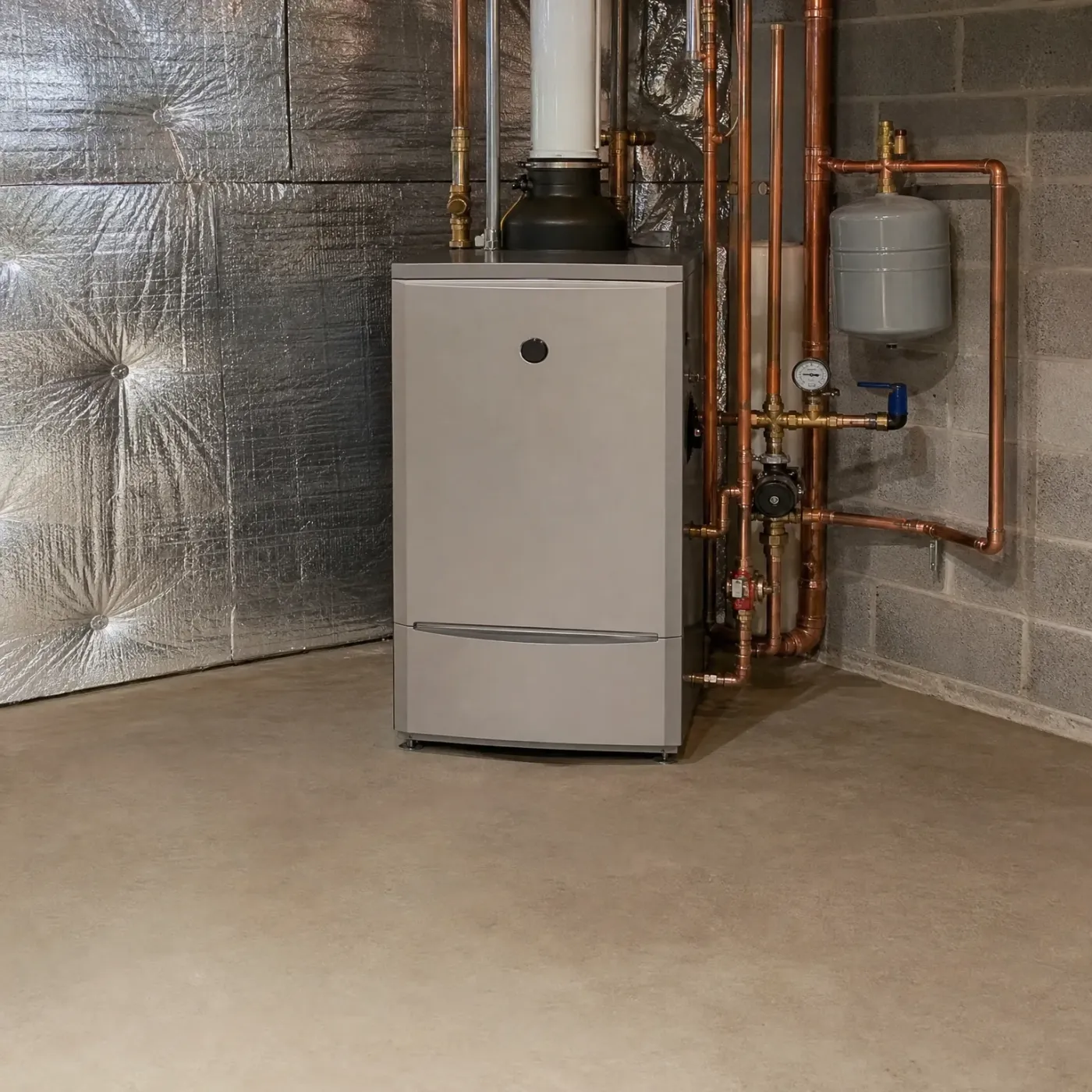
A gray residential boiler in a basement corner with copper piping, a circulator pump, pressure gauge, blue-handled valve and gray expansion tank against a concrete block wall, next to a foil-insulated wall.
Copper pipes clean and dry, the gauge reading steady, no rust at the fittings or the valve.
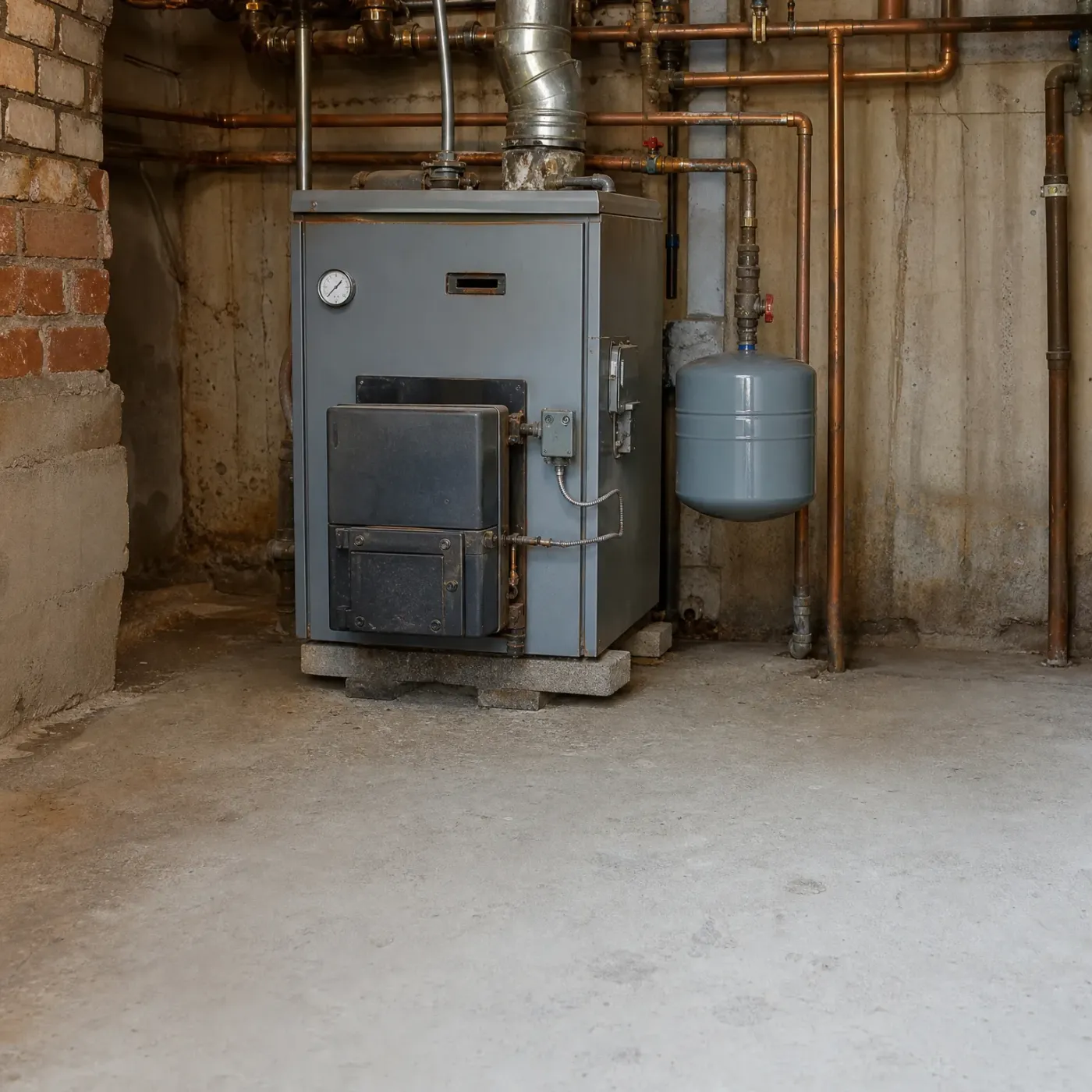
A gray boiler on a concrete block base in a basement, with copper piping, a metal flue, and a gray expansion tank mounted beside it against a concrete wall.
That gray steel jacket and the flue duct above it are worth a second look if either shows rust or soot.

Winter nights average 23°F statewide

Winter nights here average 23°F, so your boiler is running long, hard cycles most evenings from December through February. That kind of steady demand puts real wear on the burner and heat exchanger, the same parts that cause trouble when they crack or clog. A cold snap is a bad time to find out the flue isn't venting right.

NOAA nClimDiv 1991-2020 county normals weighted by homes

A middle-aged woman with shoulder-length dark hair, wearing a gray cardigan over a cream top, sits in an upholstered armchair and looks toward a sunlit window, with a shelf holding framed pictures and a plant behind her.
A woman and a child wrapped together in a knitted gray blanket on a couch, with the child's head resting on her shoulder and a lit table lamp and houseplant in the background.
A woman in a cream sweater and jeans stands in the open doorway of a white stucco house, holding the dark door, while a man in a dark quilted jacket seen from behind walks toward the entry past potted plants.

Soot, a yellow flame, or a detector going off is your answer

Any one of those means the boiler is not burning clean, and it needs a licensed eye on it before the next cold snap puts it back to work. Rhode Island winters don't give a bad heat exchanger or a blocked flue time to wait.

A local contractor who works on boilers all winter has seen this pattern before, in homes running the same gas systems as yours, and knows what to check first. When you put in a request, you're matched with one contractor local to Rhode Island, not a handful of companies competing for your callback. They'll reach out to look at your specific boiler and figure out what's actually behind the soot or the flame color, so you know where you stand before the weather turns.

A living room corner with a beige sofa and cushion, a round wooden coffee table holding a pale ceramic vase of eucalyptus stems and a wooden bowl, and a curtained window with a potted plant above a latticed radiator cover in the background.
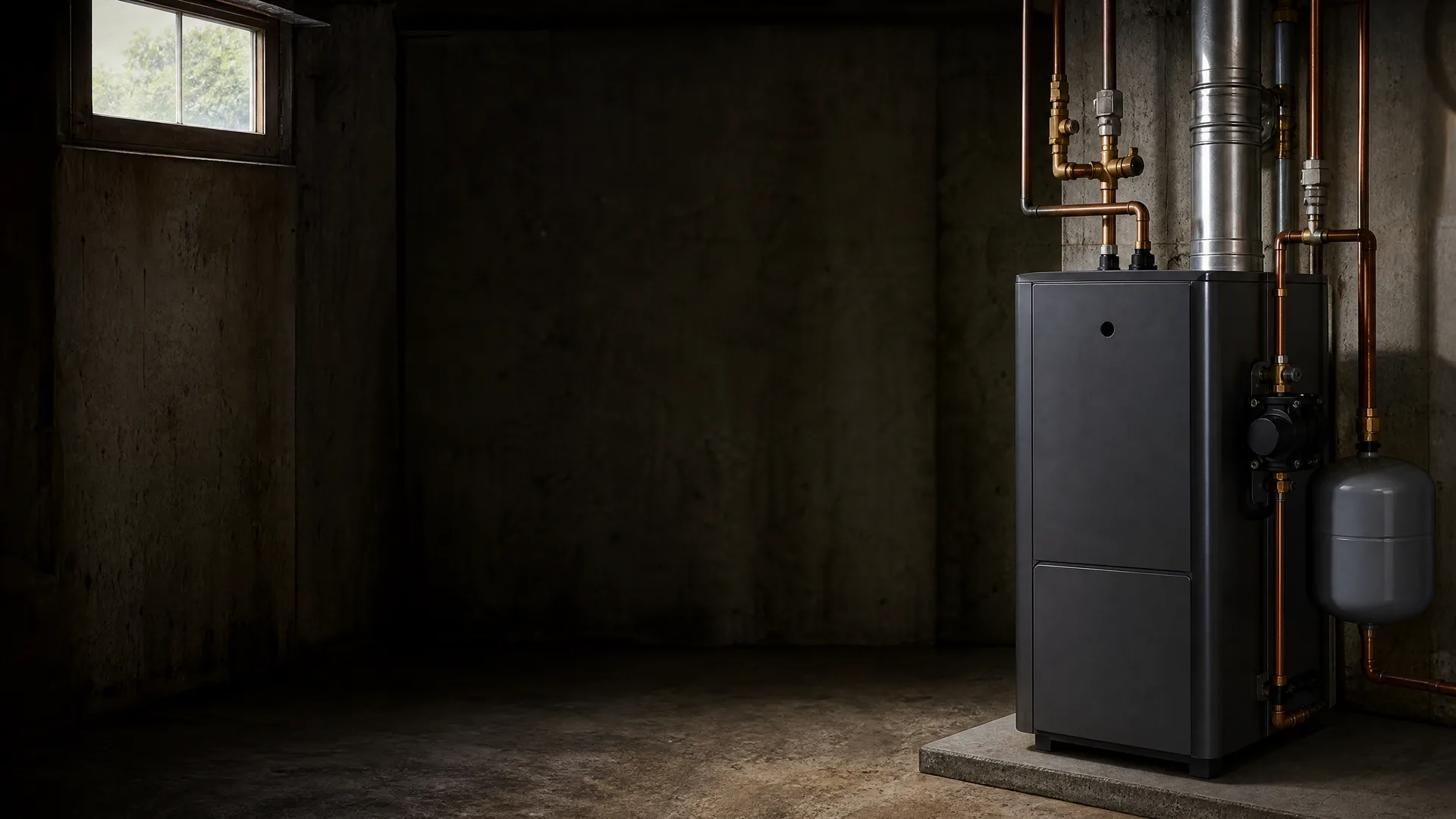
A dark grey boiler unit on a concrete pad in a dim basement, with copper pipes, a metal flue, and a grey expansion tank on the wall, and a small window with daylight on the left.

The right pro for this job

The pro who reaches out is licensed in Rhode Island.

RepairBoilerRhode Island
Step 1 of 2

What ZIP code is the job in?