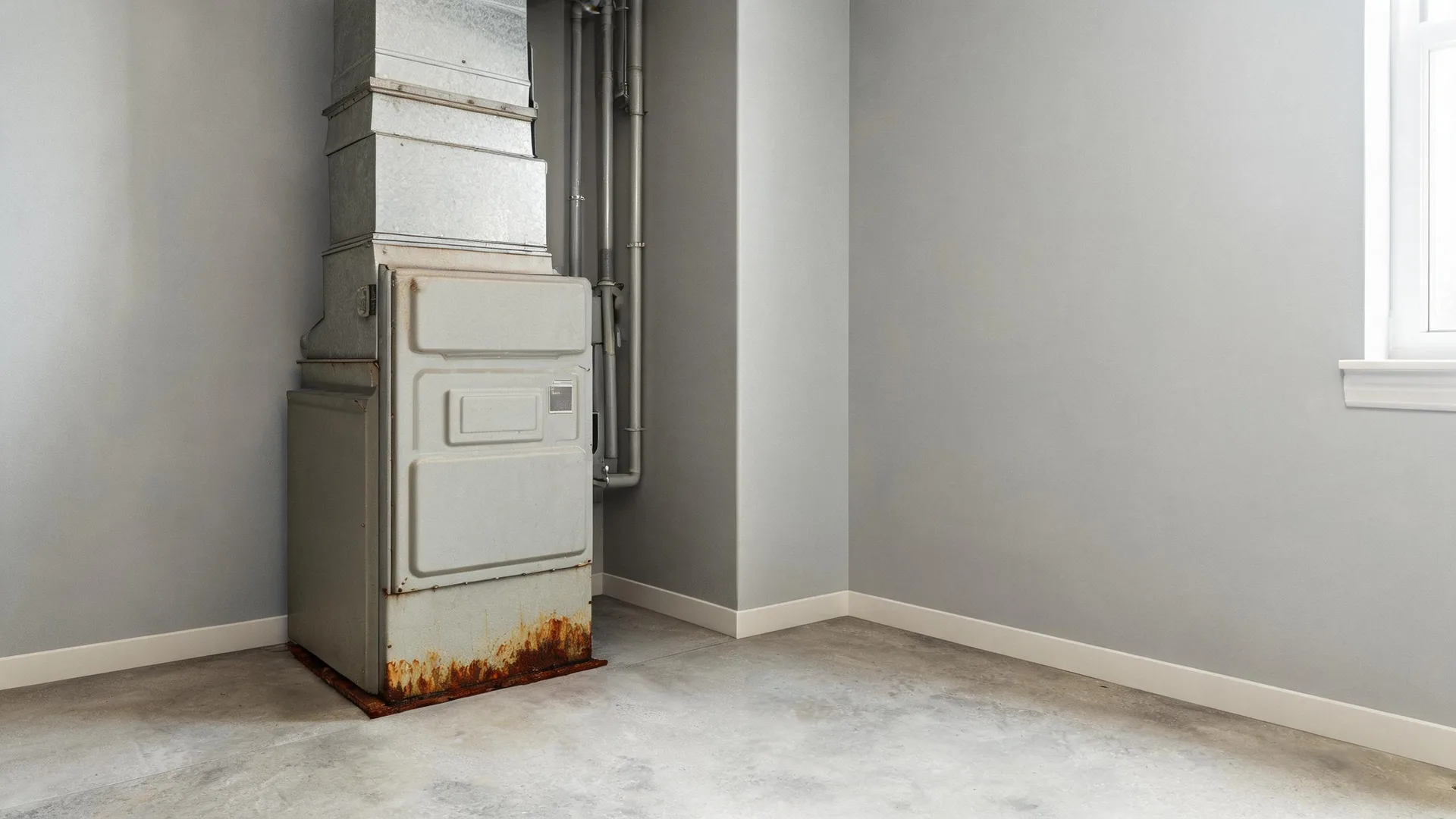
September is the month to get ahead of it
Furnaces in Newport County sit unused most of the year, and September is when it's worth having one looked at before the October startup.
Takes about a minute. No obligation.
Furnaces in Newport County sit unused most of the year, and September is when it's worth having one looked at before the October startup.
Once a furnace is running every day, whatever was already marginal, a cracked igniter or a failing limit switch, tends to give out early rather than later. Catching it before October means fixing it on your schedule, not in the middle of a cold stretch.
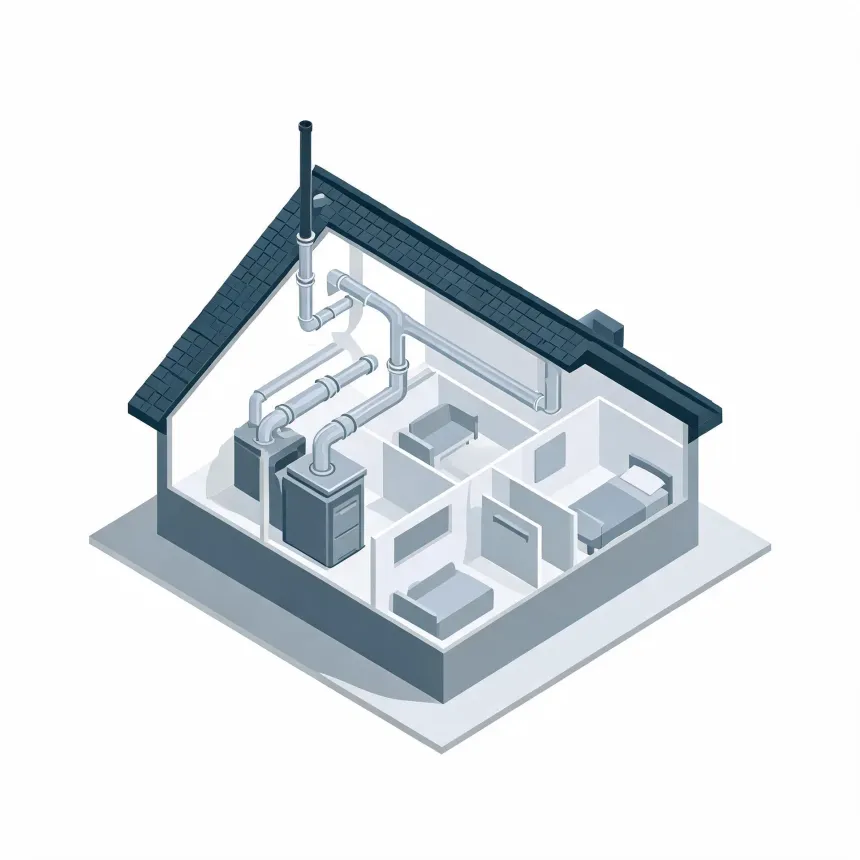
NOAA nClimDiv, 1991–2020 normals
A diagnostic visit means watching your furnace run through a full cycle, start to shutdown, not just a quick glance inside the cabinet.
A full cycle is what catches a failing igniter or a limit switch about to quit before it strands you without heat.




If your furnace is the original one, ask the contractor straight out how much life it has left before you pay for another repair. A furnace built around the time your house was, or installed whenever the last owner replaced it, is worth asking about directly rather than guessing. Some parts, like an igniter or a flame sensor, are worth fixing on a furnace of any age. Others, like a cracked heat exchanger, are worth asking whether the repair makes sense at all. Get the straight answer before you spend money on the repair, not after.
Problems tend to show up in the first weeks of the season, when the load hits a part that was already weak.
Find a contractorStart with the thermostat. Set it to heat, not fan, and set the temperature above room temperature. If the screen is dark or blank, the batteries are likely dead. Go look at the filter next. A filter packed with dust chokes off airflow, and some furnaces shut themselves down rather than run that way. Hold it up to a light. If you can't see light through it, replace it. Check the breaker box too. A furnace that won't start at all sometimes just tripped a breaker, and resetting it takes a few seconds. If the furnace has a standing pilot, look through the viewing window for a small blue flame. If it's out, there's a relight label right on the unit with the steps to follow. Last, look for a power switch on or near the unit. It looks like an ordinary wall switch, and it gets bumped off by accident more often than people expect. If all of that checks out and the furnace still isn't running right, that's a job for someone who can get inside the cabinet.
A cracked heat exchanger or a dirty flame sensor doesn't hold steady once the furnace keeps cycling. Heat stresses metal that's already weakened, and a sensor coated with a little more soot each run eventually stops reading the flame at all. The furnace doesn't fail gently. It just stops, usually on one of the coldest nights.
A furnace with a failing part is still pulling air across a hot exchanger, still pushing exhaust through a flue, still depending on a sensor to shut things down safely. Let that part go all the way and it can take a blower motor or a control board with it. The repair that would have been simple earlier gets more complicated the longer the furnace runs on a part that was already going bad.
Most furnace failures trace back to a handful of parts, and they fail in the same order wear happens. The igniter is usually first. It heats up and cools down every single cycle, and that repeated stress eventually cracks it or burns it out. The flame sensor goes next, not because it breaks but because it gets coated with a thin layer of soot until it can no longer tell the furnace a flame is there. Blower motor bearings wear down from years of spinning, and a motor working harder than it should will run hotter and louder before it quits outright. Capacitors weaken with age and heat, and a weak one makes the blower struggle to start even when the motor itself is fine. The limit switch, which shuts the furnace down if it overheats, can fail from the same heat it's meant to watch for. None of these parts fail because a furnace is old. They fail because they've done their job over and over until they can't anymore.
A repair decision usually comes down to what failed and what sits next to it. An igniter, a flame sensor, a capacitor. These are wear parts, and replacing one brings the furnace back to normal. A cracked heat exchanger is different. It isn't a wear part failing on schedule, it's the core of the furnace breaking down, and a unit old enough for that may have other parts close behind it. The real question isn't how old the furnace is by the calendar. It's whether the failure is one part or a sign the whole unit is wearing out together. A contractor who opens the cabinet can usually tell the difference, and it's worth asking directly rather than guessing before anyone's looked.