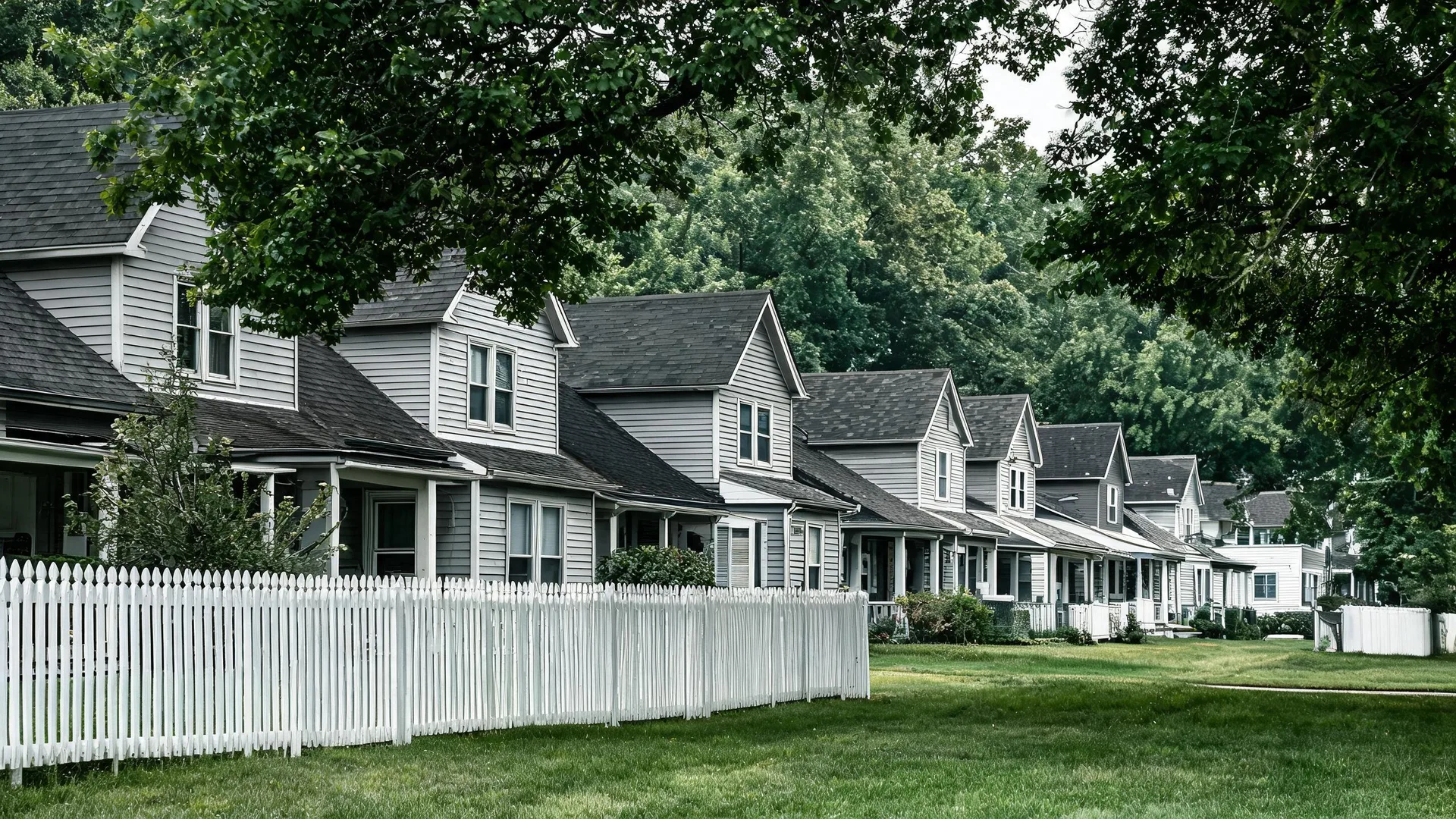


A row of similar gray clapboard houses with gabled roofs behind a white picket fence, with mown grass in front and dense green trees behind.

Furnace Repair in Bristol, RI

Tell us about the job

Takes about a minute. No obligation.

RepairFurnace or heatingBristol County, RI
Step 1 of 2

What ZIP code is the job in?

Furnaces in Bristol run from October through May, about eight months of the year. Overnight lows average 25°F through December, January and February, so the furnace is working hardest right when you need it most. That's a normal winter for a furnace, not a strain on it. A furnace that's short-cycling, blowing cold air, or not firing at all usually has one specific cause, something like a dirty flame sensor, a failed igniter, or a clogged filter choking airflow. The cold doesn't create new problems. It just makes you notice the one that's already there.

8 months
October through May, your furnace is on duty
25°F
the average winter night it heats against
57%
of homes here heat with gas, so most furnaces here burn gas
19 winter storms
in ten years, the nights a failure hurts most
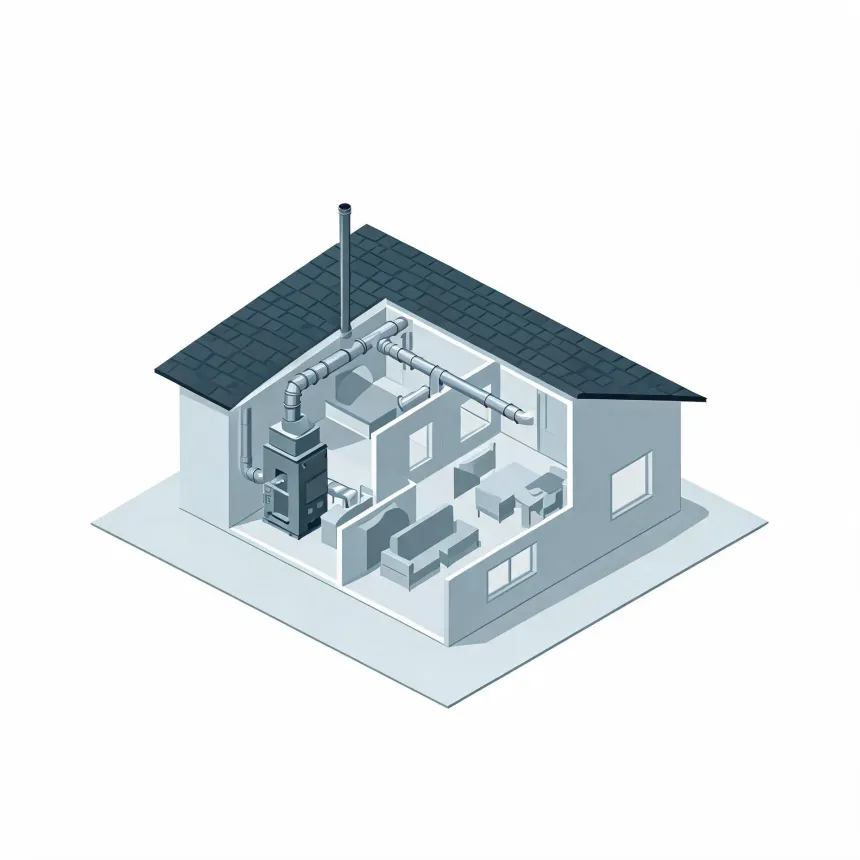
Isometric cutaway illustration of a single-story house with a dark shingled roof, showing a furnace with a flue pipe and branching ductwork running through interior rooms furnished with a sofa, table and chairs.
Your furnace works hardest from November through March.

NOAA nClimDiv, 1991–2020 normals

A cracked heat exchanger is the one failure that ends the repair conversation.

Every other part on a furnace can be replaced on its own terms, before or after it fails.

Half the homes in Bristol County were built by 1957

Half the homes here were built by 1957
Heat runs October through May
Winter nights average 25°F

Natural gas ran $21.08 per million Btu in Rhode Island last year. That's what a furnace here burns every time it fires, whether the unit is well tuned or struggling. A dirty flame sensor or a cracked heat exchanger doesn't cut the gas it uses, it just does a worse job with what it burns. That's the case for fixing the real problem instead of living with it. A furnace running on a bad part all winter burns the same gas either way, and the house stays colder for it.

If your furnace is original to the house, find out what it's worth fixing

A lot of furnaces in Bristol County are sitting in homes built in 1957 or earlier. If yours came with the house, a repair call is also a chance to ask the contractor how much life the unit has left before you put money into it.

Find a contractor
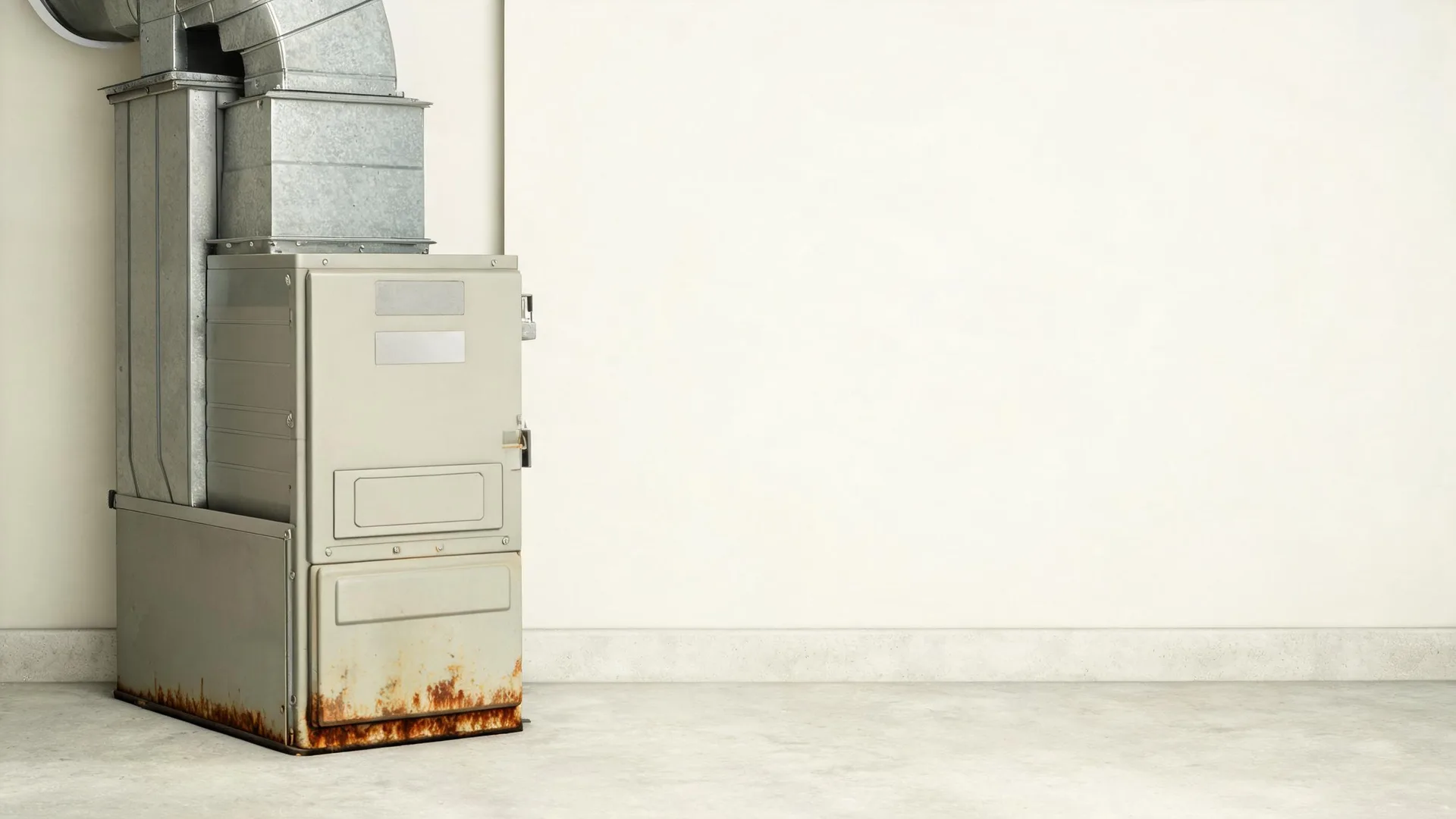
A gray gas furnace with attached ductwork and piping installed in an unfinished concrete basement.

What's wrong now is what fails next

A furnace that's short-cycling or struggling to fire is already working harder to make the same heat. Leave it alone and that strain doesn't stay put. A flame sensor coated with soot will keep misreading the flame until the furnace shuts off mid-cycle, more often each time. A failing igniter cracks a little further with each firing, or wears down until it won't glow hot enough to light the burners at all. A clogged filter starves the blower, so the heat exchanger runs hotter than it should. That extra heat is what eventually cracks it. A cracked heat exchanger can let combustion gas into the air the furnace is pushing through the house. None of these get easier to fix by running the furnace through another cold night.

What you'll notice first

The furnace cycles on and off faster than it used to, or the air coming out feels cool instead of warm. Sometimes it just won't light, and you hear the blower running with no heat behind it. A burning smell on startup is normal for a few minutes once a season. Past that, it's not.

What that tells the tech

Short cycling points to a flame sensor that can't hold a reading, or a filter so clogged the furnace is overheating and shutting itself off to protect the heat exchanger. Cold air points to an igniter that won't glow hot enough. A furnace that won't fire at all could be either one, gone all the way. The symptom narrows down the part before the panel ever comes off.

A gray forced-air furnace with ductwork stands in an unfinished concrete basement surrounded by storage items and clutter.

A new furnace would cut about $240 a year off heating for a typical Bristol County home.

  • A new high-efficiency furnace$1,030 a year
  • An older furnace$1,270 a year

Estimates for a typical Bristol County home, compared with an older unit built to the previous federal minimum, from EIA household energy data, Rhode Island fuel prices and NOAA climate normals. Your home will differ.

Repair makes sense when one part has failed and the heat exchanger is sound.

Replacement makes sense when the heat exchanger is cracked or the furnace keeps needing parts.

A diagnostic call starts before any panel comes off. The tech wants to see how the furnace behaves, so they'll run it through a full cycle and watch for the thing you described, the delay before ignition, the short cycle, the cold air. Then the covers come off. Flame sensor gets pulled and checked, since a coated one is the most common reason a furnace lights and then quits. Igniter gets checked for a crack or a weak glow. The filter gets a look too, because restricted airflow explains a lot of symptoms that seem unrelated to it. If the furnace is overheating or shutting off on a safety switch, that's usually where the trail leads. Once the tech finds the part that's actually failing, they can tell you what it takes to fix it and what it would mean to leave it alone.