
What winter here does to a heat pump
Your winter low here averages 25°F, and that matters because a standard heat pump starts losing ground before it gets that cold. Below 40°F it puts out less heat than its rating says. Below about 35°F it often needs backup heat to make up the difference. Both marks sit above your average overnight low, and every one of the roughly 105 nights a year that drop to freezing or below is colder than both marks too.
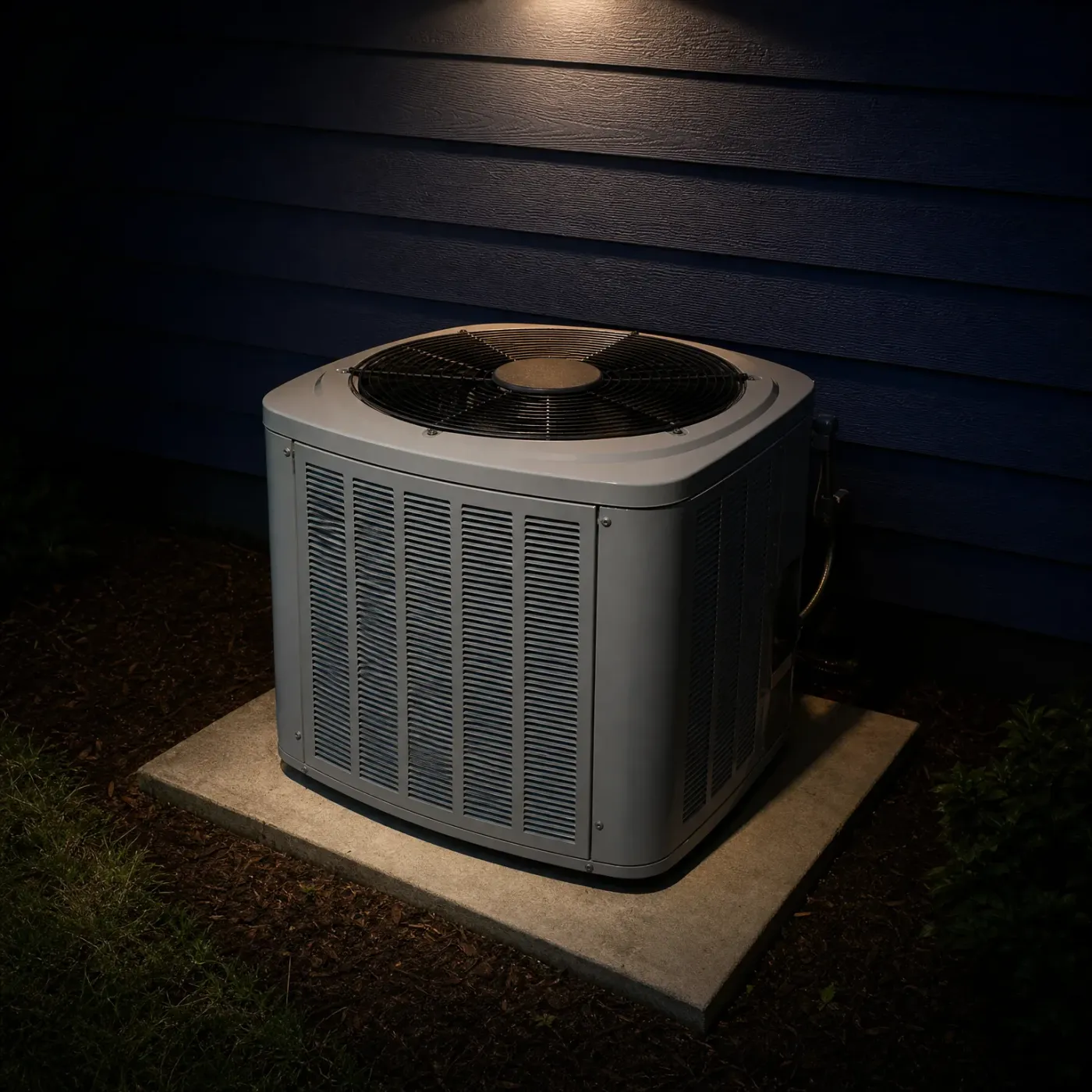
That doesn't mean a heat pump quits. An ENERGY STAR Cold Climate model has to prove, in third-party testing, that it still makes at least 1.75 units of heat per unit of electricity at 5°F, and holds onto 70 percent of its warm-weather capacity at that temperature. Field tests of these cold-climate units in occupied homes back that up: backup heat carried only a small share of the load between 0°F and 35°F, and the unit running on backup alone was rare even above 0°F. A standard heat pump and a cold-climate heat pump are not the same purchase here. If you're looking at a heat pump for this county, the cold-climate version is the one built for your winter.
The other side of that coin is backup heat itself. Something has to cover the gap on your coldest nights, usually electric resistance heat, and that runs at a lower efficiency than the heat pump's rating. The running-cost figures on this page don't include it. On most of your 105 freezing nights a cold-climate heat pump keeps working on its own. On the rare night that hits 0°F, which happens about once a year here, backup heat is more likely to be doing real work.