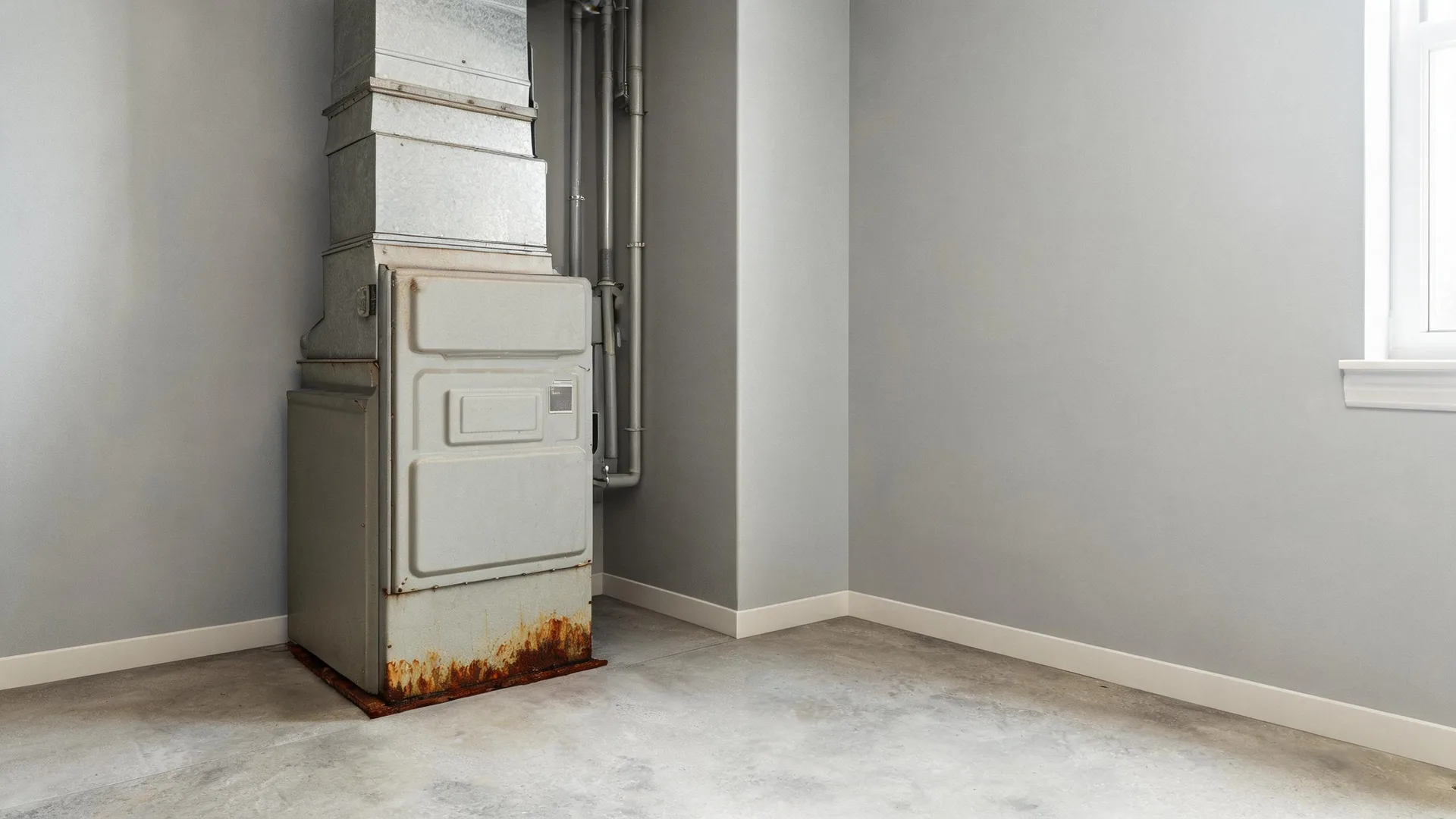
Half the homes here were built in 1956 or earlier
Providence County's housing stock is old. A furnace in one of these houses has likely been replaced at least once already, maybe more.
Takes about a minute. No obligation.
Providence County's housing stock is old. A furnace in one of these houses has likely been replaced at least once already, maybe more.
An old house doesn't tell you the furnace's age, but it's a reason to ask. If yours came with the house and nobody's touched it since, a cracked heat exchanger or a dying blower motor is a different conversation than a quick repair.
NOAA nClimDiv, 1991–2020 normals
Furnaces here run from October through May, with overnight lows averaging 22°F in January.
Eight months of hard running wears parts down faster, so find out what actually failed before paying to fix it.




September is worth a look before the heat goes on for the year. Furnaces here start running in October, and the first cold snap is what usually finds the weak spot. A failing igniter or a tired blower motor was already struggling when the furnace shut off back in the spring, and eight months of sitting idle doesn't fix that. It just sits there weak until the next call for heat. Getting it checked in September catches the problem before the house needs it, instead of after.
Your furnace works hard here, and that's usually what's behind the problem. Have it diagnosed properly so the fix lasts.
Find a contractorEight months a year, every year, is what wears a furnace down early in Providence County. When a technician comes out, have them say what part actually failed and why, not just swap it and go. A blower motor or an igniter that gave out after eight months of straight running tells you something about the one going in next.
A heat exchanger that's starting to crack doesn't fail all at once. Each time the burner fires, the metal heats and flexes, and a hairline fracture opens a little more. Keep calling for heat and the crack keeps growing, until it's letting combustion gases pass where they shouldn't.
A blower motor that's struggling still has to push air through the system, and a furnace working against a bad motor runs hotter than it should. A flame sensor coated in buildup shuts the burner off early, so the igniter fires again to restart it. Igniters only have so many cycles in them before they give out.
Estimates for a typical Providence County home, compared with an older unit built to the previous federal minimum, from EIA household energy data, Rhode Island fuel prices and NOAA climate normals. Your home will differ.
Repair makes sense when one part has failed and the heat exchanger is sound.
Replacement makes sense when the heat exchanger is cracked or the furnace keeps needing parts.
A repair makes sense when the part that failed is one part, and nothing around it got damaged by the failure. A cracked igniter or a bad flame sensor usually falls into that category. Replacement starts to make sense when the part that failed is expensive on its own, or when it failed because something upstream was already wrong. A heat exchanger is the clearest case. It sits at the center of the furnace, and swapping it often costs close to a new unit. Age matters less than what's actually broken. A furnace that keeps coming back with a new failure after every repair is telling you something a single fix won't answer. Ask what failed and why before deciding which way to go.