Oil heat leads here
Fuel oil or kerosene heats 40.5% of homes in Washington County, more than any other fuel. Utility gas comes next at 30.2%, with electricity and propane behind that.
Takes about a minute. No obligation.
Fuel oil or kerosene heats 40.5% of homes in Washington County, more than any other fuel. Utility gas comes next at 30.2%, with electricity and propane behind that.
If your furnace already runs on oil, matching the new one to the oil line and tank already in place is usually the straightforward route. A switch to gas or electric means asking what it takes to bring that fuel to where your furnace sits, not just picking a different unit.
NOAA nClimDiv, 1991–2020 normals
Oil in Westerly ran $22.61 per million Btu in 2024.
A furnace sized to the house, not oversized for the fuel, is what keeps that cost in check.



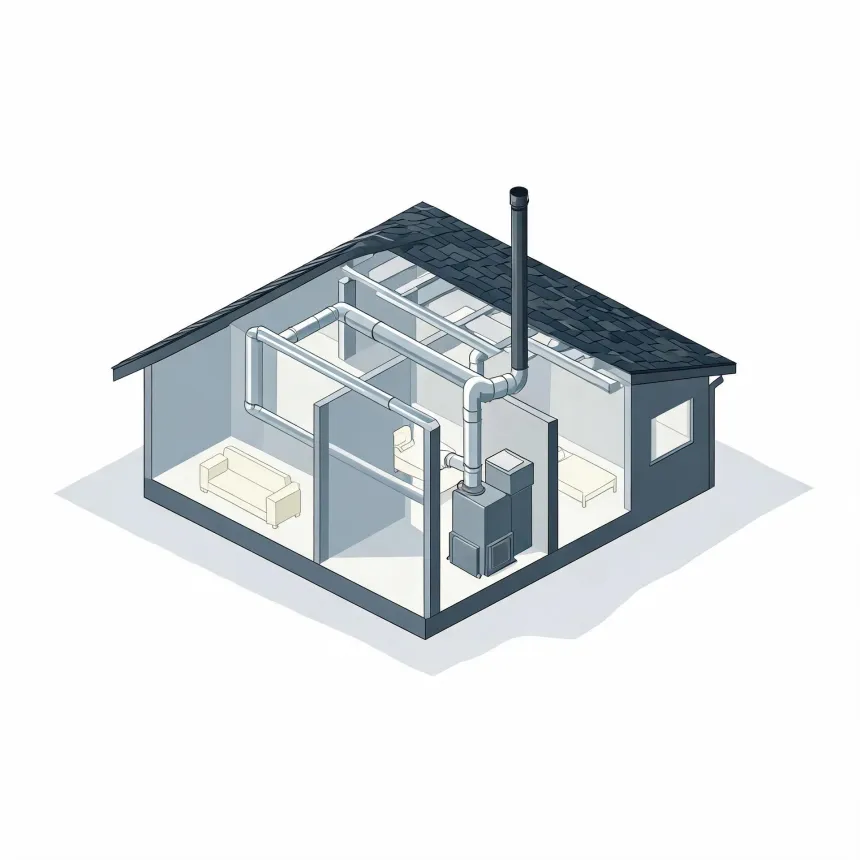
The size of the furnace matters more than almost anything else on the invoice. A unit sized to the house needs the right ductwork to move that air, and if the existing ducts are too small or laid out wrong, that gets addressed too. Where the furnace sits changes the job as well. Venting has to meet code, and that can mean new pipe through the roof or a wall, not just a swap of one box for another. The fuel line matters too. Oil furnaces need the line and tank in good shape before the new unit ever gets connected to them. Anything beyond a straight swap, a different fuel, a moved location, a bigger system, adds work that a simple replacement doesn't need.
Nothing about winters here calls for a bigger or higher-end furnace than any other house its size needs. Eight months of heat and overnight lows averaging 24°F are within what a standard furnace is built to handle. Size it to the house, not the weather.
Find a contractor
Half the homes in Washington County were built in 1977 or earlier. Half are newer than that. A furnace doesn't care which side of that line a house falls on. What decides the size is the house itself, its square footage and layout, not the year it was built. An older home and a newer one down the street can need the same size furnace if they're built to similar dimensions. Nothing about that mix of old and new housing here pushes toward a bigger unit or a smaller one. The house in front of the contractor is what sets the size, every time.
The right size comes from a room by room look at the house. How much wall and window area it has. How it's insulated, how the rooms connect. A furnace replaced on a like for like basis just repeats whatever size was picked last time, right or wrong. The only way to know the number is to work it out fresh.
A furnace too big for the house heats the air fast, shuts off, and starts again a few minutes later. That short cycling wears on the igniter and the blower motor. Rooms farther from the furnace end up colder than the ones nearby, because the air never runs long enough to even out. Too small just runs longer to get there. Too big runs harder on its own parts to do it.
Pulling the old furnace out is part of the job, not an afterthought. A tech disconnects the fuel line and the venting first, then the ductwork, then the electrical. If the old unit ran on oil, the tank is a separate question from the furnace itself. A tank no longer in use still needs to be drained and dealt with, since an empty tank left in place can collect condensation and rust from the inside. The old furnace itself gets hauled off, usually recycled, since most of what's in it is sheet metal and copper. None of that old equipment gets reused in the new install, even the parts that still look fine. Code wants new venting sized to the new unit, not fitted to whatever pipe was already there.
Install day starts with the old unit already disconnected and out, so the first real work is setting the new furnace in place and running the connections to it. The vent pipe goes in next, sized and routed to meet code for this unit, not just reattached to what was there. Ductwork gets connected and sealed at every joint, since a loose seam anywhere in that run leaks heated air into a basement or attic instead of a room. The fuel line gets hooked up and checked for a tight connection before anything is fired. Once it's wired in and the thermostat is connected, the tech runs the furnace through a full cycle, checking the flame, the airflow at the vents, and the rise in temperature across the unit before calling the job done.