Profile view of a bearded man wearing a dark green baseball cap and a dark gray T-shirt against a plain light background.

Is radiant floor heat worth it in Rhode Island

New system or replacementBoilerRhode Island
Step 1 of 2

What ZIP code is the job in?

Radiant floor heat is worth it in Rhode Island if you're replacing a boiler anyway, because it runs off the same gas system most homes here already have. It pairs with a boiler instead of forced air, warming the floor itself rather than blowing heated air through ducts. That matters for comfort on a cold January morning, but it also matters for your bill. Radiant systems run at lower water temperatures than old cast iron radiators, so the boiler doesn't have to work as hard to keep rooms warm. The tradeoff is upfront cost and the work of opening up floors, which makes it a better fit for a renovation or a new addition than a quick swap. It won't do anything for summer, since the system only heats. If you're planning the work for next winter already, it's worth deciding now, before floors get closed back up.

A man in a blue sweatshirt reclines with closed eyes in a brown leather armchair in a living room with a bookshelf, houseplant, sofa, window, and a side table holding newspapers and a dark mug.
A bearded man in a gray pullover reclines with closed eyes on a brown leather sofa in a sunlit room with a window, framed picture, potted plant, and a wooden cabinet holding papers and a dark mug.
A man in a gray sweater leans back with closed eyes in a brown leather armchair beside a wooden side table holding a dark mug and a folded newspaper, with bookshelves and a window seat behind him.
A man in a green sweater reclines in an armchair with his eyes closed and a slight smile, beside a window with plants, a small table holding a mug and folded newspaper, and bookshelves behind him.

Why it pairs well with a boiler

Radiant floor heat needs hot water, and your boiler already makes hot water. Instead of that water going straight to cast iron radiators or baseboard units, it runs through tubing laid under or in the floor. The gas line, the boiler itself, the venting, none of that changes. What changes is the distribution, how the heat gets from the boiler into the room. That's why this upgrade fits a boiler replacement so well. The contractor is already disconnecting the old distribution piping to put in the new boiler. Adding radiant tubing at that point is a smaller jump than retrofitting it later into a system that's working fine.

What a warm floor actually changes

Forced air heats the room by heating the air moving through it, so the air near the ceiling ends up warmer than the air at your feet. Radiant floor heat warms the floor directly, and the floor warms you, the furniture, and the air closest to the ground first. Rooms feel warm at a lower water temperature than baseboard heat needs, because you're standing right on the heat source instead of waiting for it to rise. With Rhode Island winters running cold for months, that steadier, lower-temperature heat is part of what makes the system worth installing instead of patching the old radiators again.

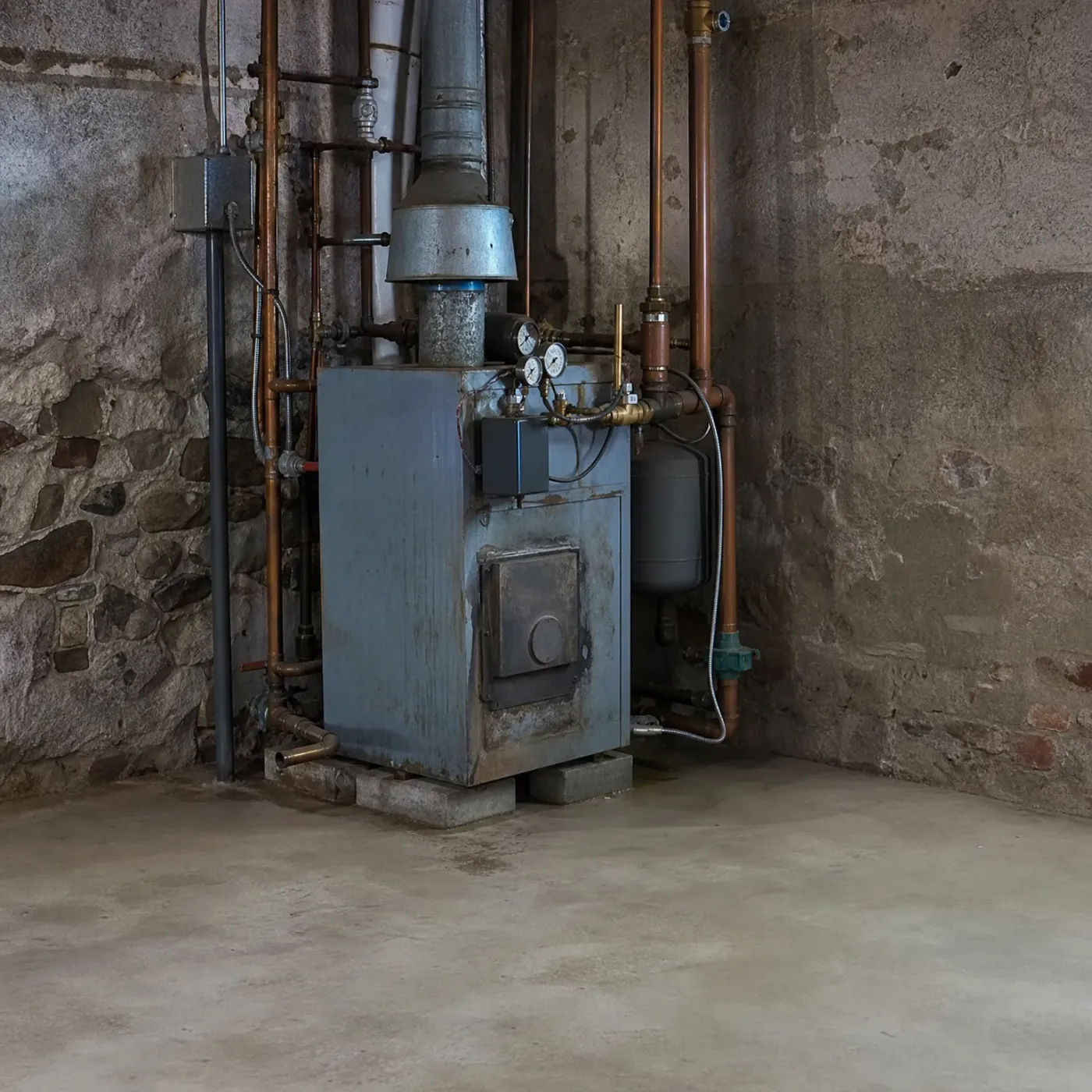
An older gray boiler with a metal flue, copper piping, pressure gauges and an expansion tank sits on concrete blocks in a basement corner with stone and concrete walls.
Before you get your boiler installation
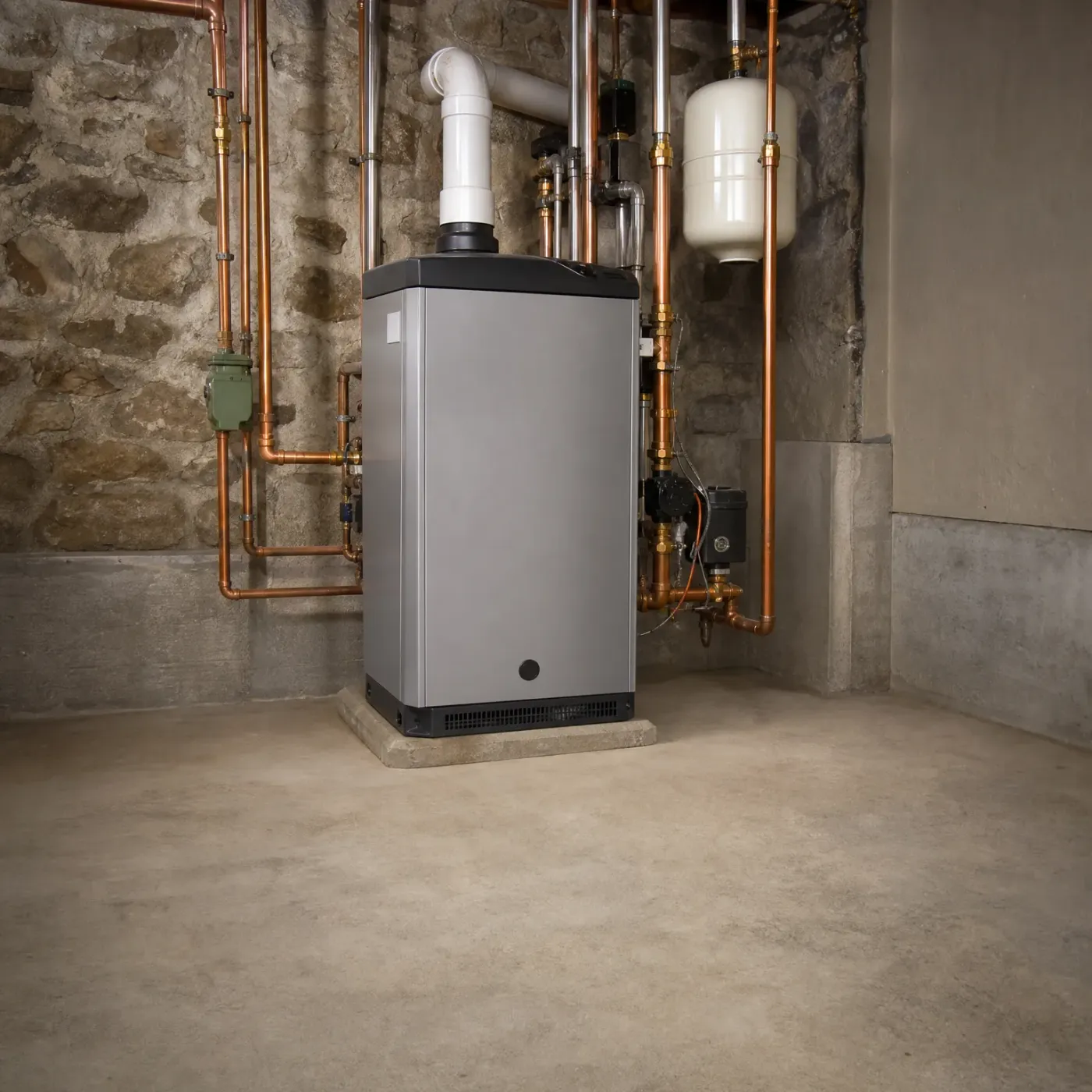
A gray floor-standing boiler on a concrete pad in a basement, connected to copper pipes, a white expansion tank, and a white PVC vent against a stone and concrete wall.
After you get your boiler installation

No cold spots on tile or hardwood

A radiant floor warms the room from the ground up, so bathroom tile and kitchen hardwood stay warm underfoot instead of staying cold while the air above them heats.

Hand off my installation

No vents, no baseboard units to work around

With the heat running through the floor, you get your wall and floor space back. Furniture can sit flush against a wall instead of leaving a gap for a baseboard unit.

Hand off my installation

Why does your bedroom floor stay cold all winter?

If your boiler feeds baseboard units or cast iron radiators, the floor is the last thing to warm up. You feel it most getting out of bed or stepping out of the shower onto tile. The air near the ceiling reads warm on the thermostat while your feet say otherwise, so you nudge the heat up to compensate. That extra run time shows up on the gas bill, and with power rates what they are here, most people don't want to make up the difference with a space heater either. None of this means the boiler is failing. It means the heat it makes isn't reaching the floor, because baseboard and radiators were never built to.
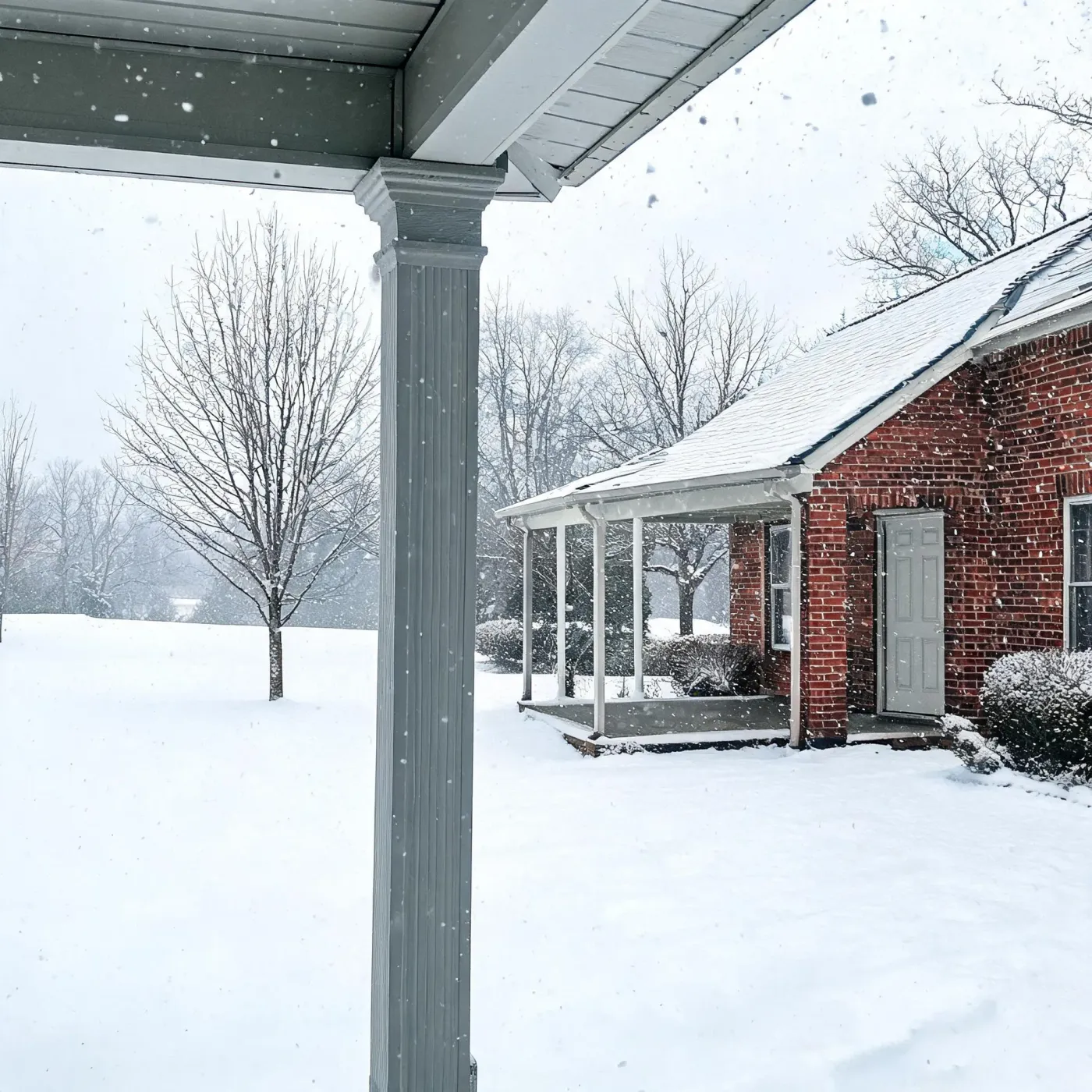
View from under a covered porch with a gray square column toward a red brick house with a white-columned porch and gray door, with falling snow covering the yard, roof, and bare trees.

Winter nights here average 23°F statewide, according to NOAA. That's the stretch where your boiler is firing most of the night just to hold the house steady, and it's exactly when baseboard units and cast iron radiators fall behind, leaving the floor cold until the air finally catches up. Radiant tubing doesn't have that lag. It keeps the floor itself at a steady temperature through those long, cold nights instead of cycling hard trying to warm the air first. Once you send in the details, finding a licensed contractor to spec that out for your house isn't something you have to chase down yourself anymore. That part is handled.

NOAA nClimDiv 1991-2020 county normals weighted by homes

Done looking for a boiler pro

Your request goes to one pro, not a list of companies.

You're not committing to anything by asking.
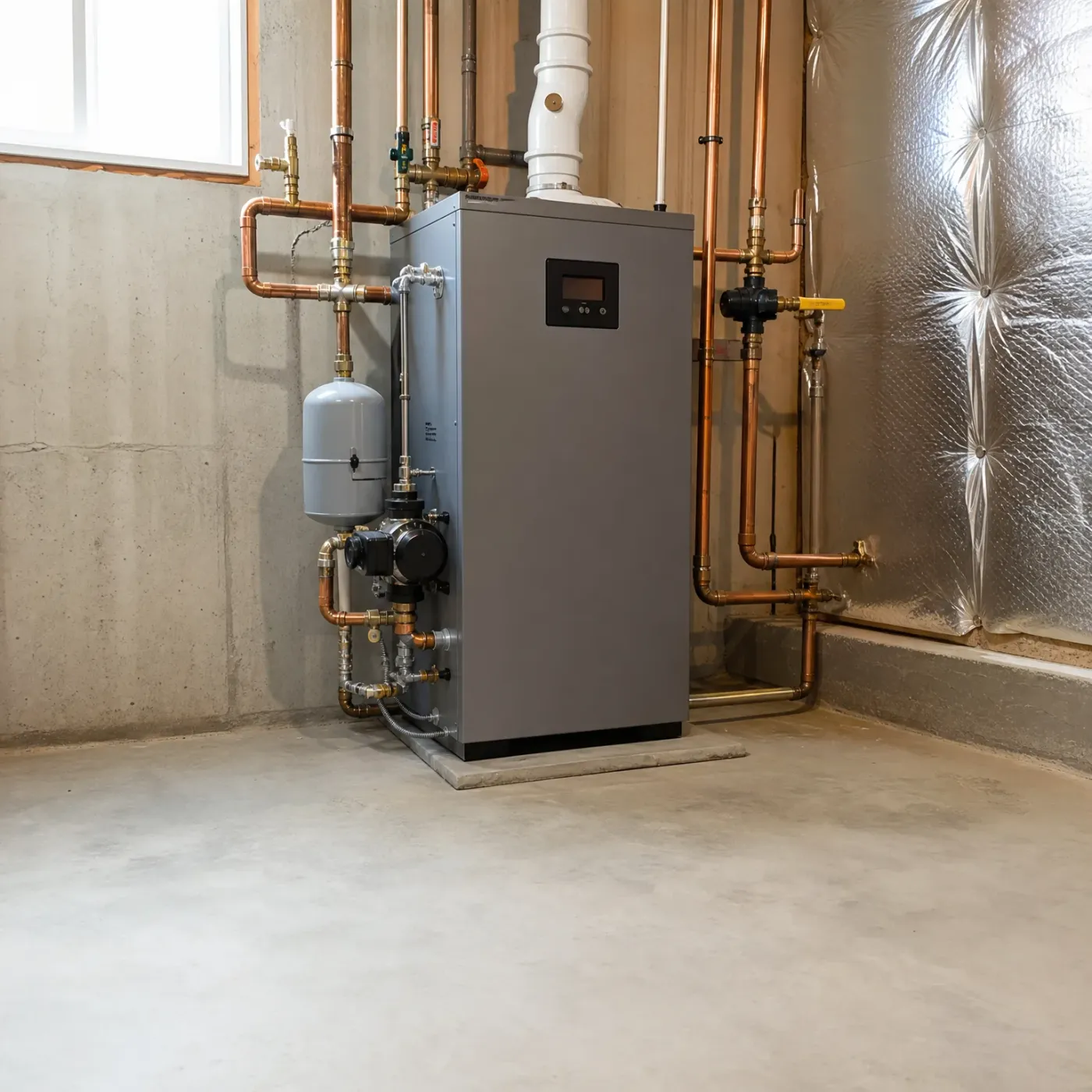
A gray boiler unit with a digital display stands on a concrete basement floor, connected to copper piping, a gas valve, a circulator pump and an expansion tank, beside a concrete wall and foil-faced insulation.

Boiler running right

A boiler that's firing clean and holding pressure can feed radiant tubing without strain. The pump moves water through the loops, the flue draws fine, and the gas line already in place is sized for the job. This is the point to add radiant, while you're swapping the unit anyway.
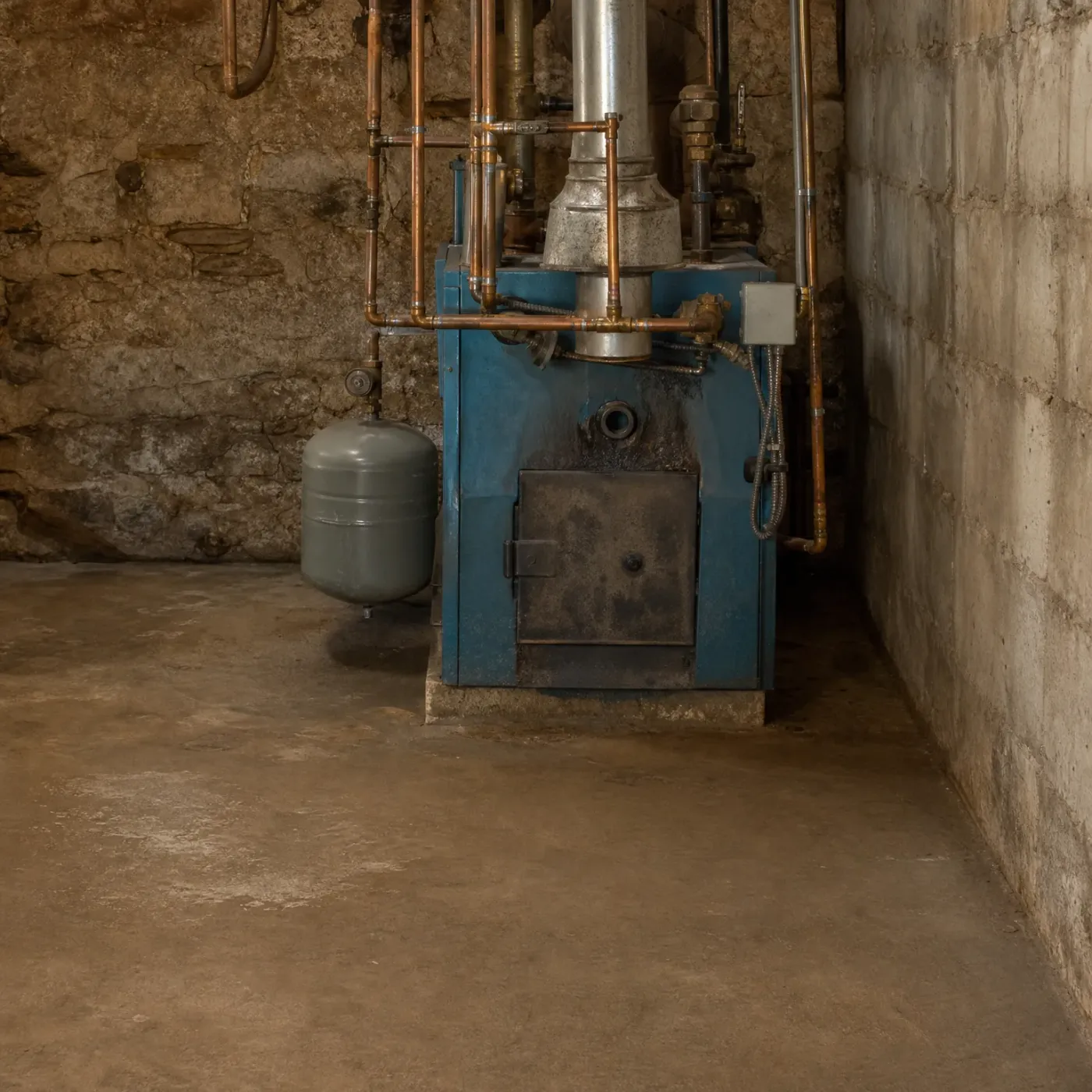
A blue cast-iron boiler with a metal flue pipe and copper piping stands against a stone and concrete block basement wall beside a gray expansion tank on a bare concrete floor.

Boiler on its way out

Corrosion on the access door, a flue that's seen better days, an expansion tank sitting loose on the floor. This boiler is closer to a breakdown than a long retirement. Piping it into new radiant tubing now would mean asking tired iron to carry a bigger job than it has left in it.
Radiant Floor or Keep Baseboard Heat

Radiant floor

  • Heat comes up through the floor, so the room feels warm at ankle height instead of just near the ceiling.
  • Tile and hardwood stay warm underfoot all winter, even in a bathroom that gets cold air off an exterior wall.
  • No baseboard units or vents along the walls, so furniture and floor space aren't planned around them.
  • Runs off the same boiler and gas line most homes here already have, so there's no second fuel source to install.
  • The tubing goes in during a boiler replacement, not as a separate job added on later.
  • Takes longer to respond to a sudden cold snap since the floor itself has to warm up first, not just the air.

Baseboard or radiators

  • Heats the air near the ceiling first, so the floor is the last thing to warm up on a cold morning.
  • Units along the walls take up space you'd otherwise use for furniture or storage.
  • Responds faster to a thermostat change since there's no floor mass to heat first.
  • Already in place in most Rhode Island homes with a boiler, so there's nothing new to run or plan around.
  • Cast iron radiators and baseboard units can be repaired or replaced one at a time without touching the floor.
  • Rooms with radiant floors warm evenly, but a room with baseboard heat often has one warm spot near the unit and cooler air elsewhere.
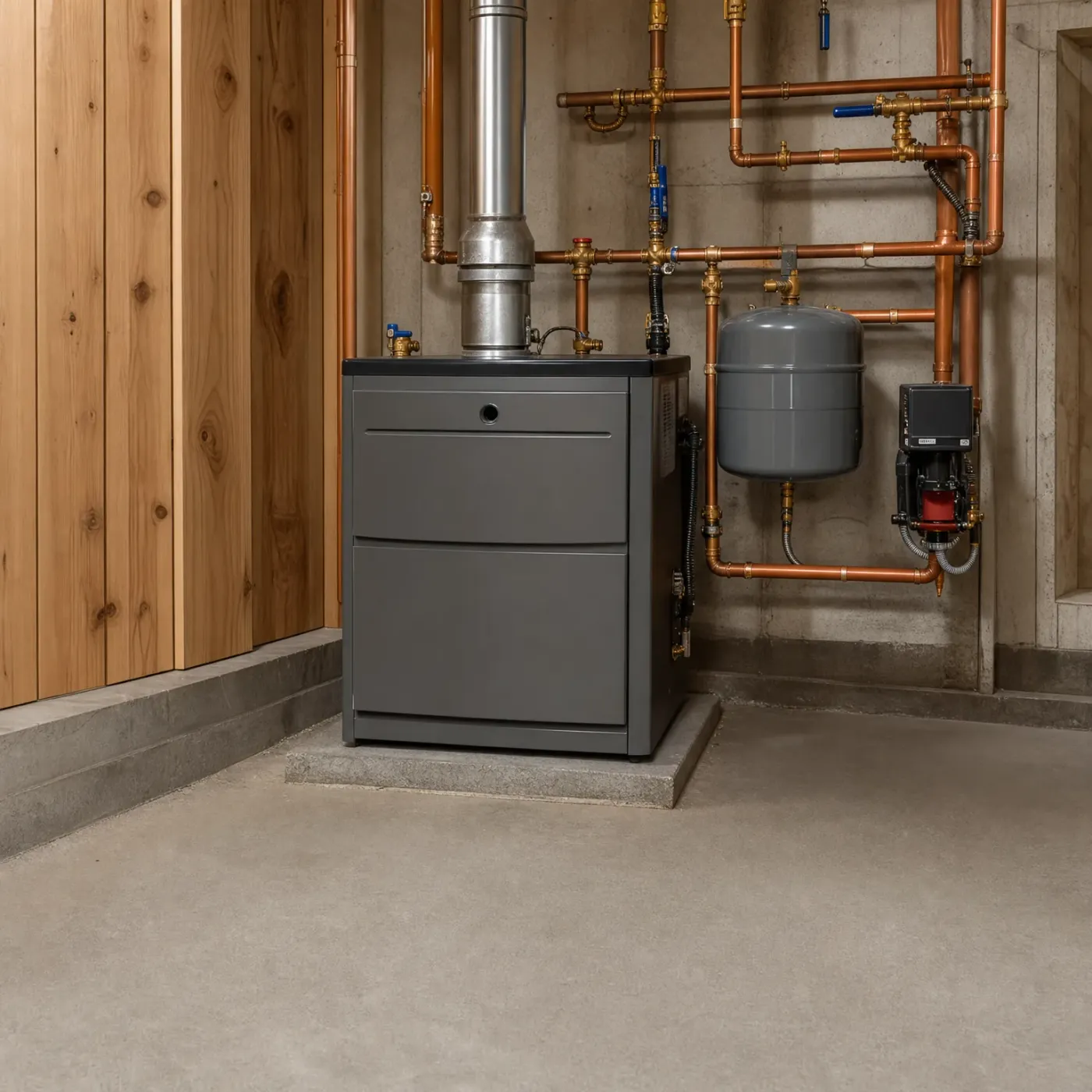
A gray boiler on a concrete pad in a basement, with a metal flue pipe and copper piping, brass valves, a gray expansion tank and a circulator pump mounted on the concrete wall beside wood paneling.
A boiler like this can take on radiant tubing without trouble. Pressure holds, the flue draws fine, and the gas line already sized for baseboard can usually feed the loops too.
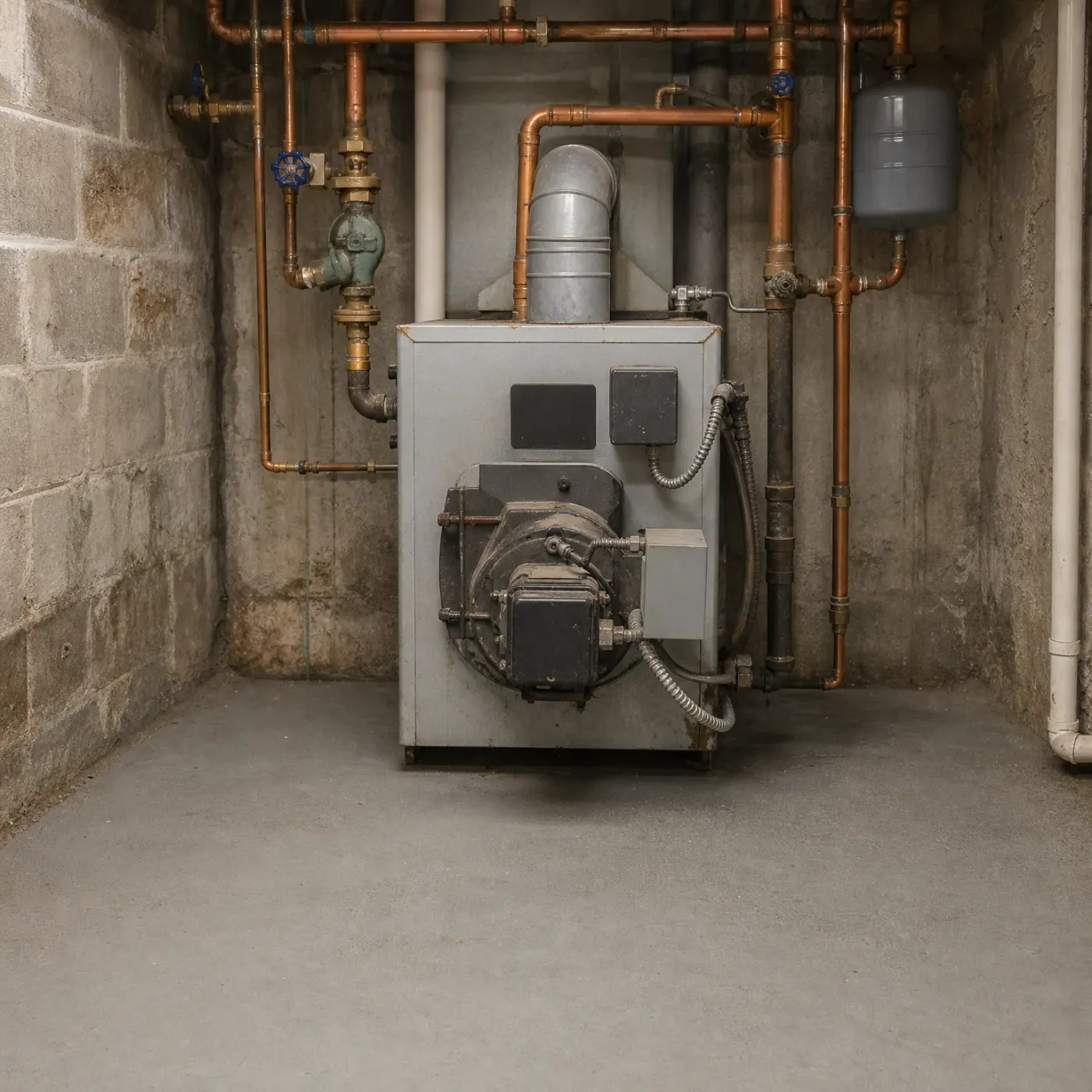
A gray boiler with a flue pipe and burner unit stands against a concrete block basement wall, surrounded by copper and steel piping, valves, and a gray expansion tank, on a bare concrete floor.
A boiler working this hard is already behind. Corroded valves and a straining pump mean radiant tubing is asking more of a system that can't keep up now.
An older man with gray hair and a beard leans back on a beige sofa with his eyes closed, in a sunlit room with potted plants, a wicker chair and large windows behind him.
A woman in a cream knit sweater sits in an armchair with her eyes closed and a slight smile, beside an open window showing orange autumn foliage, with a mug, books and a lit candle on a small side table.

Where That Leaves You

  • If you're already replacing a boiler in Rhode Island, radiant floor heat uses the same gas line and makes the swap worth the extra cost.
  • A boiler holding pressure and drawing clean through the flue can take on radiant tubing without strain.
  • A boiler with corroded valves or a straining pump needs that fixed before any tubing gets added.
  • A local contractor who services boilers every winter here knows which ones are ready for radiant and which ones need work first.
  • Going with one licensed local contractor means one visit and one assessment, not a string of calls to compare.
  • The cold floor you feel getting out of bed or off the shower tile is the baseboard system falling behind, not something radiant has to live with.

Radiant floor heat is worth adding in Rhode Island when a boiler replacement is already on the table. The gas line is there, the hot water is there, and the tubing is the only new piece. What decides whether it's a clean add-on or a bigger job is the boiler itself. One that holds pressure and draws clean through the flue can take on the loops without strain. One with a corroded valve or a pump that's already working hard needs that sorted first, before anything gets laid under the floor.

That's not something to guess at from the basement. A contractor who works on boilers all winter in this state has seen which ones carry radiant tubing fine and which ones show trouble within a season. Calling one local contractor instead of fielding quotes from three or four means one person looks at your actual boiler, your actual gas line, and tells you where you stand, rather than you piecing together answers from different companies with different guesses.

None of this changes what you already feel. If your floor is cold getting out of bed or stepping off the shower tile, that's your baseboard system falling behind, not something you have to keep living with. Whether radiant makes sense this time comes down to the condition of the boiler feeding it, and that's worth having someone look at before you decide either way.


A curving paver walkway runs alongside a house with beige lap siding and a white-trimmed window, bordered by low shrubs, grassy plants, and trees in sunlight.
A dark-framed casement window with divided upper panes set in a stucco wall beside a stone-clad section, with hydrangeas, hostas and trimmed shrubs in a mulched bed above a lawn.
White horizontal lap siding wall with a single six-pane double-hung window, above a mulched bed of hydrangea shrubs with browning blooms, bordered by mown grass in low sunlight.
Interior corner with tan plaster walls, a potted olive tree in a large terracotta urn beside a floor-to-ceiling window, and a wooden bench with a beige cushion on a herringbone brick floor partly covered by a woven jute rug.
A wooden bench beneath a window holds a green linen cushion and a fringed cream throw, with a woven basket stored underneath on a wood plank floor.

It's off your list after this

The pro who reaches out is licensed in Rhode Island.

Find a licensed boiler pro

It costs nothing to send, and you don't have to hire anyone.