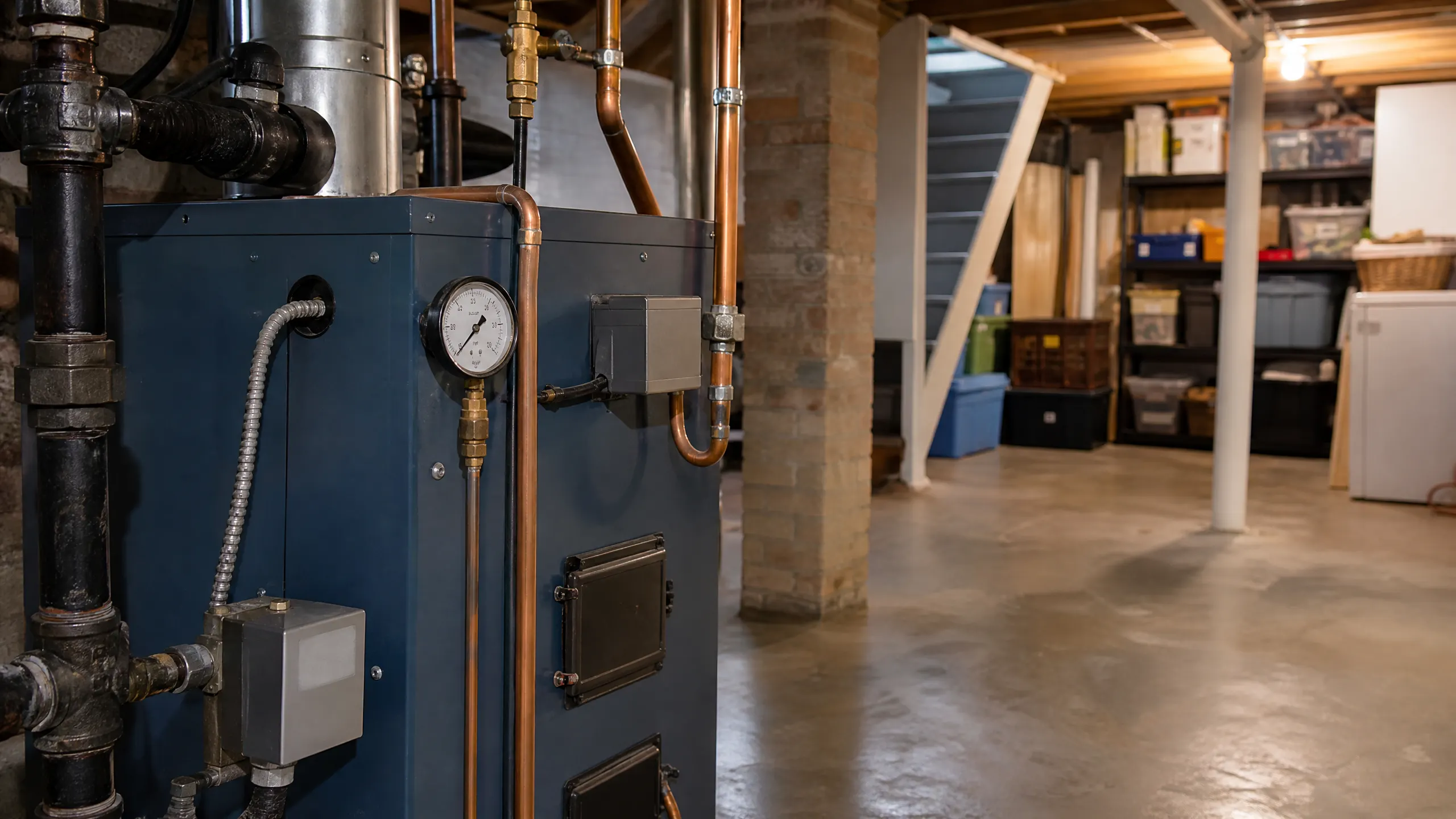




A blue boiler with copper pipes and a pressure gauge mounted on its front panel, installed in an unfinished basement used for storage.

Boiler Repair in Providence, RI

Tell us about the job

Takes about a minute. No obligation.

RepairBoilerProvidence County, RI
Step 1 of 2

What ZIP code is the job in?

Half the homes in Providence County were built in 1956 or earlier. If yours is one of them, the boiler inside it probably isn't original, but it's worth finding out how old the one you have actually is. A repair makes sense on a unit with real years left in it. It makes less sense on one that's already near where boilers this age tend to give out for good. Before paying for a big repair, ask whoever comes out how much life is left in the unit, not just what's wrong with it today.

A cracked heat exchanger or a leaking circulator pump is a repair call on a boiler that still has years in it.

The same fault on a boiler near the end of its run is a sign to ask about replacing it instead.

Eight months of heat starting in October, and trouble shows up early

Heat runs October through May
Winter nights average 22°F
49 winter storms from 2015 to 2024

Natural gas ran $21.08 per million Btu in Rhode Island last year, among the higher rates in the country. A boiler that's short-cycling, losing pressure, or firing longer than it should burns through that gas without heating the house any better. That's money going out every month the fault sits there. A unit running clean costs less to run than one limping along, even before you get to the repair bill. If something's off with yours, the gas cost alone is a reason not to let it sit through the winter.

Get it diagnosed properly

Your boiler works hard here, and that's usually what's behind the problem. Have it diagnosed properly so the fix lasts.

Find a contractor
A man in a cap, dark shirt and tan work pants walks up stone steps toward a dark blue front door, carrying a canvas tool bag, with a potted shrub beside the entry.

Low water pressure and leaks

A boiler loses pressure slowly over years as water finds its way out through a worn valve, a loose fitting, or the circulator pump seal. Once pressure drops too low, the boiler won't fire at all, or it'll trip a switch meant to protect it. Topping off the pressure gets you through the day, but if it keeps dropping, something is actually leaking somewhere in the system and that's what needs finding.
Scale and corrosion inside

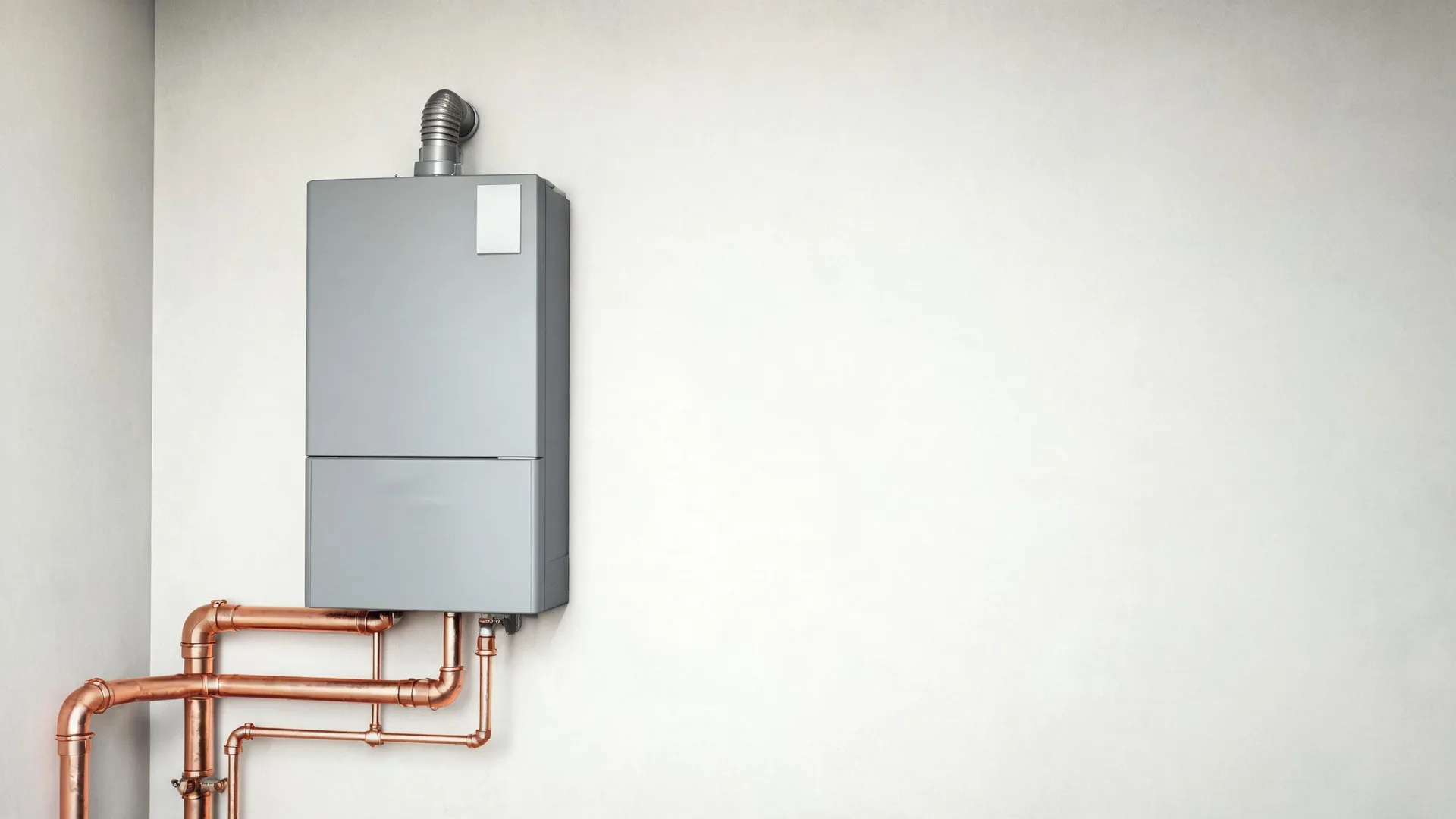
Minerals in the water settle inside the heat exchanger over time, coating it the way a kettle scales up. That layer makes the boiler work harder to move heat into the water, so it runs longer and hotter than it should. Left alone, the same heat that's being blocked from the water ends up stressing the metal instead, which is how cracks start.

A few things are safe to check yourself before anyone comes out. Look at the pressure gauge on the front of the boiler. If the needle sits down near zero, that alone could explain why it won't fire. Check the switch on the wall near the boiler, usually marked as an emergency shutoff, and make sure it hasn't been bumped off. If your boiler has a condensate line, look at where it exits outside and check that it isn't blocked or frozen, since a clogged line will shut the unit down on purpose. Listen for a thermostat that's calling for heat but getting no response, which points you toward the boiler itself rather than the thermostat. If you smell gas at any point, that's not a checklist item, that's a reason to shut the valve and get outside.

A tech starts by asking what you noticed first. A noise, a smell, a room that won't heat, a pressure gauge that keeps dropping. Then they check the pressure, look over the valves and fittings for signs of a leak, and watch the boiler run through a full cycle if it fires at all. A combustion analyzer shows whether it's burning clean or running rich. Rich burning points toward a blocked flue or a dirty burner. If the heat exchanger looks suspect, they check for soot and staining that show where heat isn't moving into the water the way it should. Most of this comes from watching the boiler work, not from guessing. What you get at the end is a plain answer about what's failing, why, and whether it makes sense to fix on a boiler this age.