



White colonial-style houses with lit windows photographed at dusk along a tree-lined street.

Boiler Repair in Newport, RI

Tell us about the job

Takes about a minute. No obligation.

RepairBoilerNewport County, RI
Step 1 of 2

What ZIP code is the job in?

Boilers here run from October through May, about eight months straight. September is the last quiet month before that load hits. If a boiler has a weak igniter, a failing circulator, or a pressure switch on its way out, it usually shows itself in those first cold weeks, not in the middle of winter when everything has already been running steady. That's when a part that got by on light use last spring finally gets asked to do a full night's work and can't. If your boiler is acting up now, early in the season, that timing itself is a clue to what's wrong.

A boiler that won't hold pressure usually has a slow leak somewhere in the system, not a failed tank.

Find where the water is going before anyone touches the pressure relief valve.

Half the boilers in Newport County are as old as the houses they heat

Half the homes here were built by 1963
Heat runs October through May
Winter nights average 26°F

Newport County boilers run on a few fuels, and oil is common in homes that never switched to gas. Oil ran $22.61 per million Btu in Rhode Island last year. That cost has nothing to do with why a boiler is acting up. A sooty burner or a bad nozzle will waste fuel and cause trouble regardless of the price per gallon, and a clean, well-tuned oil boiler is not harder to keep running than a gas one. If yours is struggling now, look at the burner and the ignition, not the fuel it takes.

Ask what your boiler has left before you pay to fix it

Half the houses in Newport County went up in 1963 or earlier, and a lot of boilers are the same age as the house. A repair on a boiler that old is worth doing if it buys you real years. Have the contractor give you a straight answer on what's left in it before you spend on the part.

Find a contractor

Kettling and banging in the heat exchanger

A boiler that bangs, knocks, or makes a kettle-like rumble as it fires has scale or sludge built up on the heat exchanger. Water trapped under that buildup flashes to steam and that's the noise you hear. Left alone, the heat exchanger works harder to pass heat through the buildup and can crack under the stress.
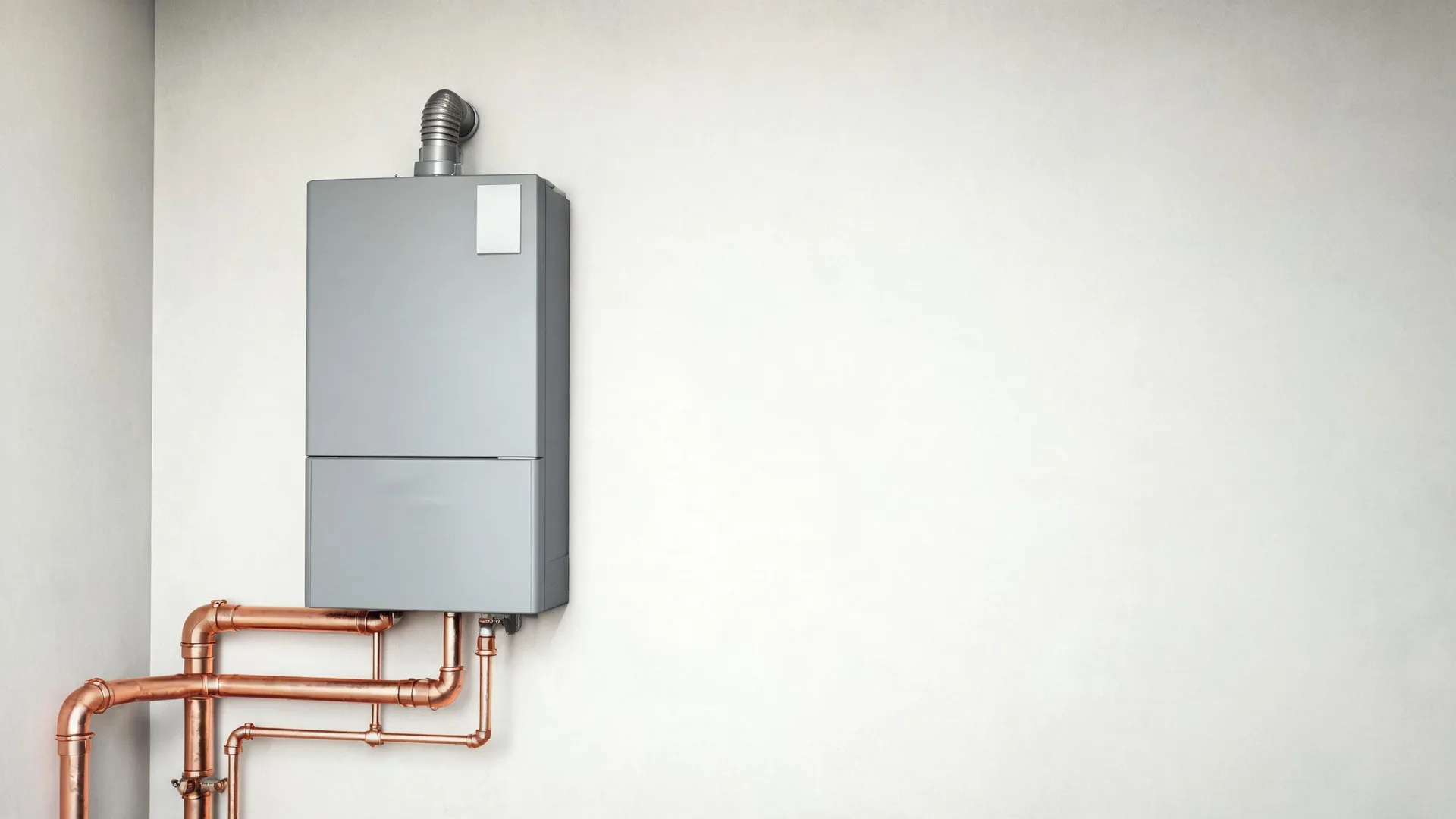
Short cycling means something is cutting it off early

If the boiler fires, runs a few minutes, and shuts off before the house gets warm, something is telling it to stop early. That can be a flame sensor not reading the flame right, a limit switch tripping, or low water flow through the system. It's not the boiler being weak, it's the boiler reacting to a real signal somewhere else.

Before anyone comes out, a few things are worth checking. Look at the pressure gauge first. Most boilers want the needle somewhere in the middle of the dial when cold, and if it has dropped near the bottom, that alone explains a boiler that won't fire or won't heat right. Check that the system switch and the thermostat actually have power and are calling for heat, rather than assuming they're fine because they were fine last winter. If it's a condensing boiler, find the condensate pipe where it runs outside near ground level and make sure it isn't blocked with ice or debris, since a blocked line will shut the whole unit down. Listen for what happens when it tries to fire. No response at all is a different problem than a boiler that tries, makes noise, and then quits, and knowing which one you heard gives the contractor something to go on before they even open it up.

A diagnostic visit starts before any panel comes off. A tech will ask what the boiler was doing right before it quit, what the pressure gauge read, and whether anyone heard it try to fire. Then they check the easy things first. Power, thermostat calls, pressure. Those rule out a lot in a few minutes without any tools coming out. From there it's elimination. Gas valve and igniter if it won't fire at all. Flame sensor and limit switches if it fires and then cuts out. Circulator and air in the system if it fires fine but the house stays cold. Each test tells the tech what to check next, not just whether that one part is bad. By the time the cover goes back on, the problem should have a name, not just a guess.