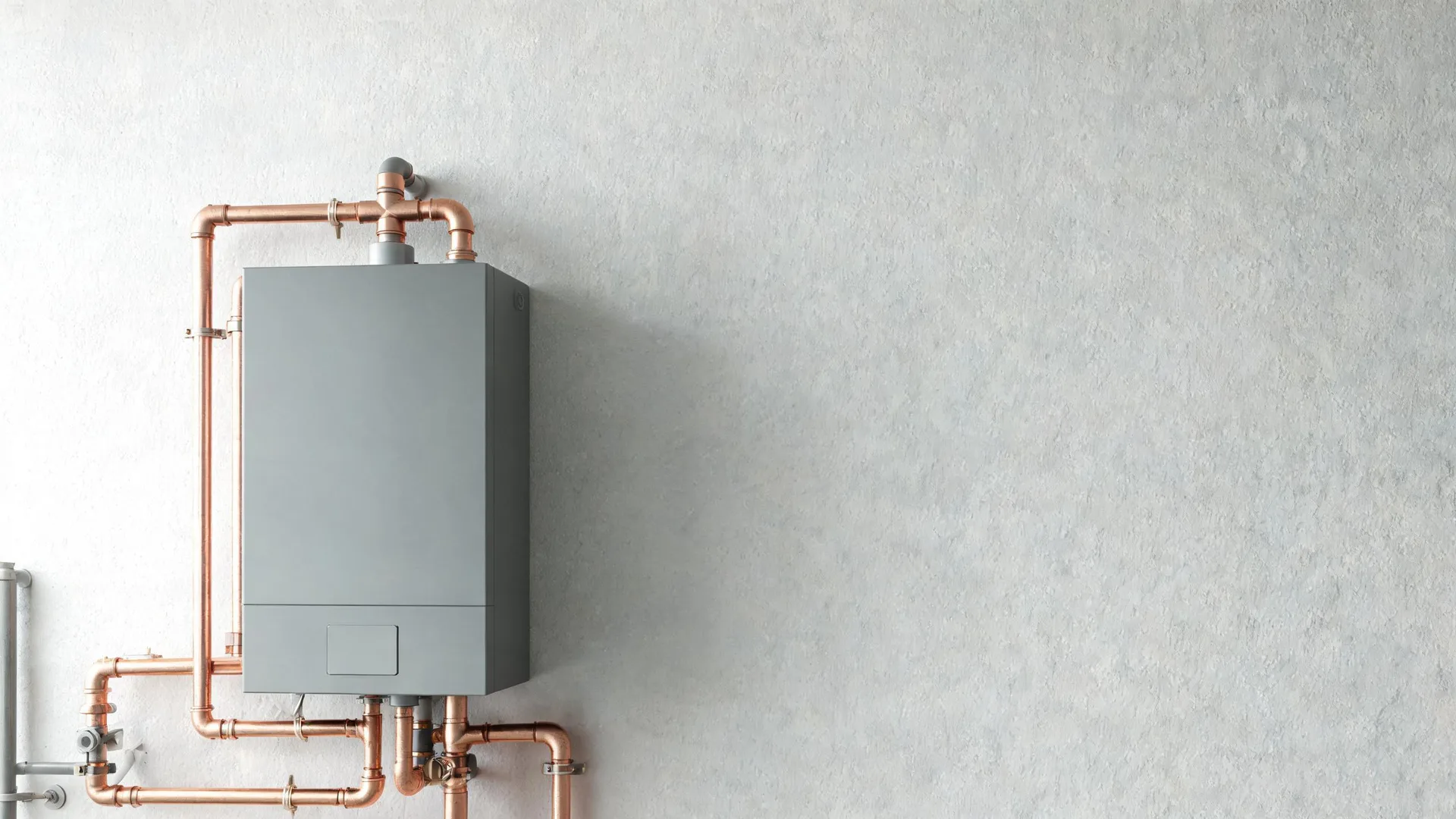
Gas is the normal fuel here
Utility gas heats 57.1% of homes in Bristol County, more than any other fuel. Fuel oil accounts for most of what's left, at 28.1%.
Takes about a minute. No obligation.
Utility gas heats 57.1% of homes in Bristol County, more than any other fuel. Fuel oil accounts for most of what's left, at 28.1%.
If your home already has a gas line run for heat, replacing an old boiler with a new gas one keeps the same fuel and the same vent path. That's usually the simplest installation to plan for.
Gas in Bristol County runs $21.08 per million Btu.
A standard-efficiency gas boiler sized to your home is the right call. No local reason to pay more for a bigger or higher-efficiency unit than the house needs.



Heat runs here from October through May, and overnight lows average 25°F in December, January and February. That's a normal New England winter, not a hard case. A standard-efficiency boiler sized to your home's heat loss will carry it fine. Winter storms with heavy snow and ice hit Bristol County often enough that the unit needs to start reliably on a cold morning after a bad night. That's a matter of correct sizing and a clean installation, not a bigger boiler than the house calls for.
Rhode Island follows zone 5A under the 2021 energy code, a cool zone where heating carries the larger load. New gas-fired boilers have to hit at least 84 percent AFUE. That narrows the field some, and a federal tax credit is available toward a qualifying new system.
Find a contractorA standard-efficiency boiler vents through a chimney or a metal flue, the way the old one likely did. A high-efficiency condensing boiler vents through PVC pipe out a sidewall, and that pipe has to reach outside at the right clearance from windows, doors and property lines. If the chimney is staying unused, it still needs to be capped or lined for anything else that vents through it. Whichever direction the job goes, the vent path is what a contractor has to work out first, not the boiler itself.
Most boilers are also the hot water source for the house, through a tankless coil or an indirect tank fed off the boiler. Swapping the boiler means that hot water supply gets rebuilt too, piped correctly to the new unit. The zone valves or circulators that send heat to different parts of the house, and the expansion tank that handles pressure in the system, usually move over to the new install as well. The more of this original piping and control gear that's being reused instead of replaced, the more hours go into fitting a new boiler to all of it correctly.
AFUE is the number on the label that tells you how much of the fuel actually becomes heat in your house, versus what goes up the vent. A boiler rated in the mid-80s is still burning some of that gas just to push exhaust out the flue. A condensing boiler rated in the mid-90s or better wrings the heat out of that exhaust before it leaves, down to the point where the exhaust is cool enough to vent through plastic pipe instead of a metal flue. That efficiency gain is real, but it only pays off if the rest of the system supports it. A high-efficiency boiler still has to be sized to your home's actual heat loss, not just bought for the rating on the sticker. Buying more efficiency than your venting and your heat loss call for doesn't make the house warmer, it just adds cost to the install.
The old boiler comes out first, drained and disconnected from the gas line, the vent, and whatever piping sends heat through the house. If a tankless coil or indirect tank was pulling hot water off it, that connection gets opened up too. The new boiler goes in on its own base, leveled and set where the venting can actually reach outside. Gas line gets connected and checked for leaks before anything is fired. Vent pipe goes in next, metal flue or PVC depending on what the boiler calls for, sloped and clear of the distances it needs from windows and doors. Then the old piping and controls get tied back in, zone valves, circulators, the expansion tank, each one checked rather than just reconnected. The system gets filled, purged of air, and brought up to pressure before the boiler is fired for the first time. Once it's running, a tech checks the flue gas and adjusts the burner to it, because a boiler that fires correctly on paper can still be out of tune until it's actually measured.