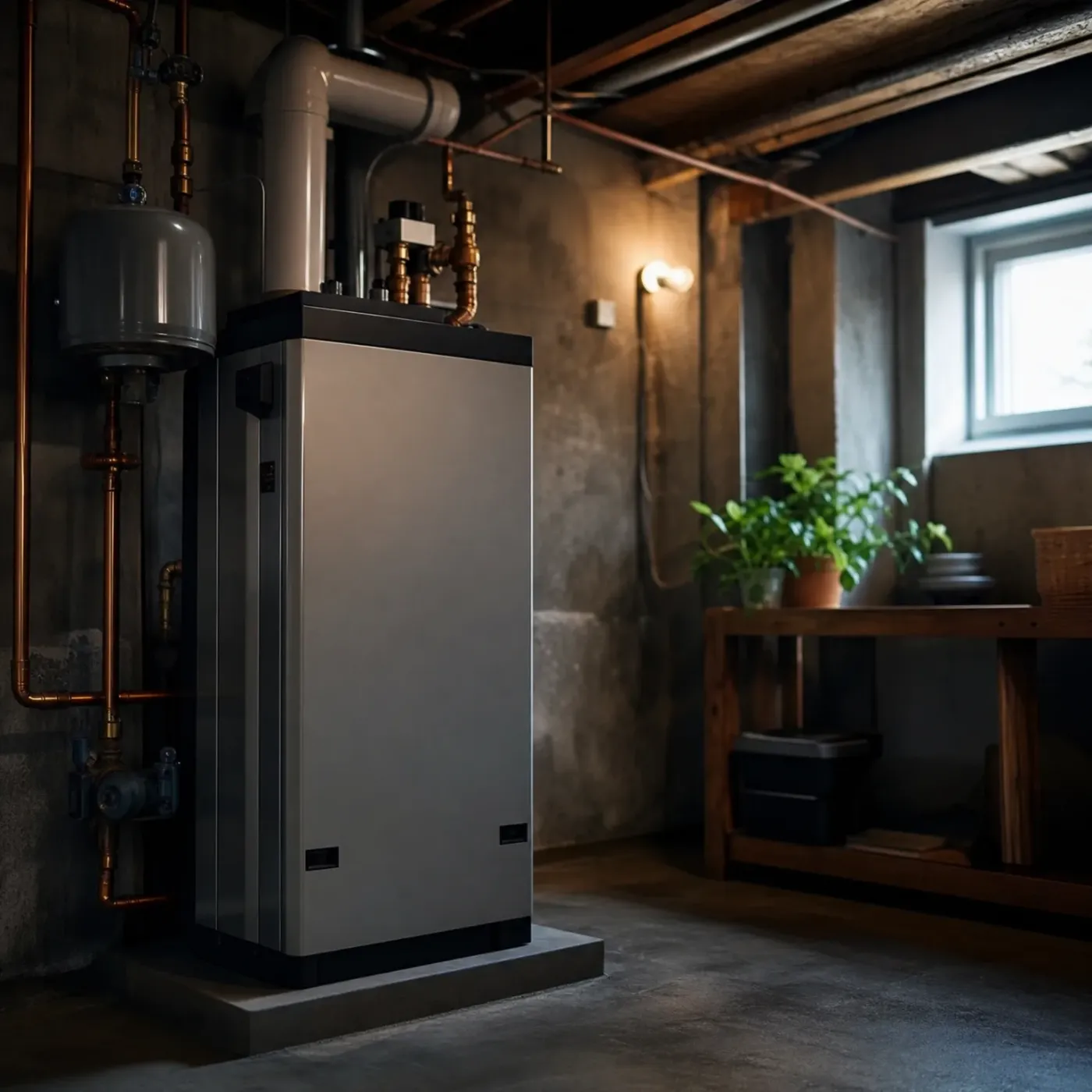
A floor-standing gray boiler unit on a concrete plinth in a basement, with copper pipes, an expansion tank, and a flue pipe above, a wall light, a small potted plant on a wooden shelf, and a window in the background.

Hand off the search today

Why your boiler is gurgling in Rhode Island

Gurgling usually means air or water pressure, and sometimes it's nothing, but it can also mean a failing pump or a cracked heat exchanger. This page walks through what that sound means for your boiler. Skip the calling around and the retelling your boiler's history to every contractor you reach. Send the form once and let someone qualified take it from there.

Send it today

That gurgling is almost always air trapped in the system, or water pressure that's drifted low. Boilers push hot water through a closed loop of pipes, and when air gets into that loop, it collects at high points and bubbles as the water moves past it. Low pressure does something similar, letting water churn instead of flow smooth. Both are common after the system's been idle, which in Rhode Island means it can show up right as you fire the boiler back up for the season. Most of the time bleeding the system or topping off the pressure settles it. But gurgling that keeps coming back, or shows up alongside banging or a boiler that short cycles, can mean a pump that's starting to fail or sludge building up near the heat exchanger. That kind of wear doesn't fix itself, and it tends to cost more the longer it runs.

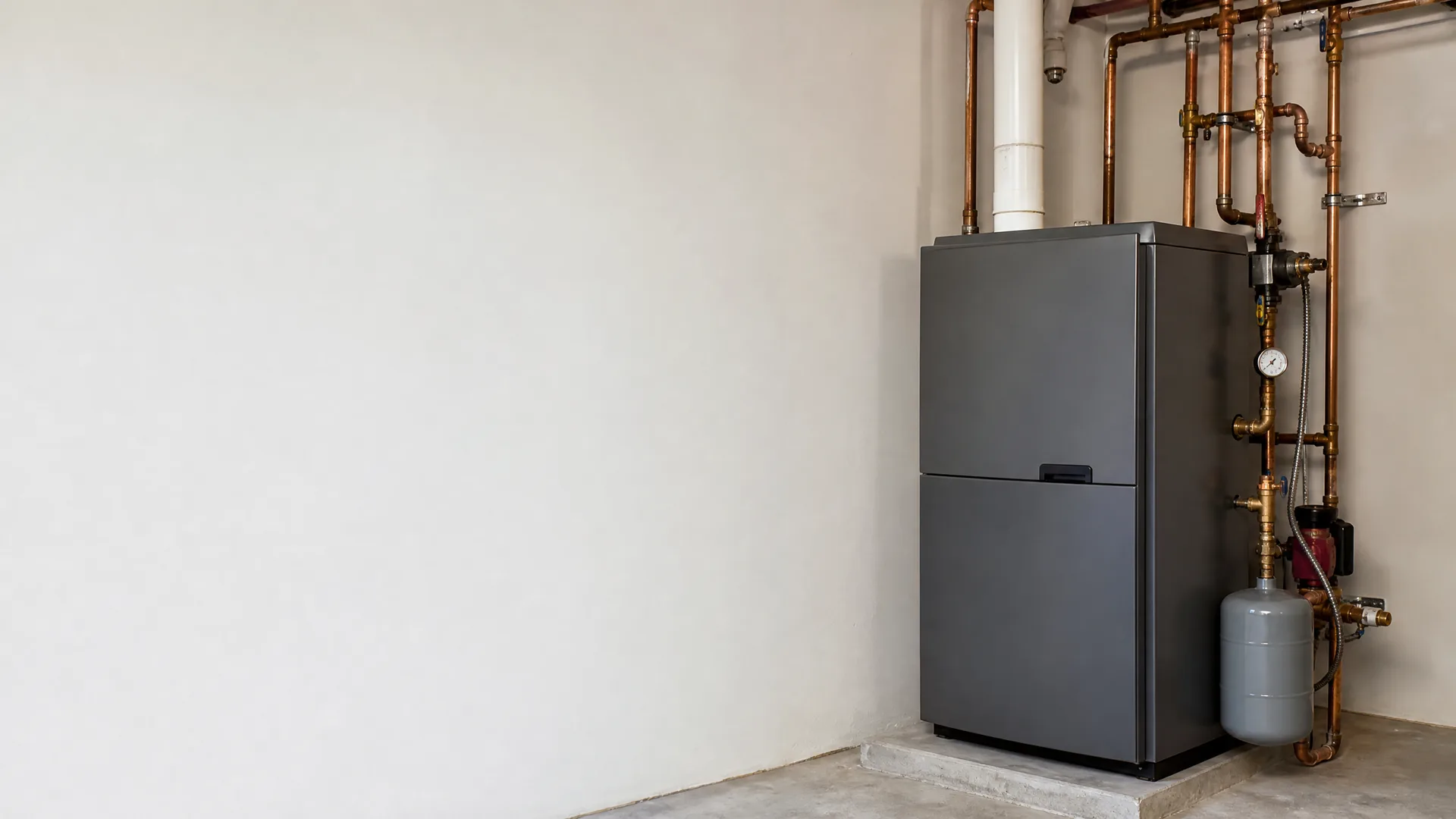
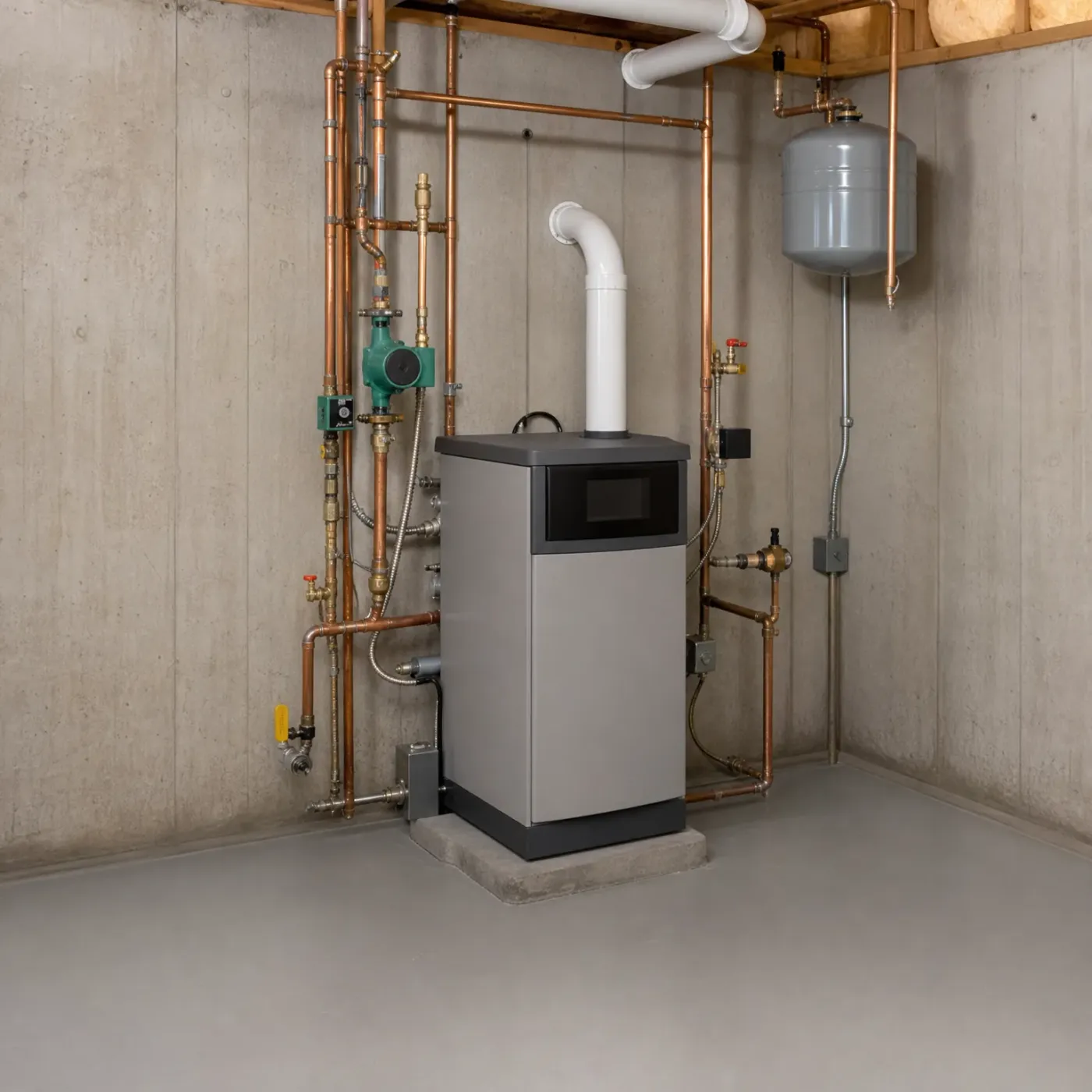
A gray floor-standing boiler on a concrete pad in a basement corner, with copper piping, a circulator pump, a white PVC flue, and a gray expansion tank mounted on the wall.

Quiet, steady, no air in the loop

This is what a boiler sounds like when the pressure is right and the air has been bled out. Water moves through the copper lines and the circulator pump without a sound, and the expansion tank holds the pressure steady as the water heats and cools.

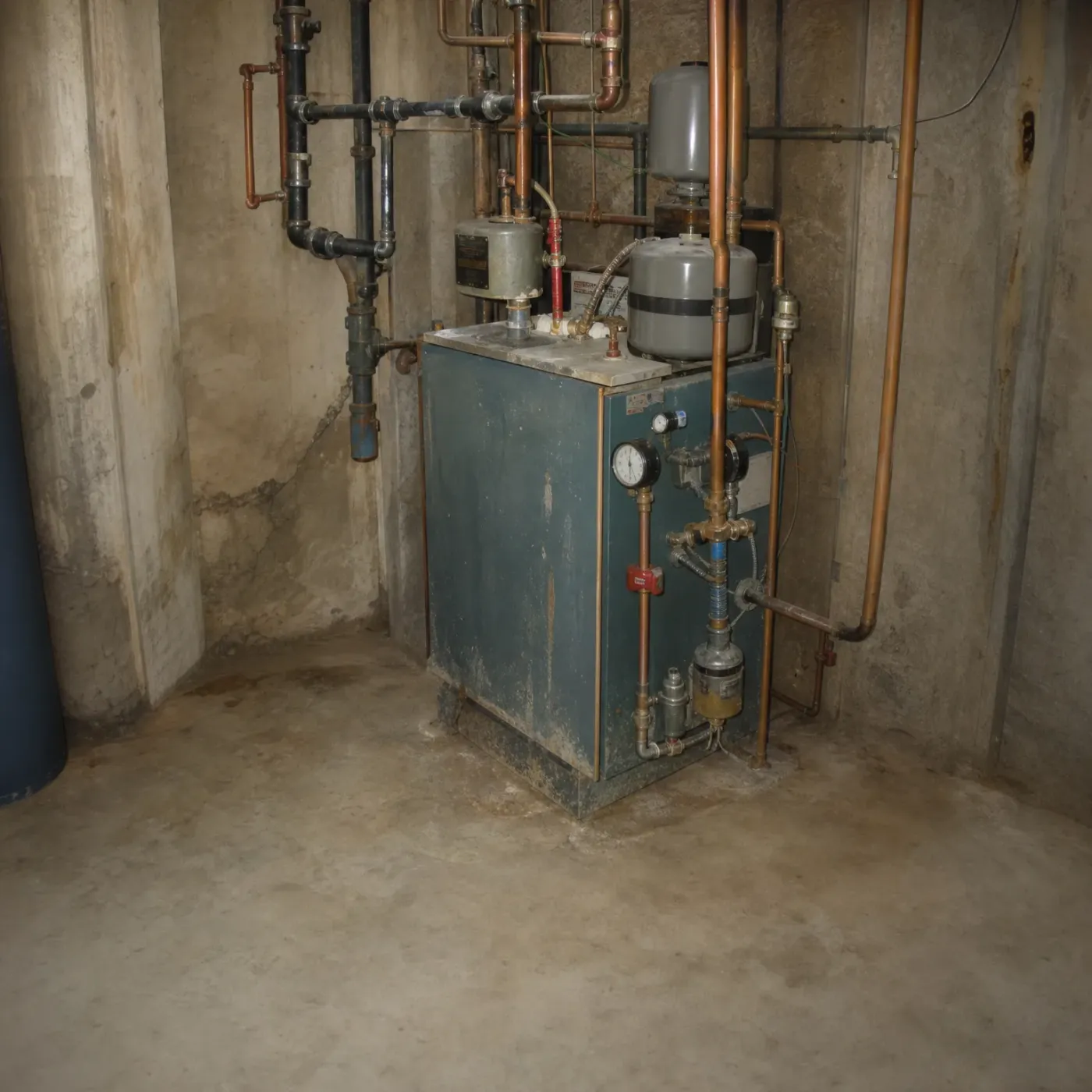
A green metal boiler with pressure gauge stands in a concrete basement corner, surrounded by copper and black iron pipes and two tank-shaped vessels.

Gurgling, with pressure worth checking

An older cast iron boiler like this one holds more water and more pipe, which gives trapped air more places to collect and more places to knock. Check the pressure gauge. If it reads low, the gurgling may be the first sign, not the last.

Why does my boiler gurgle more when it first kicks on?

You notice the gurgling is worst right when the boiler fires, then it settles down once the system has been running a few minutes. That pattern is worth paying attention to, because it points to where the air actually is rather than just confirming that air is the problem.

Cold water holds more air, so the noise peaks at startup and fades as it warms

Cold water holds dissolved air that a flame can't push out right away. When the boiler fires, that water starts moving and heating at the same time, and the air comes out of it fastest in those first few minutes, working its way toward the bleed valves and high points in the loop. As the water gets hotter and keeps circulating, less air is coming out of solution and the sound drops off. If it quiets down within a few minutes of startup and stays quiet the rest of the cycle, that's the pattern of air working its way out, not a sign the pump or heat exchanger is in trouble.

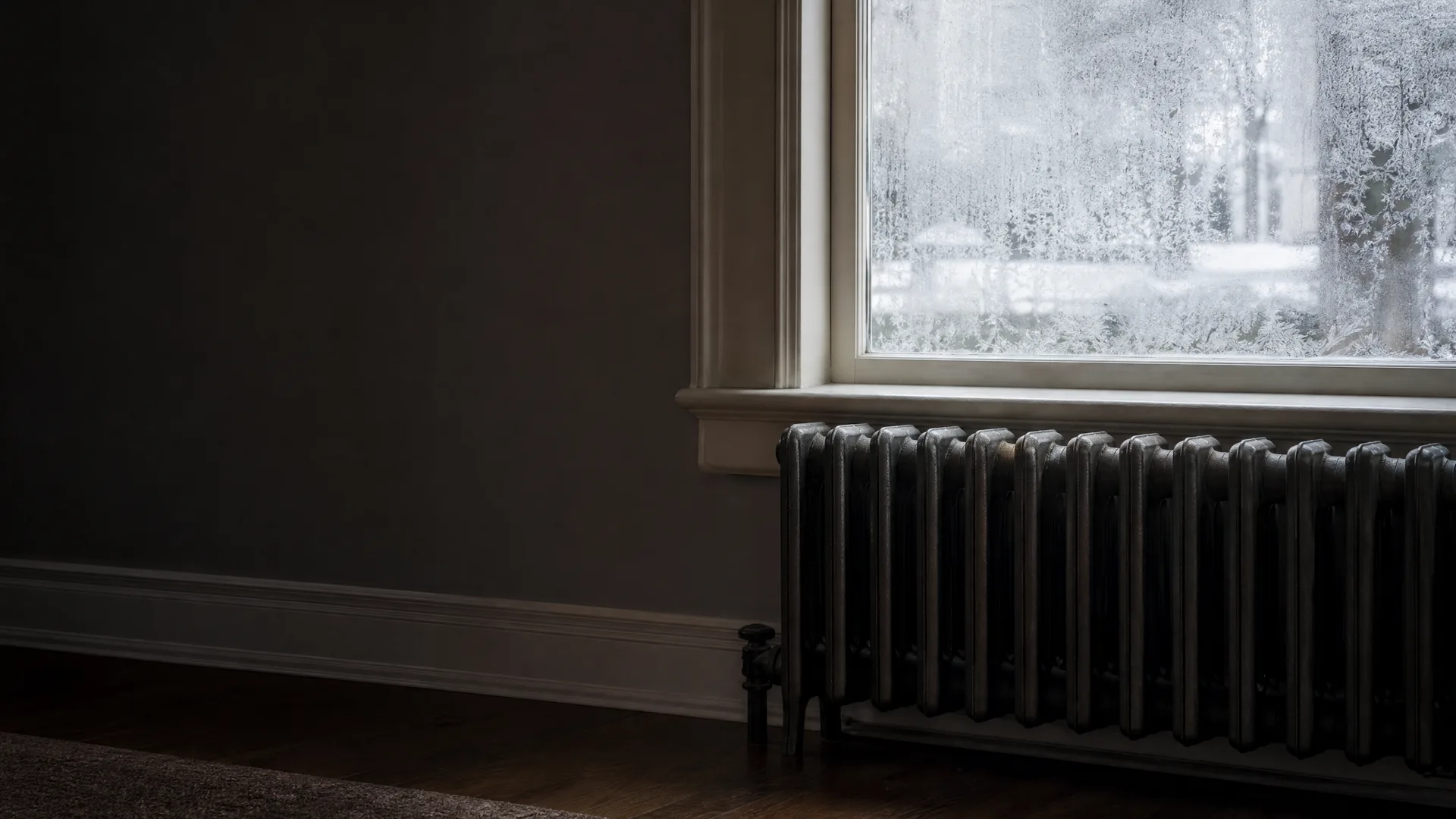
A cast iron column radiator with a valve stands beneath a window with a frosted pane showing snowy trees outside, in a dim room with dark walls and wood flooring.

You're up before the house, making coffee, and you hear it through the wall before you're even in the room. That gurgle under the living room window, louder than it's been. The radiator sits there under a layer of frost on the inside of the glass, January in Rhode Island doing what it does, and the cast iron is barely warm at the top edge where your hand checks it. The gurgle runs long this time, longer than it used to, and the room hasn't caught up to the cold yet. You stand there a second, coffee going cold too, listening to see if it settles the way it usually does. It doesn't, not yet.
What you're hearing when you walk past that radiator

You'll hear it most in the room where the radiator or baseboard sits closest to where you're sitting, a gurgle or a knock that comes and goes with the burner cycle. Some rooms heat fine and others stay cool, and the cool ones are usually the ones making noise. You might feel a radiator that's hot on the bottom and cold at the top, or notice the pressure gauge on the boiler sitting lower than it used to. None of that means damage yet. But a pump straining against trapped air, or a system running low on water pressure month after month, wears parts faster than it should, and in a Rhode Island winter a boiler that quits is not a small problem to have.

A smiling man in a blue denim shirt over a white tee sits at a light stone kitchen counter with a grey mug and a bowl of oranges and bananas, with pendant lights and shelving behind him.
A smiling bearded man in a grey long-sleeved shirt sits at a kitchen counter with a dark mug, with a dining table, pendant light and glass doors onto greenery behind him.
A bearded man in a dark green knit sweater smiles and looks off to the side while standing at a kitchen counter with a white mug of coffee, with open shelving, a potted tree, and a dining table near large windows behind him.
A man with dark curly hair in a dark green sweater stands smiling and looking to the side in a kitchen with white cabinets, a potted plant, a stone countertop with a ceramic mug, and a dining area with framed art in the background.

Stop chasing a boiler pro

Fill out one short form instead of calling around.

You only hire the pro if you want to.

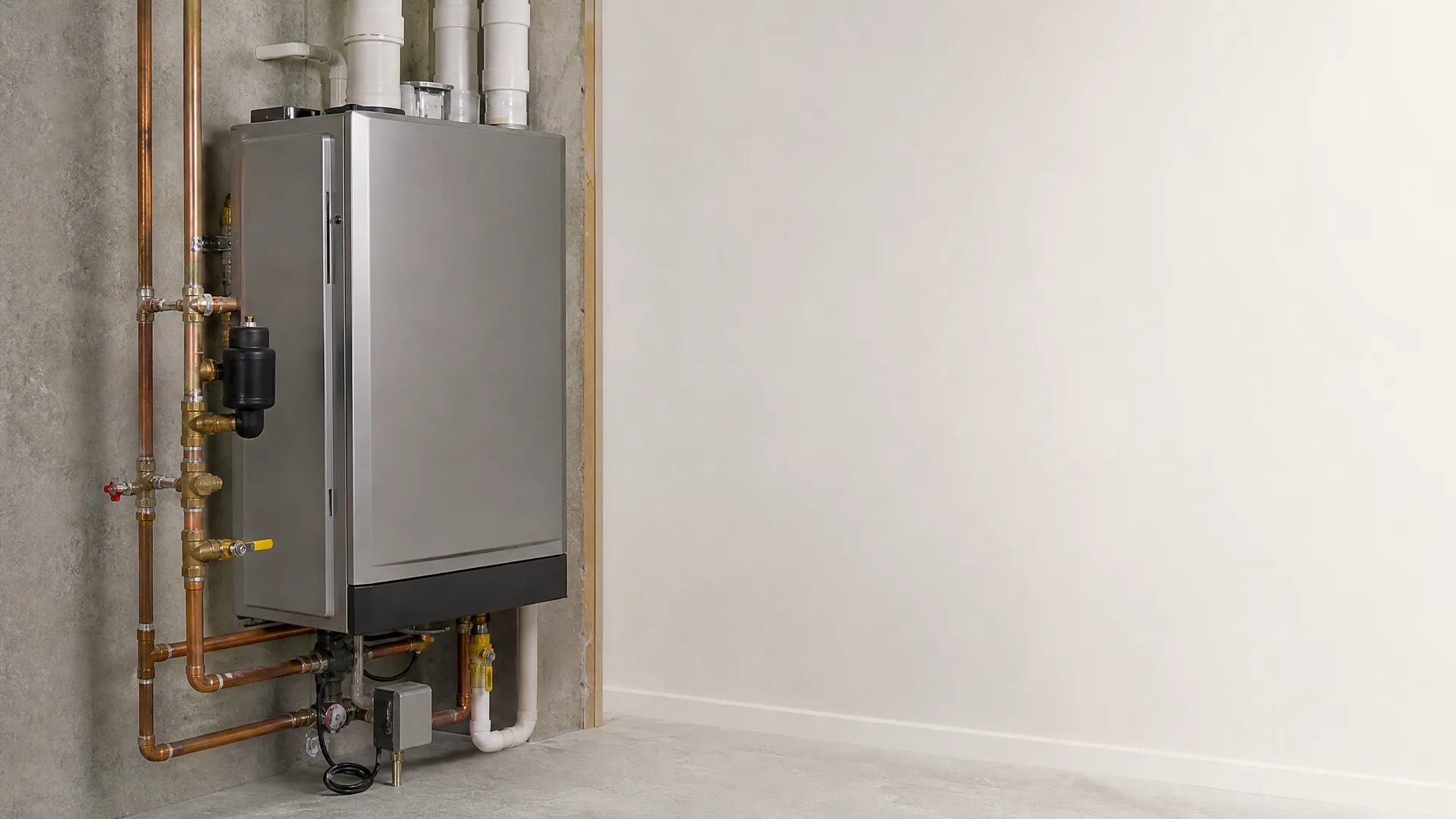
A wall-mounted grey boiler with copper pipework and white flue pipes installed against a concrete wall in an empty room with a plain pale wall to the right.

Where the air gets in

Every time you bleed a radiator or a contractor refills the loop after a repair, a little air rides in with the water. Most of it works its way up to the highest point in the system, which is usually an upstairs radiator or a bleed valve near the top floor. That's why gurgling often shows up loudest in a second-floor room even when the boiler itself is in the basement.

A dark grey boiler unit stands on a concrete pad against a plain light wall, connected to copper pipes, a pressure gauge, a pump and a grey expansion tank.

What the pressure gauge tells you

Most residential boilers are built to run between 12 and 15 psi when the system is cold. If the needle sits below that, water has left the loop somewhere, through a bleed valve, a weeping fitting, or the pressure relief valve doing its job during a hot cycle. A gauge reading under 12 psi most mornings is worth writing down and showing to whoever comes to look at it.

Winter nights average 23°F statewide

23°F is the average overnight low here from December through February. That's the kind of cold that keeps your boiler firing most of the night, and a system that's running that much will work any trapped air or low pressure loose fast. Catching the gurgle now, before a January cold snap, is easier than catching it mid-cycle at 2 a.m.

NOAA nClimDiv 1991-2020 county normals weighted by homes

A closed dark laptop and a ceramic mug of coffee on a wooden dining table, with wooden chairs, a dark kitchen cabinet with cutting boards and a potted plant, and a leafy plant by a window in the background.

So that's the gurgle

Air in the loop or pressure that's drifted low, that's what's behind the sound. Most of the time it's a quick fix: bleed the radiator, add water to the loop, bring the pressure back to where it belongs. Sometimes it points to something that needs a closer look, like a pump or a heat exchanger. Either way, you know what you're listening for now, and you know it's worth dealing with before a cold night in Rhode Island makes it worse.

You don't have to spend your evening finding out who handles boilers around here, calling a few numbers, and explaining the same gurgle to each one while you wait for a callback. Send the form once and that part is off your plate. Someone licensed to work on it takes it from there, and you go back to your evening.

Interior corner with a beige sofa holding a dark green and a light cushion and a textured throw, a potted small-leaved tree beside a white-framed window, and a dark shallow bowl on a wooden coffee table in the foreground.
At dusk, a dark board-and-batten house with a standing-seam metal roof and lit entry walkway of stone pavers, with two large outdoor heat pump units on a stone-walled pad at right and trees and hills in the background.

Boiler Repair

Hand off the boiler problem

RepairBoilerRhode Island
Step 1 of 2

What ZIP code is the job in?

  • A ceramic vase holding leafy green branches and a shallow wooden bowl sit on a wooden window ledge beside a sunlit window, with a cream upholstered chair and knit throw in the foreground.
    • Tell a local repair pro what your boiler is doing.
    • Describe your boiler job, and a local pro who handles it gets in touch.
  • Sunlit living room corner with a beige upholstered sofa, a round wooden side table holding a ceramic vase of olive branches, linen curtains at a window, a floor vent in the baseboard, and a woven jute rug on hardwood flooring.
    • Send the request and finding a pro stops being your problem.
    • After this form, you can stop searching for a boiler pro.
  • A wooden side table with a single drawer holds a shallow carved wood bowl and a white ceramic vase of green eucalyptus stems, beside a window and an upholstered chair draped with a cream knit throw.
    • Skip searching for a boiler pro and answer a few questions instead.
    • One form replaces the calls you'd make to find a boiler pro.
  • Corner of a house with horizontal siding, a white-framed window and stone veneer base, beside a covered entry with wooden steps, a potted plant, mulched beds of green shrubs and a flagstone path.
    • Only one pro gets your request, so you hear from one company.
    • Your request stays with one local pro.