Why your boiler relief valve is leaking in Rhode Island

RepairBoilerRhode Island
Step 1 of 2

What ZIP code is the job in?

Why is my boiler's relief valve leaking?

A drip from the valve on top of the boiler usually gets noticed fast, especially once it starts leaving a stain down the side of the tank or a small puddle on the floor. It's a small thing until it isn't, and most people want to know whether it's the valve itself or something pushing it to open before they call anyone.

Too much pressure or a worn valve seat is forcing it open

The relief valve exists to open when pressure inside the boiler climbs too high, so a leak usually means one of two things. Either the pressure really is too high, often from a failing expansion tank or a fill valve letting in too much water, or the valve itself has a worn seat and is letting water past at normal pressure. Gas-fired boilers, which run most heating systems in Rhode Island, build pressure as the water heats, so a valve that only drips when the system is running points to pressure. One that drips all the time, even cold, points to the valve. Either way, it's not something to leave alone. A relief valve that's seeping has already told you something upstream isn't right.

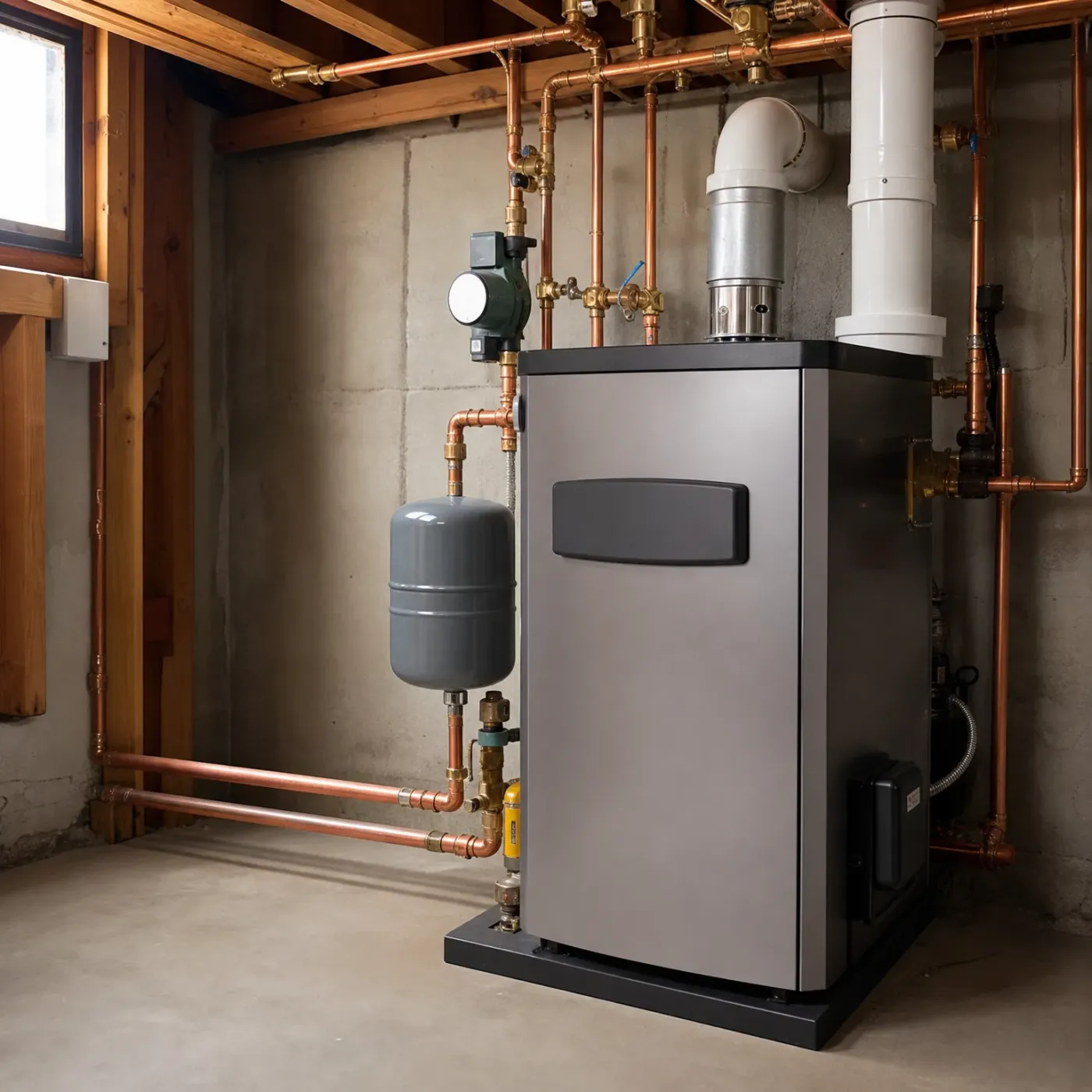
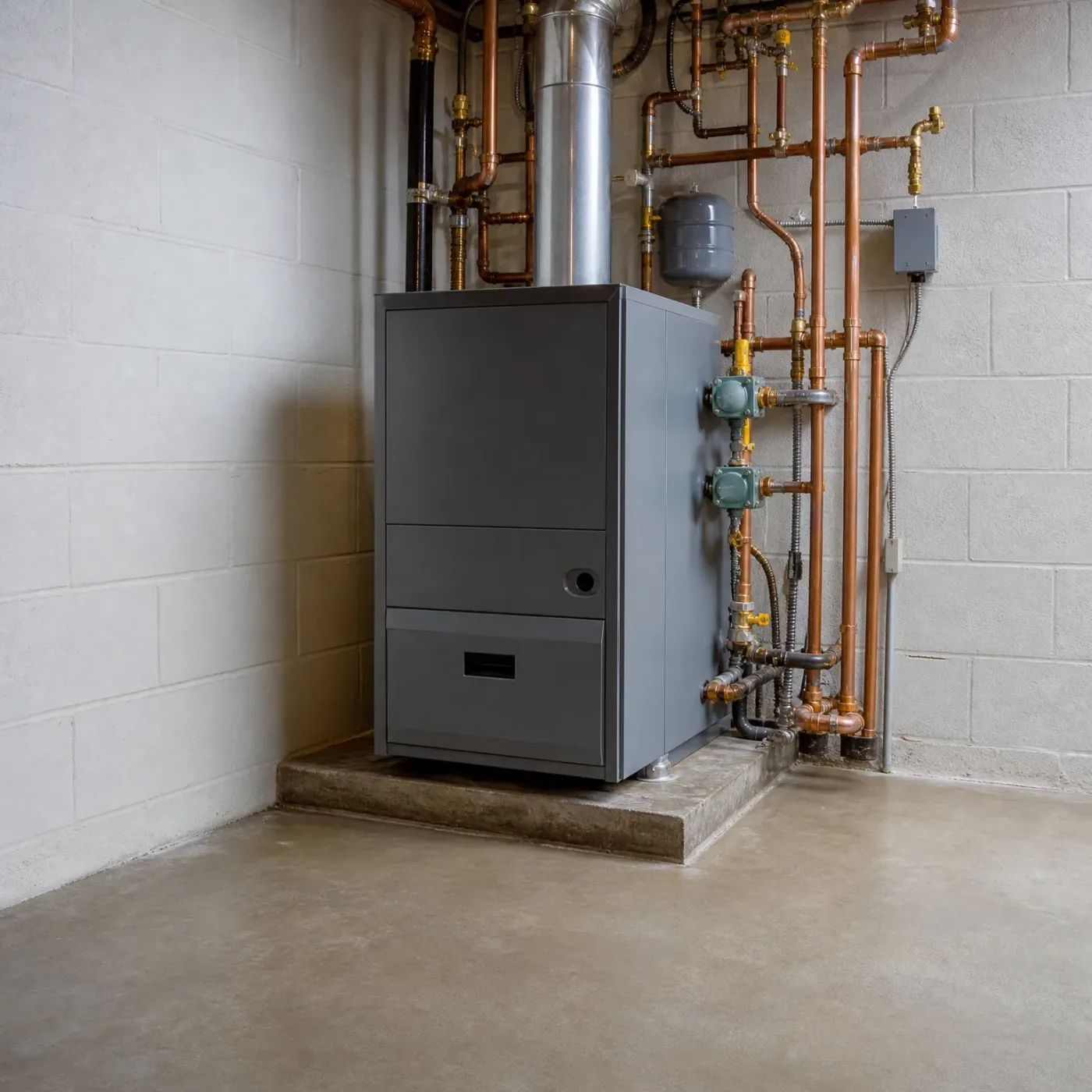
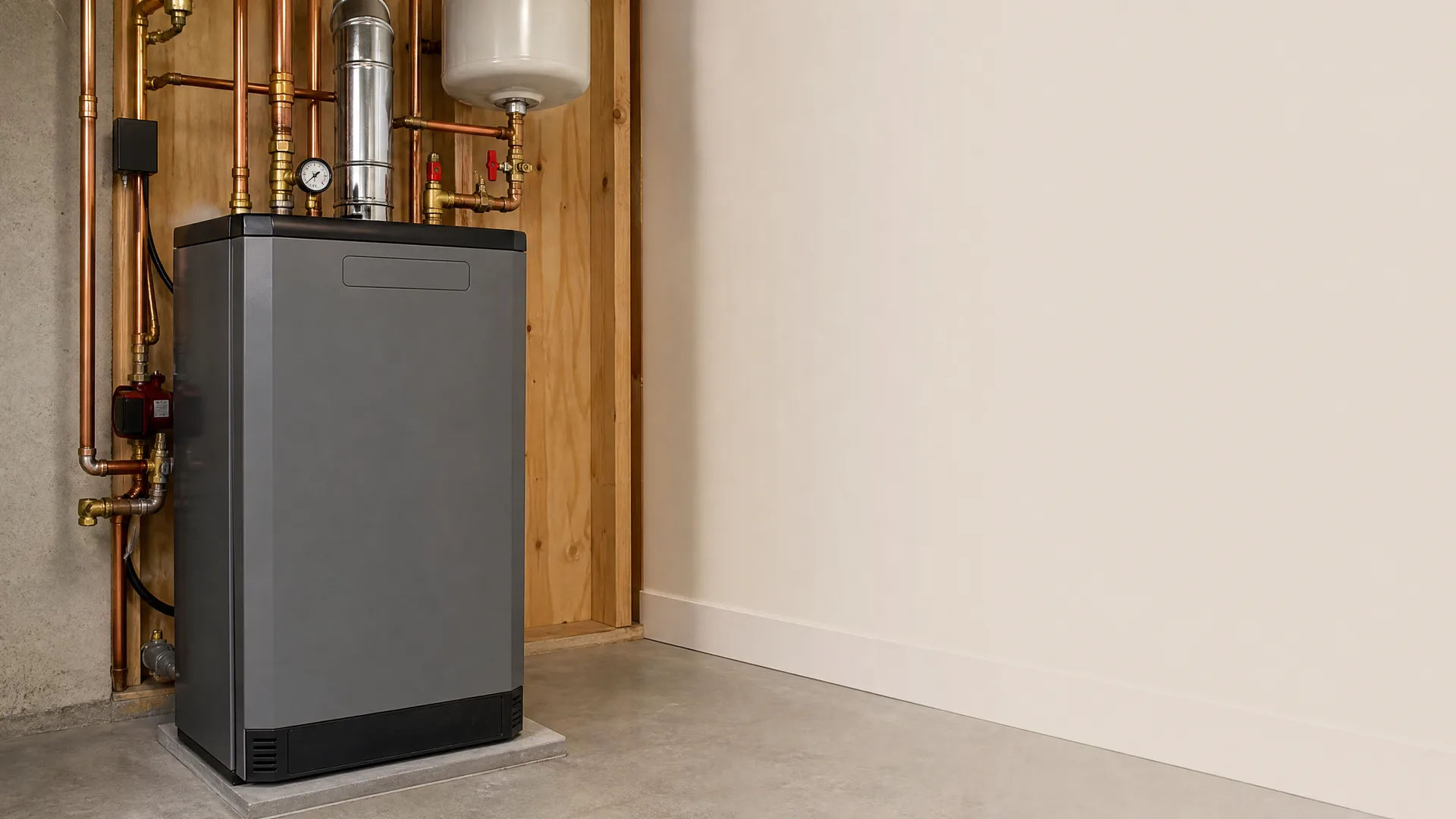
A dark grey floor-standing boiler on a concrete floor in front of a plywood wall, with copper pipes, valves, a pressure gauge, a flue pipe and a white expansion tank above it, beside a plain light-coloured wall.

What the valve is actually doing

The relief valve sits on top of the boiler as a safety outlet. It opens on its own once pressure inside climbs past about 30 psi, or once water temperature gets too high, letting a little water out so the tank doesn't take the strain. A valve that drips at normal pressure is telling you something upstream is off, not that the valve itself is broken.

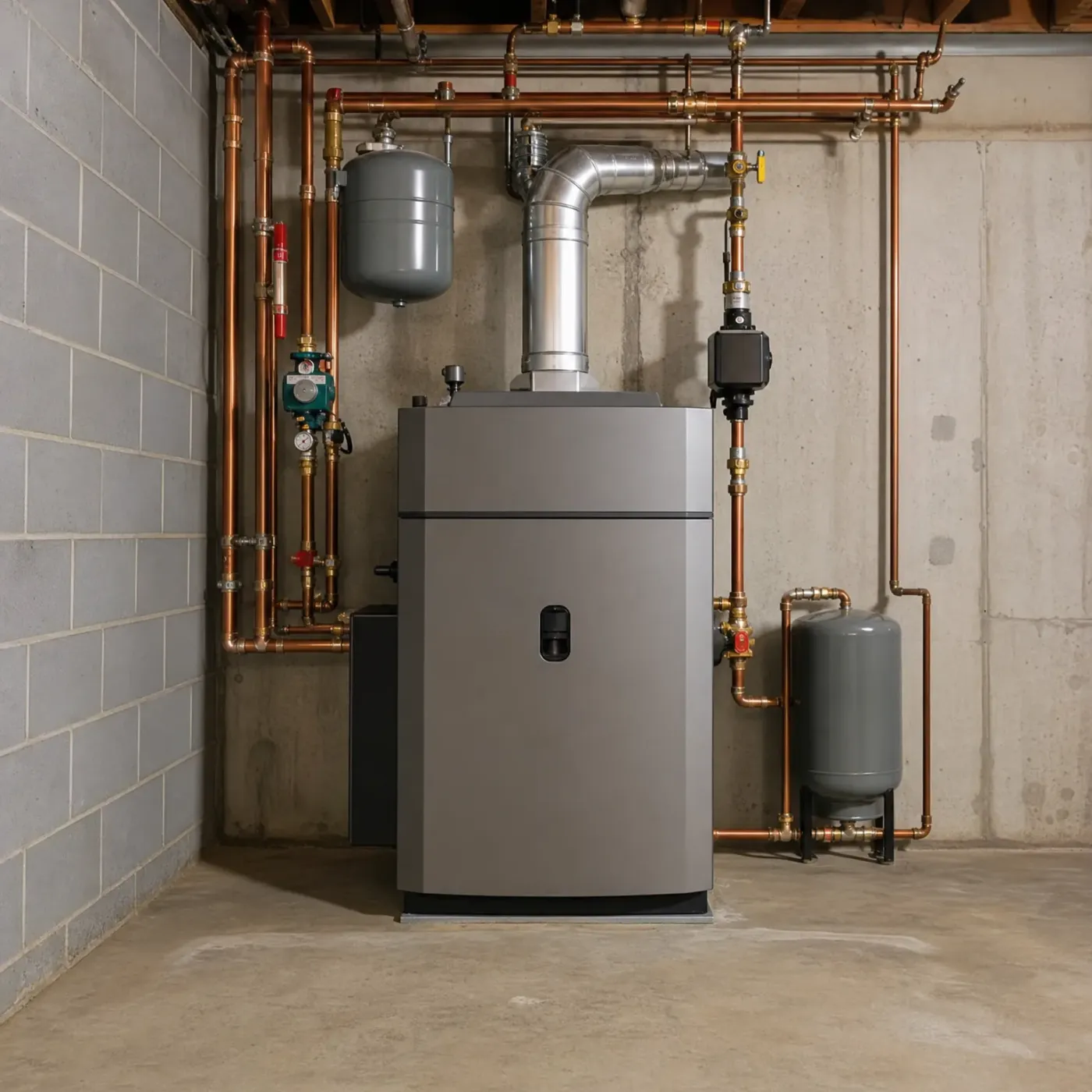
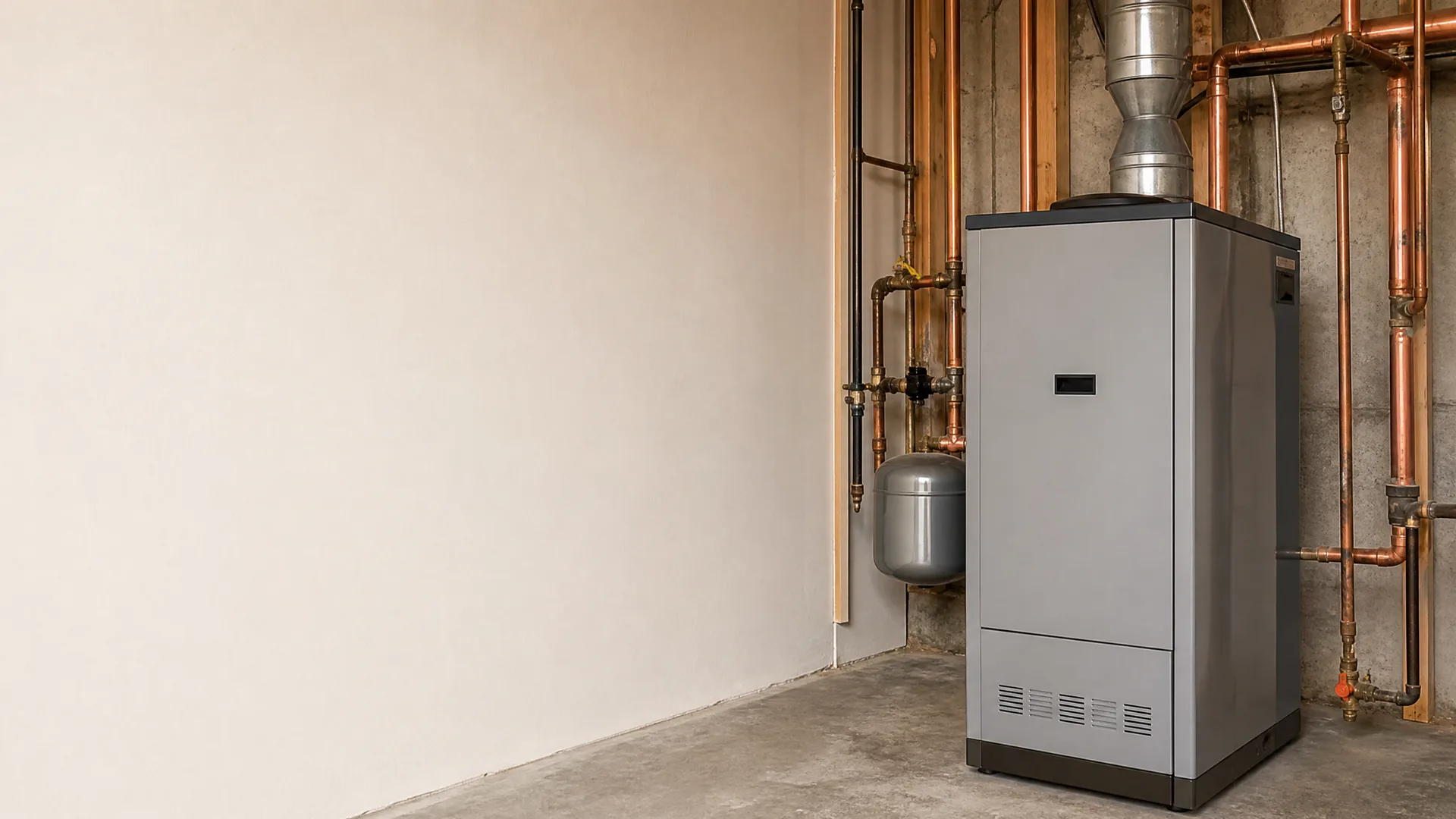
A gray boiler unit with a metal flue pipe stands in a basement corner, surrounded by copper piping and an expansion tank against a plain light wall and concrete floor.

Where the extra pressure comes from

A boiler that's overfilled, or an expansion tank that's lost its air cushion, pushes pressure up past where the relief valve is set to open. Gas-fired systems around Rhode Island cycle on and off all winter, and each cycle heats and expands the water a little more. If the expansion tank can't absorb that, the pressure has nowhere to go but out through the valve on top of the tank.

What are you noticing near the boiler right now

You probably found this because there's water on the floor near the boiler, or a rusty streak running down the tank where the valve sits. Sometimes it's not water you see first, it's the sound, a steady drip hitting the drain pipe underneath. Or you noticed the pressure gauge creeping higher than it used to. Left alone, that water finds its way to whatever's nearby, a wood subfloor, a storage box, the drywall behind the unit. Rhode Island winters mean that boiler runs for months at a stretch, so a slow leak now doesn't stay slow. Catching it while it's still just a drip, before the valve seizes or the floor underneath starts to go, is the difference between a quick fix and a bigger one.

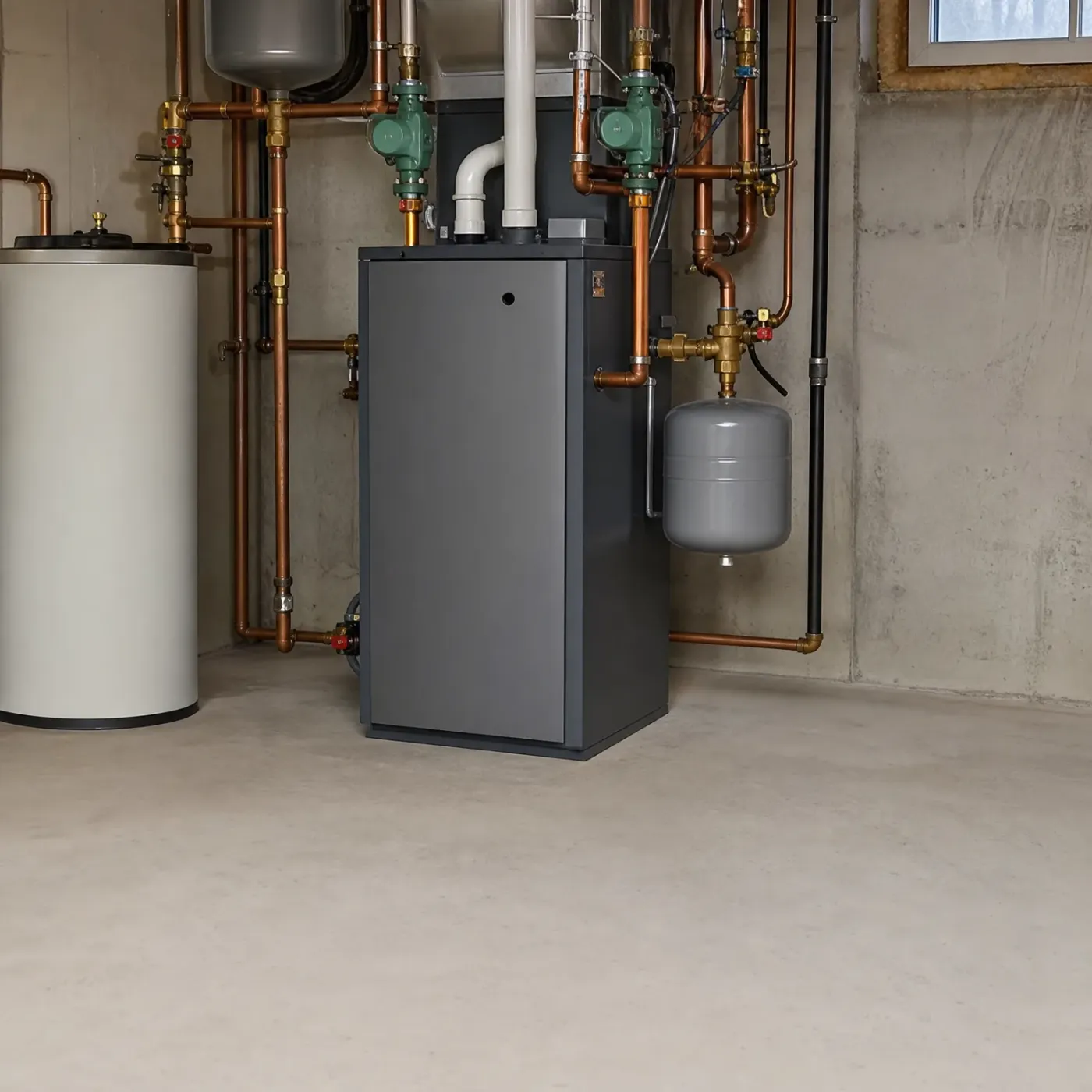
A dark gray floor-standing boiler in a concrete-walled basement, connected to copper piping, circulator pumps, a gray expansion tank, and a cream-colored storage tank to the left.

Pressure and temperature holding steady

The gauge sits where it should, the pumps move water through the copper lines without complaint, and the relief valve stays dry. That expansion tank on the wall is doing its job, giving the system room to breathe as water heats and expands.
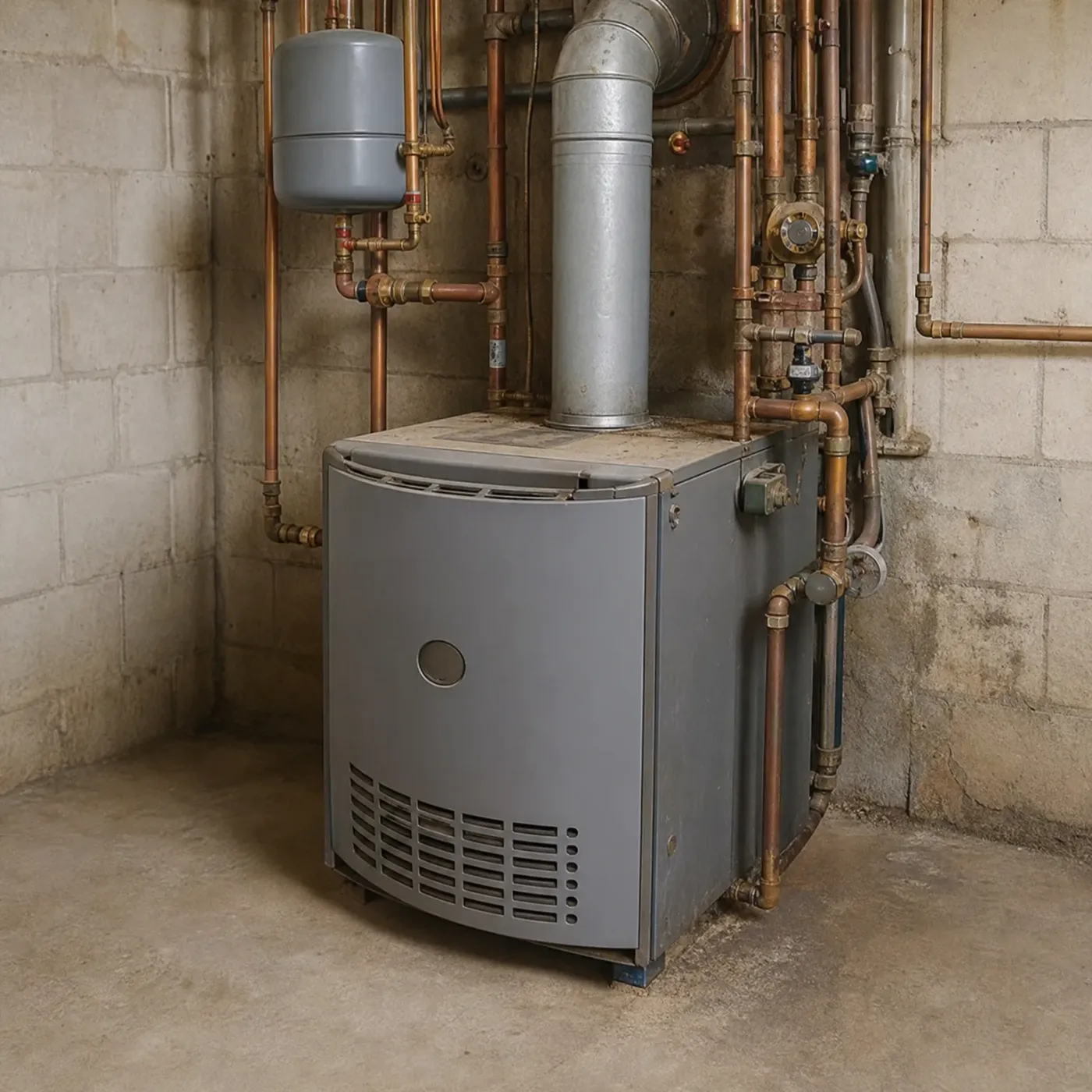

A gray residential boiler with a metal flue pipe stands in a concrete-block basement corner, surrounded by copper piping, valves and a gray expansion tank.

A valve that's had enough

Once pressure climbs past where it should sit, or the water runs hotter than the valve is rated for, it opens and lets water out the side of the tank. If the expansion tank next to it has gone bad, the relief valve ends up doing work that isn't really its job.

A smiling man in a navy long-sleeve shirt sits at a wooden table in a kitchen and dining area, with a ceramic mug, a potted plant, and a sliding glass door behind him.
A smiling bearded man in a green henley shirt stands at a kitchen island with a gray mug, looking off to the side, with a dining area and shelves blurred behind him.
A smiling bearded man in a navy sweater sits at a white kitchen island with a ceramic mug, with open shelves, potted plants and a range hood behind him.
A smiling man in a dark olive long-sleeve shirt sits in a kitchen beside a counter with a dark mug, with a dining table, sideboard and hallway visible in the blurred background.
A gray boiler on a black base in a basement with concrete walls, connected to copper piping, a circulator pump, a gray expansion tank, and white and metal flue vent pipes.

Finding a pro stops being your job

Your request goes to one pro, not a list of companies.

After this form, you can stop searching for a boiler pro.

Find a licensed pro

You're not committing to anything by asking.

A gray boiler with a metal flue pipe stands in a basement against concrete and concrete-block walls, connected to copper piping, a circulator pump, and two gray expansion tanks.
A system like this holds pressure the way it's supposed to, with the expansion tank taking up the extra room as water heats and expands.

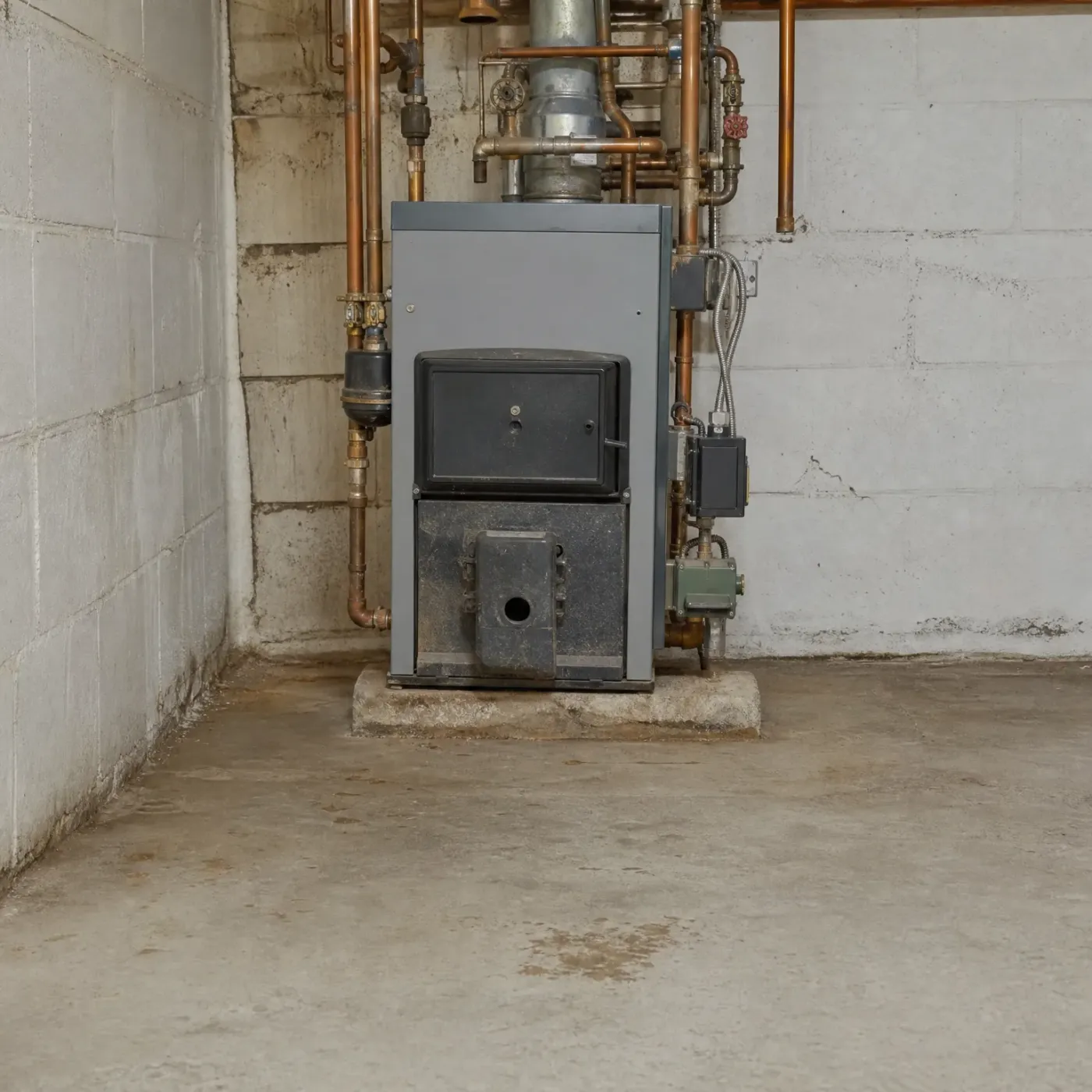
A gray boiler on a concrete pad in a basement with painted concrete block walls, copper piping, a metal flue, and electrical control boxes.
This one's past that point, and the valve on top is doing the only thing left it can do: let water out before something gives.

Why the valve won't reseat

  • The valve opens through a spring-loaded disc that lifts off its seat once pressure or heat pushes past its rated limit.
  • A worn seat or a speck of mineral grit under the disc keeps it from seating fully, so it weeps instead of staying shut.
  • A waterlogged expansion tank forces the boiler to absorb pressure spikes it was never meant to handle, and the valve takes the hit instead.
  • Boilers fired by gas cycle through heat and cool fast, and that repeated swing wears the valve's seal faster than a steady load would.
  • Once a valve has opened and reseated a few times, mineral deposits can build on the seat edge, and it rarely seals as tight again.
  • A relief valve set to open near 30 psi will drip at any pressure close to that mark, even if the gauge reads only slightly high.

The relief valve is a simple piece of brass with a spring inside it, holding a disc against a seat. Pressure or heat builds past the point the spring is set to hold, the disc lifts, water escapes, and the spring should pull the disc back down the moment things settle. That last step is where most leaks start. The seat only has to be off by a hair, a scratch, a bit of grit, a trace of scale, and the disc won't sit flush again. Water finds that gap and keeps finding it, drop by drop, long after the pressure that opened the valve has passed.

Gas boilers make this worse than it would be on a steadier heat source. Every time the burner fires and shuts off, the water inside heats and cools, and the metal and the valve's seal move with it. Do that enough times over a winter and the seat wears faster than it would under a constant load. An expansion tank that's lost its air cushion adds to it, because the boiler ends up absorbing swings in pressure that the tank was supposed to soak up instead, and the valve opens more often than it should.

Once a valve has opened and reseated a few times, it's rarely as tight as it was new. Mineral deposits collect right at the edge where the disc meets the seat, and a valve rated to open around 30 psi will start weeping at pressures close to that mark, even when the gauge looks only a little high.

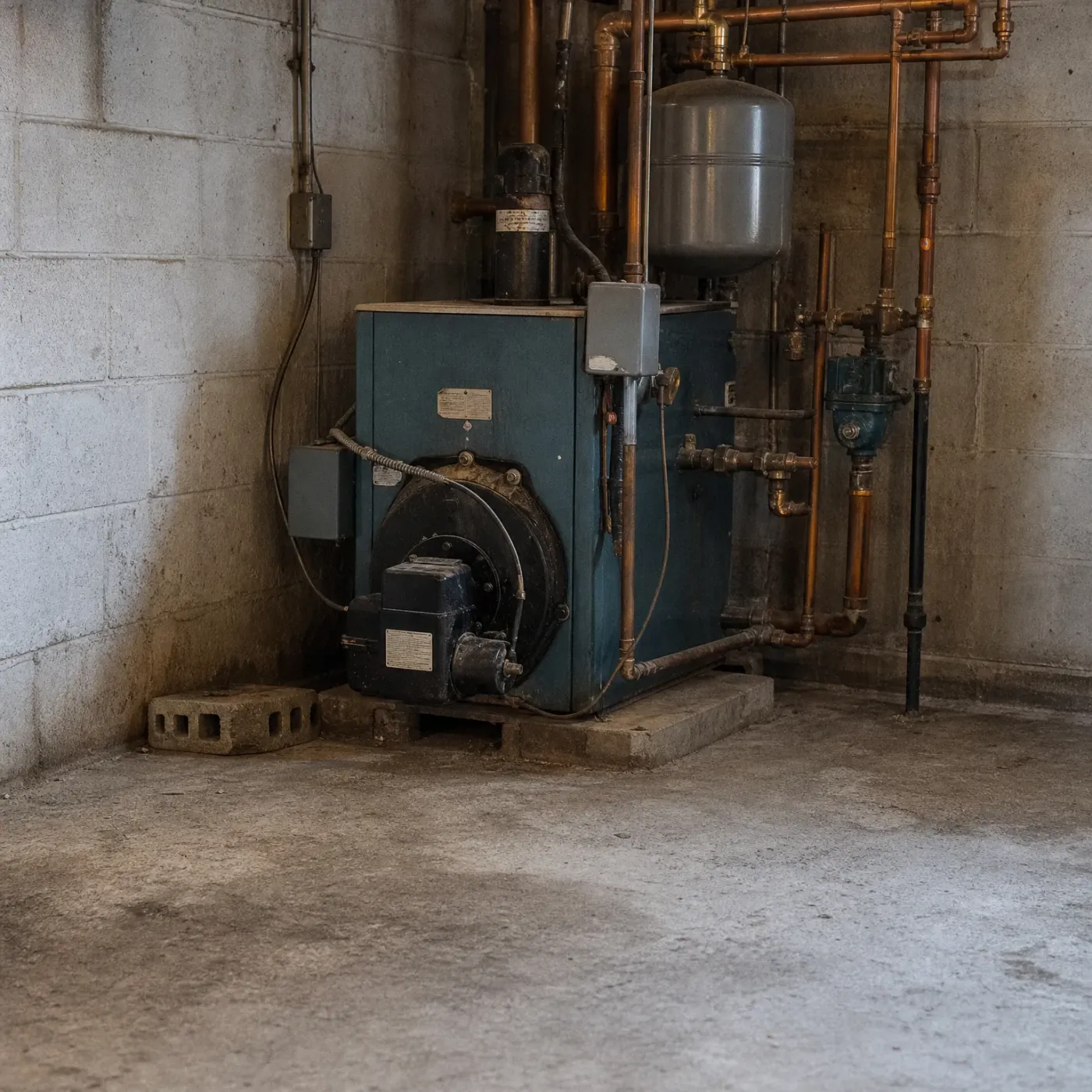
A blue oil-fired boiler with a burner unit sits on a concrete pad in a basement corner, with copper piping, valves and a gray expansion tank overhead against concrete block walls.
Before you get your boiler repair
A gray boiler unit on a concrete pad in a basement corner, connected to copper piping, valves and a metal flue against painted concrete block walls.
After you get your boiler repair

You keep an eye on this stuff and catch it early, which is why you're looking at the valve now instead of waiting for the puddle to spread. That's the right instinct with a boiler.

Leave it alone and the drip doesn't stop on its own. It either keeps weeping slowly or it gets worse once the cold weather puts more load on the system, and by then it's not a small fix anymore.

Winter nights average 23°F statewide

Winter nights here average 23°F, so your boiler is running long hours to keep up, often overnight when nobody's watching it. That's more cycles on the relief valve, and more chances for a weak one to start weeping instead of holding shut.

NOAA nClimDiv 1991-2020 county normals weighted by homes

  1. Pressure or heat climbs past the valve's rated limit.

  2. A spring-loaded disc lifts off its seat to vent water.

  3. Grit or a worn seat keeps the disc from closing fully.

  4. A waterlogged expansion tank sends extra pressure straight to the valve.

A man in a blue T-shirt sits on a light gray sofa, laughing while looking at an open laptop in the foreground, with a framed picture, lamp and potted plant behind him.
A bearded man in a blue and brown plaid flannel shirt stands indoors looking out a window at snow-covered trees, with a ceramic mug on the windowsill.
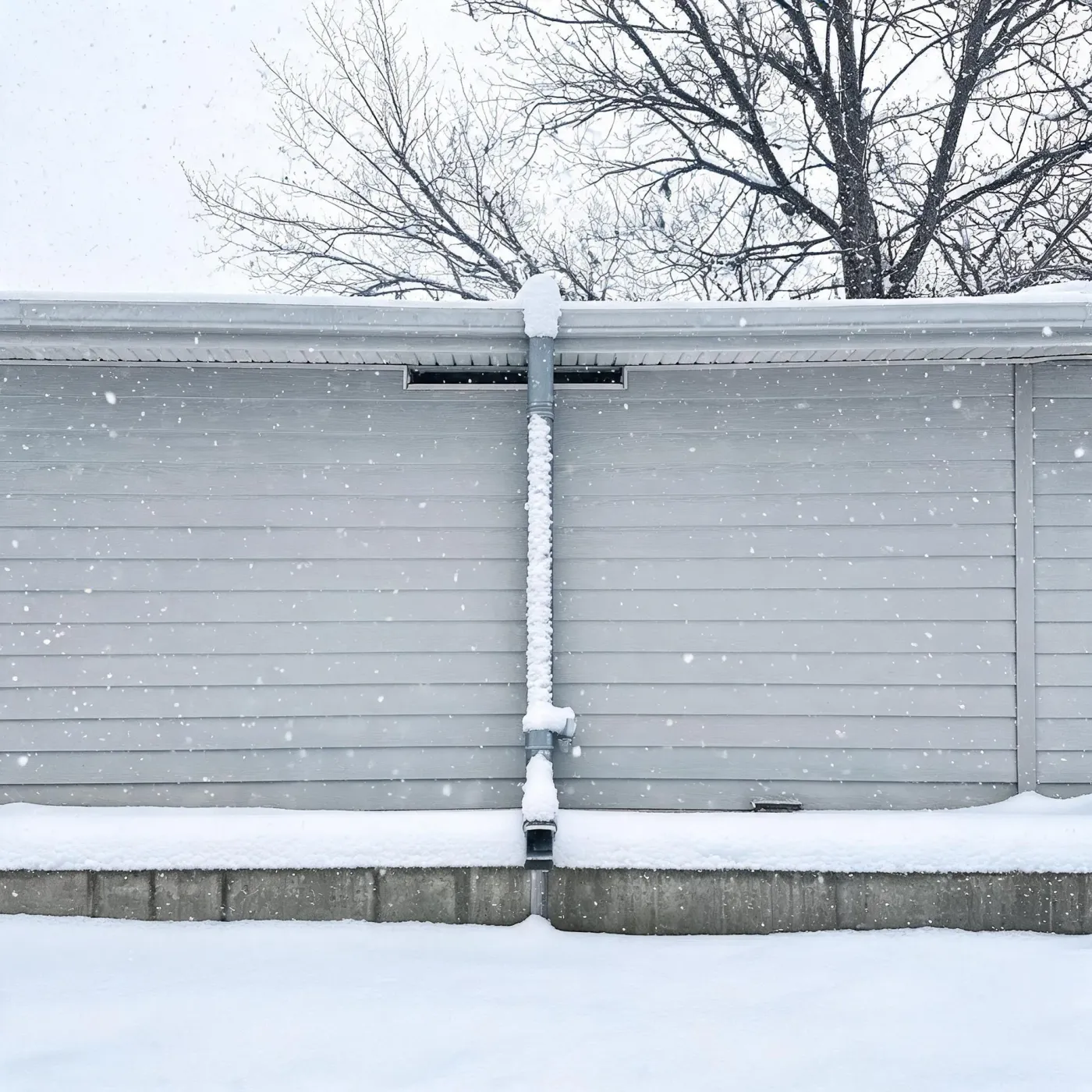
Exterior wall of a building with light gray horizontal siding and a snow-covered downspout running down its center, with bare trees behind the roofline and falling snow over deep snow on the ground.

Winter nights average 23°F statewide, per NOAA. That kind of cold keeps a boiler firing for long stretches, and a system that runs longer builds pressure and heat more often. Each time it climbs toward that limit, the relief valve is what absorbs it. A valve with a worn seat or a little grit under the disc can hold through milder weather, then start weeping once the real cold sets in and the boiler is working harder, more often, to keep the house warm overnight.

NOAA nClimDiv 1991-2020 county normals weighted by homes

A relief valve that's leaking is telling you something specific: pressure or heat went past its limit, or grit is keeping the disc from seating, or the expansion tank isn't doing its job anymore. None of those get better with time. A boiler tech who works on these systems all winter in Rhode Island has seen this exact drip more times than you'd think, and knows within a few minutes whether it's the valve itself, the tank, or pressure that's climbing too high. That's who gets matched to you, someone local, licensed, and already familiar with what fails first on a system like yours. You'll hear from one contractor, not a handful of them competing for your callback. You caught this early, before the puddle spread or the stain got worse, which is exactly the kind of thing that keeps a small repair from turning into a replacement. The valve stays the same part doing the same job either way. What changes is whether someone looks at it before the next cold night or after.

Elevated view over a dark standing-seam metal roof with a stone chimney and wood-sided gable, surrounded by conifers and autumn-colored trees with forested hills under an overcast sky.

Let someone else find the pro

Find a local pro

It costs nothing to send, and you don't have to hire anyone.

A leaking valve left alone doesn't pause for a cold snap. It keeps weeping while your boiler keeps firing through the night, and the drip you caught today is easier to fix than the one that's worn a seat down further. Sending this now means someone local who knows these systems looks at it before that happens.