









Why your boiler smells like oil in Rhode Island

Describe what your boiler is doing once, in one form.

Start one form

An oil smell from a boiler almost always means something is burning that shouldn't be, or oil has leaked somewhere along the line. If your boiler runs on oil, a sharp smell when it first fires is common, but one that lingers points to a cracked heat exchanger, a dirty or misfiring burner, or a fuel line fitting that's leaking. Soot buildup inside the unit can also hold onto that smell and release it as the boiler heats up. Most homes in Rhode Island heat with gas, so if yours burns oil, that line to the tank and the burner assembly are worth having checked, since a leak there won't fix itself. Either way, a lingering oil smell means combustion isn't happening the way it should, and that's worth having a licensed technician look at before winter puts real demand on the system.

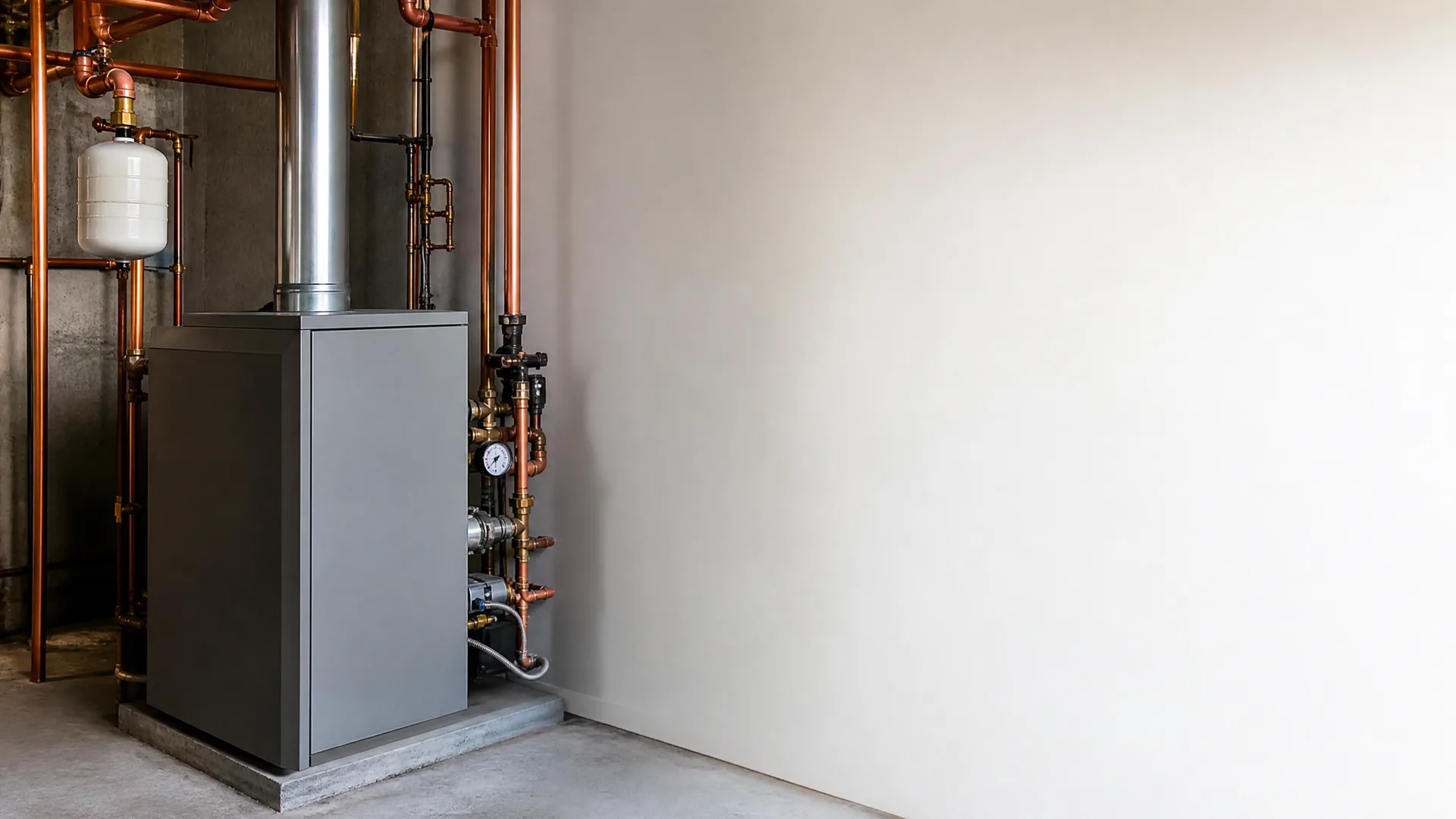
A grey floor-standing boiler with a metal flue and copper pipework, valves and a pressure gauge stands in the corner of a room with plain light walls and a concrete floor.

Soot and a clogged nozzle

Oil boilers fire through a nozzle that atomizes fuel into a fine mist. When that nozzle clogs or the burner isn't adjusted right, the flame burns dirty and leaves soot on the heat exchanger. Soot holds the smell of oil and lets it off slowly into the room long after the burner shuts down. A boiler that smells strongest right after it cycles off is often telling you the burner needs adjustment, not that there's a leak somewhere in the line.

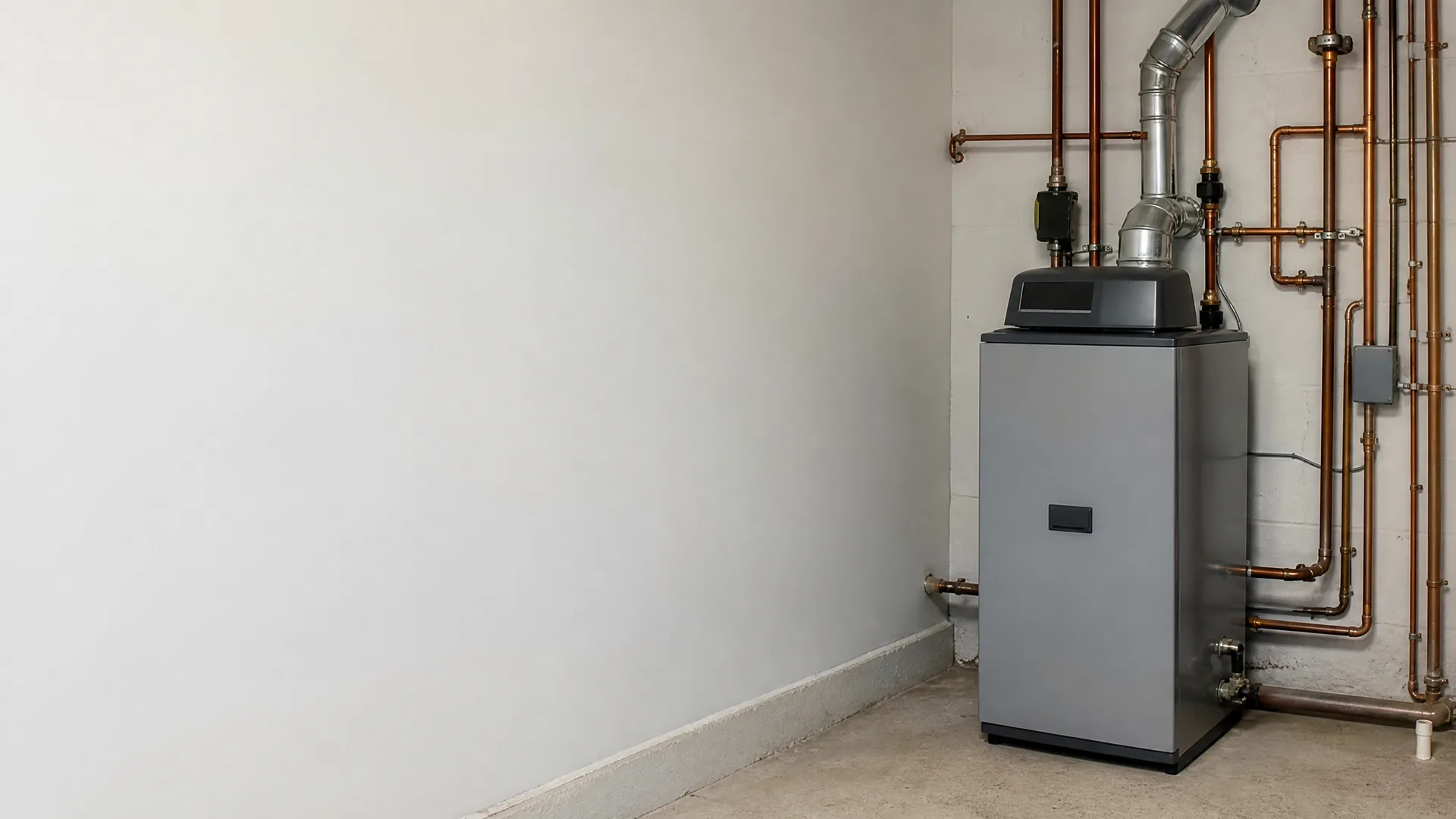
A gray floor-standing boiler with a metal flue pipe stands in the corner of a plain painted basement room, connected to copper pipes running along the wall.

Where the oil line runs

Most oil boilers draw fuel from a tank through a copper line that runs underground or along a basement wall. A loose fitting or a pinhole in that line lets oil seep out slowly, and the smell can show up well before you ever see a stain. If the smell is faint but constant, rather than sharp only at startup, a Rhode Island contractor who works on these systems will usually check the line and the tank connection before looking anywhere else.

A closed silver laptop and a ceramic mug of dark coffee sit on a wooden table in front of two chair backs, with a kitchen counter, tiled backsplash, wooden cutting boards, a vase of greenery and a potted plant by a window behind.

That smell means something to fix, not something to live with

An oil smell that hangs around your house means it's getting into rooms where people sleep and sit, not just the basement. If your boiler shares space with a laundry area or a finished room below grade, that's where it settles first. A leak at a fitting or an oil line can also mean fuel pooling where you can't see it, which is worse than the smell itself.

Finding someone who actually works on oil boilers takes more than a search. Most contractors who answer first do gas work and treat oil systems as a side job. You'd be calling around, describing the smell three or four times, then sorting through quotes from people who may never have serviced the nozzle or burner on your exact boiler. A request through this page goes to one local contractor who works on oil boilers all winter in Rhode Island and knows what a lingering smell usually means on the system you have.

Interior corner of a room with a window and sheer curtain at left, a gray upholstered sofa with a cushion at right, and a round wooden table holding stacked books and a round vase with an olive branch.
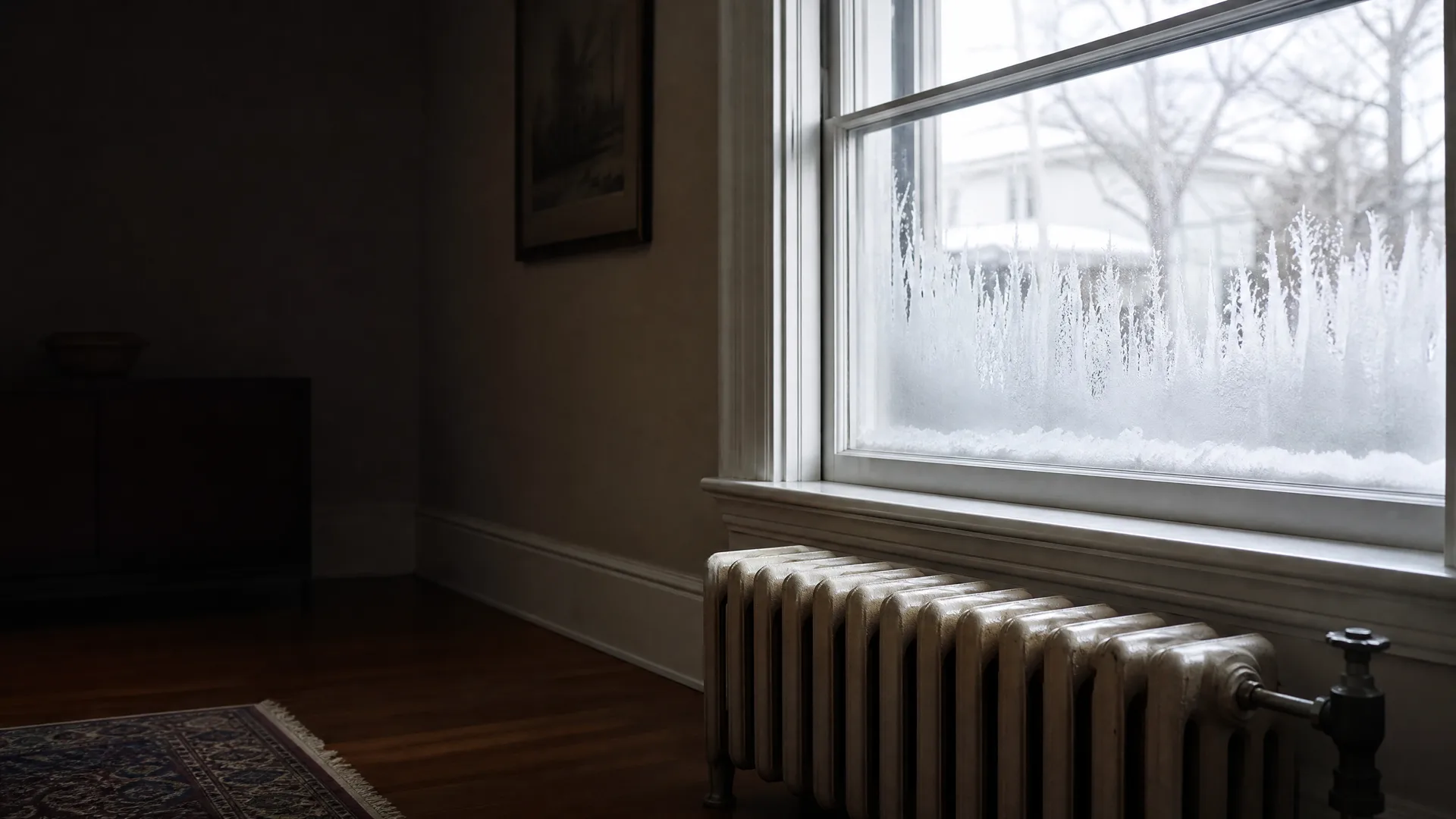
A cast-iron radiator with a valve sits beneath a frost-covered window in a dim room with dark wood floor, a patterned rug, a framed picture, and a low cabinet.

You come downstairs before the heat has caught up with the cold outside. Ice has formed on the inside of the living room window, past the cast-iron radiator under the sill. The boiler kicked on twenty minutes ago and you can smell it from the stairs, that flat oily smell that gets into the curtains and the couch. You open the window a crack anyway, cold air over a cold radiator, because the smell is worse than the chill. Down in Rhode Island, January mornings like this one are when you notice it most, when the house is shut tight and the boiler is working the hardest it will all year.

A gray and blue floor-standing boiler in a basement corner, with a metal flue pipe and copper and black piping, valves, and a gray expansion tank mounted on an unfinished wood-framed wall beside a concrete wall.
A boiler running clean has no smell at all once it's past startup, just the quiet tick of water moving through copper and black iron.
A green oil-fired boiler with a flue pipe, burner and circulator pumps sits on a concrete pad in a basement corner, surrounded by copper piping and an expansion tank against concrete walls.
A boiler that smells like oil even after it's been running a while is telling you something inside it isn't burning the way it should.

Oil has to ignite the instant it hits the combustion chamber. When that's delayed even a second or two, it builds up first, then lights all at once with a small puff that pushes fumes out through the breach instead of up the flue. The burner also needs a clear path to pull combustion air in. If that tube is blocked, or the barometric damper is stuck, exhaust backs up into the basement rather than venting outside. None of that has to come from a major failure. A fitting on the fuel line or the gasket on the oil filter housing can weep slowly for weeks, and you'll smell it before you ever see a stain on the floor. The tank itself can be the source too. Its vent pipe or fill cap can let smell escape into the boiler room even while the burner inside is running clean. And once soot from a puffback coats the inside of the jacket, it stays there, so the smell returns every time the blower moves air across it, long after the original event is over.

Where the smell actually starts

  • A delayed ignition happens when oil builds up in the combustion chamber before the igniter fires, and it goes off with a small puff that pushes unburned fumes out through the breach.
  • The burner draws combustion air through a tube and if that tube is blocked or the barometric damper is stuck, some of the exhaust backs up into the basement instead of going up the flue.
  • A fuel line fitting or the gasket on the oil filter housing can weep slowly for weeks before anyone sees a stain, and the smell shows up before the drip does.
  • Puffback leaves soot inside the jacket where it never gets wiped off, so the smell comes back every time the blower pushes air across it.
  • The oil tank's vent pipe or fill cap can let smell escape near the boiler room if the tank sits close by, even when the boiler itself is burning clean.
  • A cracked heat exchanger lets flue gas mix with the air the blower circulates, carrying the smell well past the basement.
A woman in a knitted shawl sits in a living room with a fireplace, shelves, a sofa with cushions, and a lamp by a bright window, looking off to the side.
A woman with long brown wavy hair in a green shirt over a white top stands in a living room with built-in white shelves, a ceiling fan, a potted plant and a sliding glass door.
A woman with shoulder-length gray-streaked hair in a light gray knit sweater stands smiling and looking off to the side in a living room with a sofa, houseplant, framed picture, and sunlit sliding glass door.
A woman with shoulder-length curly gray hair wearing a gray knit sweater stands near a window with a sheer curtain, looking to the side, with a blurred interior room behind her.

One form, no calling around

Only one pro gets your request, so you hear from one company.

Asking costs nothing, and the choice to hire stays yours.

The smell only happens at startup

A cold boiler burns dirty for a few seconds until the burner catches up and the flame stabilizes. You'll smell it from the basement stairs, maybe in the kitchen if the vents are close, and then it's gone. This is normal on an oil system and isn't something to chase down. If that's what's happening at your house, the boiler is doing what oil boilers do every time they fire after sitting off for a while. You can tell it apart from a real problem by the clock: it clears in under a minute and doesn't come back until the next cycle starts.
The smell stays once it's running

If you still smell oil ten or fifteen minutes into a cycle, or notice it in rooms away from the boiler, something is off. That could be a clogged nozzle burning dirty, a cracked heat exchanger, or a fitting weeping oil somewhere along the line. None of those clear up on their own, and they tend to get worse over a winter of daily cycling. A local contractor who services oil boilers through Rhode Island winters can usually tell what's wrong by where the smell is strongest and whether there's soot near the burner or oil pooling anywhere in the mechanical room.

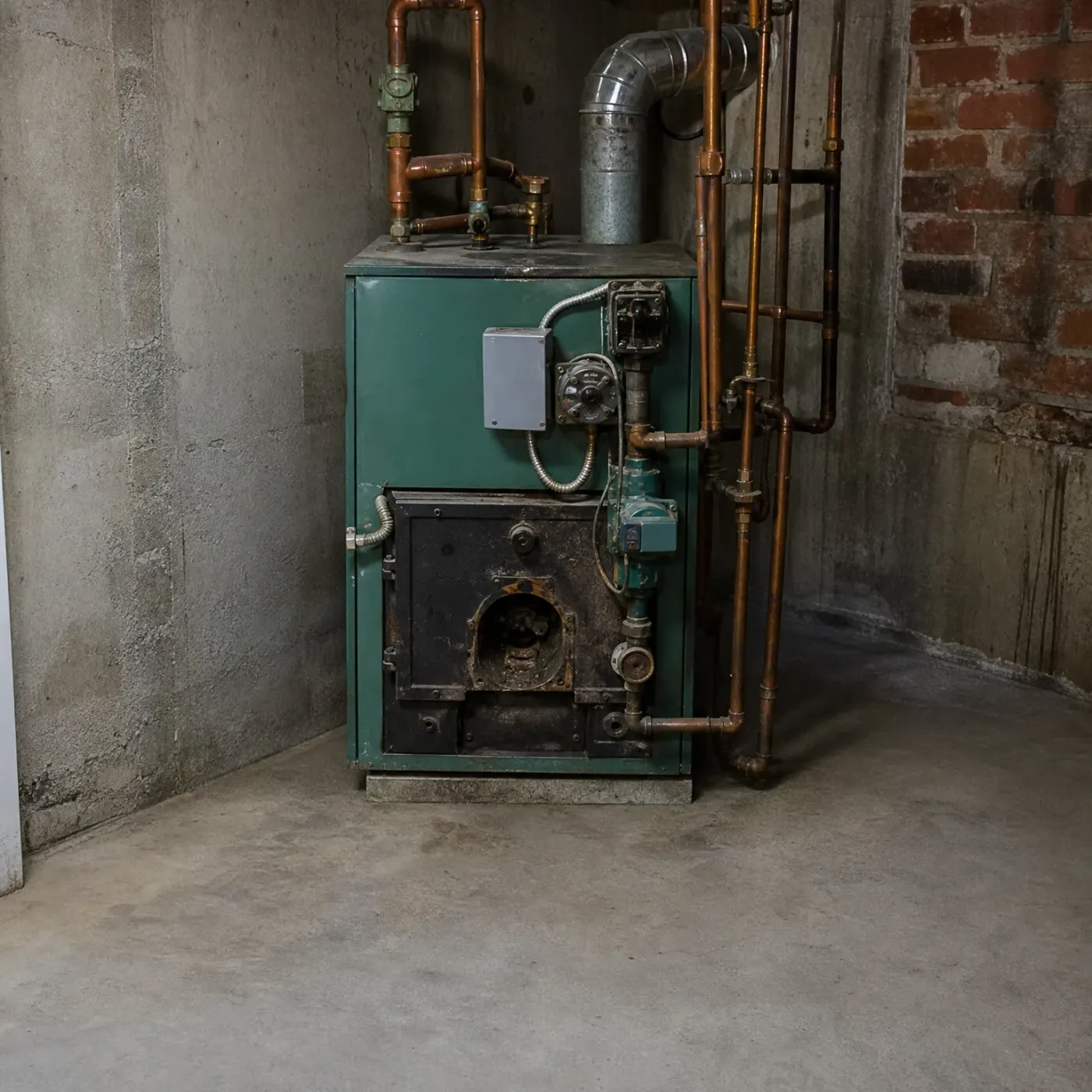
A green cast-iron boiler with a soot-stained front door, copper piping and a metal flue, standing on a concrete floor in a basement corner with concrete and brick walls.
Before you get your boiler repair
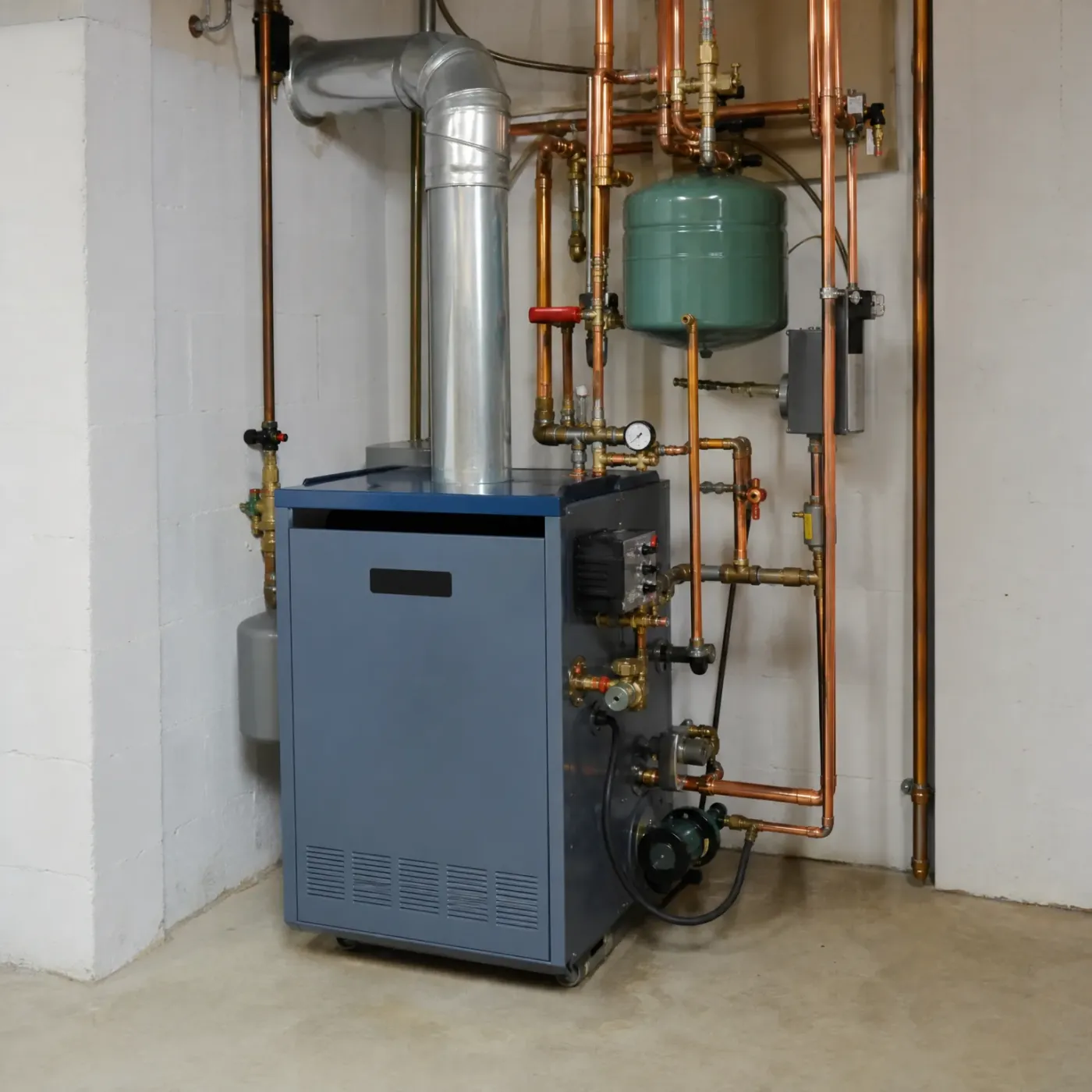
A blue-gray residential boiler in a basement corner, connected to copper piping, a green expansion tank, a circulator pump, gauges, and a metal flue pipe against painted block walls.
After you get your boiler repair
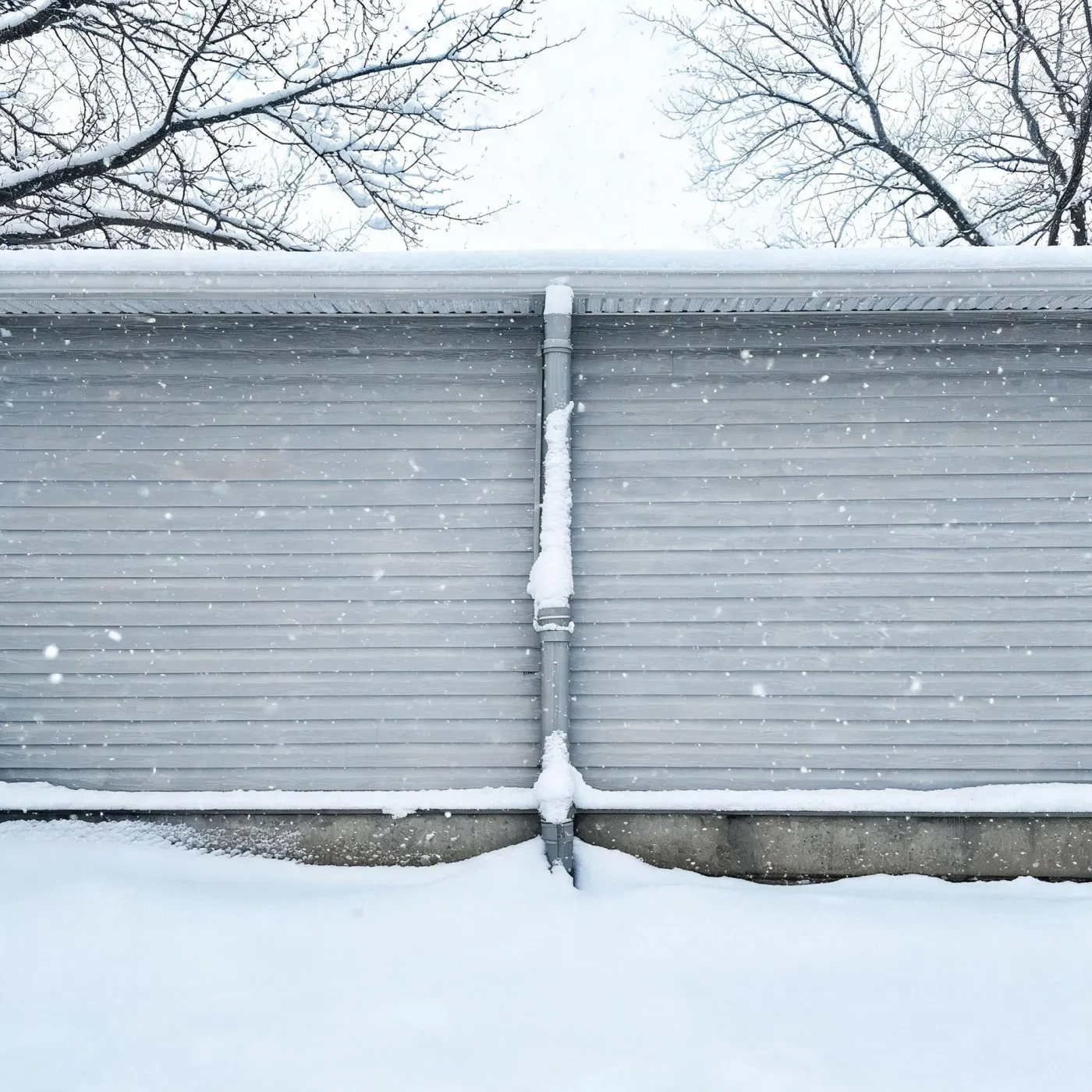
Exterior of a gray horizontal-lap-sided building with a snow-covered roof edge and a central downspout, seen during falling snow with deep snow on the ground and bare tree branches above.

Statewide, winter nights average 23°F. On a night that cold, your boiler isn't cycling on and off anymore, it's running long stretches just to keep up with the heat loss through the walls and windows. That means more hours of actual flame time, and more hours for a dirty nozzle or sooted heat exchanger to put that oil smell into the air. If the smell has gotten stronger as the nights got colder, that's not a coincidence. The burner is working harder and longer, and whatever's wrong with it is getting more time to show itself in your house.

Source: NOAA climate normals.

NOAA nClimDiv 1991-2020 county normals weighted by homes

What is that oil smell doing to your house

You notice it most in the room right above the boiler, or in the basement stairwell when you go down to check the thermostat. Some houses carry it into the laundry area, or up through a floor register into a bedroom. It might fade after the burner's been running a few minutes, or it might sit in the air the whole time the heat is on. Either way, you're breathing it, and so is everyone else home that day. Combustion fumes in living space aren't something to get used to. If the smell has been part of your winter routine for more than a season, it's worth finding out now what's causing it rather than waiting for it to get worse.

  1. Oil sprays from the nozzle into the combustion chamber as a fine mist.

  2. The igniter sparks and the oil mist catches, starting the flame.

  3. A clogged or misaligned nozzle makes the flame burn dirty instead of clean.

  4. Dirty combustion coats the heat exchanger and flue with soot.

Winter nights average 23°F statewide

On a night in the low 20s, your boiler is lighting the burner more often and keeping it lit longer. Every one of those cycles pulls oil through the nozzle, and a flame that's already burning dirty gets more chances to push that smell past the heat exchanger and into the house.

NOAA nClimDiv 1991-2020 county normals weighted by homes

What the smell is telling you

  • A persistent oil smell from your boiler means dirty combustion, a leak, or a cracked heat exchanger, not something to wait out.
  • Smell that fades after a couple of minutes at startup is normal; smell that lingers once the boiler is running steady is not.
  • A clogged nozzle, a blocked air tube, or delayed ignition all burn oil dirty enough to push fumes past the heat exchanger.
  • On the coldest Rhode Island nights your boiler runs longer stretches to keep up, which means more cycles pushing that smell into the house.
  • A local contractor who works on oil boilers every winter here can usually tell what's wrong from how the smell behaves before even opening the unit.
  • Getting this looked at means one call instead of several, to someone who already knows what tends to fail in boilers like yours.

A boiler that smells like oil is burning fuel it isn't fully converting to heat, or it's leaking oil somewhere along the line. Neither one is something to live with until spring. If the smell shows up when the burner first fires and clears out in a couple of minutes, that's the normal startup burn working itself out. If it's still there once the boiler has settled into a steady run, something inside is off: a nozzle clogged with soot, a combustion air tube partly blocked, or oil pooling in the chamber before the igniter catches it. Each of those burns dirtier than it should, and dirty combustion leaves soot on the heat exchanger that holds the smell and lets it drift up into the house.

Rhode Island winters make this worse before they make it better. On the coldest nights, with lows in the 20s statewide, your boiler isn't just cycling on and off, it's running longer stretches to cover the heat loss through the walls and windows. More run time means more cycles, and if the burn is already dirty, more chances for that smell to push past the heat exchanger and into the rooms where people are sitting or sleeping.

A contractor who services oil boilers through a Rhode Island winter has usually heard this exact complaint before and knows which part tends to go first in units like yours. One call gets you someone who already knows what to check, instead of a string of calls explaining the same smell over and over.

A woman with her hair in a bun holds a sleeping young child against her chest, both wrapped in a textured beige knit blanket on a sofa in a dimly lit room with a lamp, framed picture, and bookshelf behind them.
A gray-haired woman in a cream knit sweater stands in a dimly lit kitchen at night, looking to her right, with a round loaf of bread in the foreground and a dark window and potted plant behind her.

Boiler Repair

Skip the search

Your request stays with one local pro.

A black-framed smartphone standing upright against a plain light gray background, its screen filled with solid green.
RepairBoilerRhode Island
Step 1 of 2

What ZIP code is the job in?