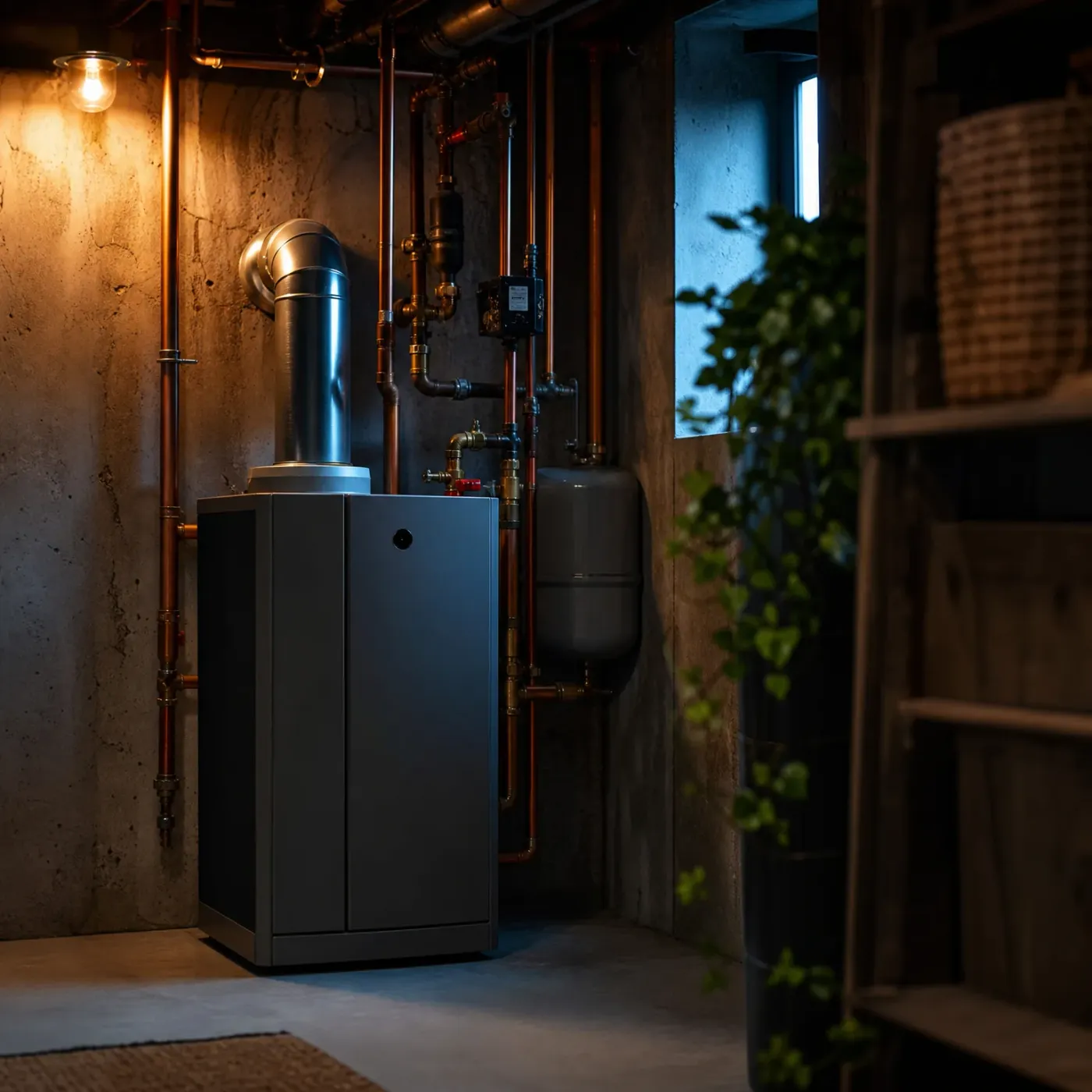


A dark grey floor-standing boiler with a metal flue stands against a concrete basement wall, surrounded by copper pipework, valves and a wall-mounted expansion tank, with ivy and a shelving unit at right.

Skip calling around

How to keep boiler pipes from freezing in Rhode Island

Pipes freeze when a boiler loses power or runs out of oil or gas during a cold snap, and in a bad freeze a cracked pipe can mean real damage. This page covers what protects your system and your home through a Rhode Island winter. Skip the search for a plumber or HVAC company, the back and forth calls, and the pile of quotes to sort through, and get to a licensed local contractor who works on boilers all winter long.

Skip the calls

Keep the rooms with exposed pipes above freezing, keep a trickle of water moving through any line that runs along an outside wall, and don't let your boiler's power or fuel supply cut out during a cold snap. Boiler pipes freeze when the water inside them sits still in a space that drops below 32 degrees, usually a basement corner, a crawlspace, or a line run along an uninsulated wall. The boiler itself can be running fine and the water in a dead-end pipe still freezes if that pipe never gets warm water moving through it. A Rhode Island cold snap can drop a cold room's temperature fast enough that a pipe freezes in the hours before anyone notices, especially overnight when nobody's running water or checking the thermostat. Once ice forms, it expands, and that's what splits copper or iron pipe. The fix is keeping heat and water movement reaching every pipe, not just the ones near the boiler.

A gray floor-standing boiler with a metal flue stands against a concrete block wall, connected to copper pipes, brass valves and a gray expansion tank, on a bare concrete floor.
A boiler like this keeps circulating hot water through every loop, which is what stops any one section of pipe from sitting cold long enough to freeze.
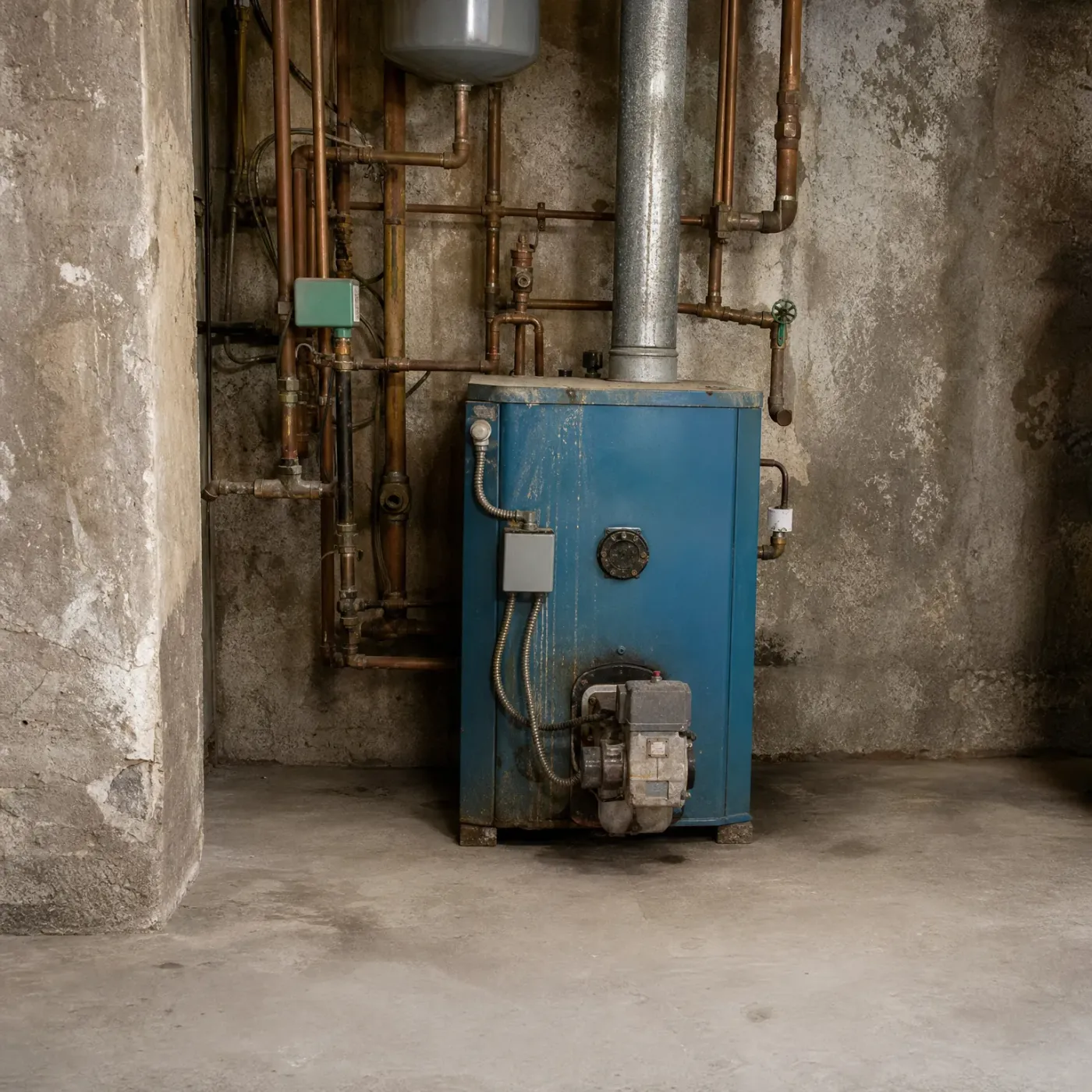
A blue oil-fired boiler with a burner unit and pressure gauge stands in a concrete basement corner, connected to copper pipes and a metal flue.
This teal oil-fired unit shows what's at risk if the burner cuts out: once circulation stops, the pipes rising to the ceiling start losing heat right away.

Why does the basement feel colder near the pipes this year

Walk past the pipes along the basement wall and feel for cold spots, or a section that's noticeably colder than the rest of the line. Listen for the boiler short-cycling or not kicking on at all during a hard freeze, and check if the oil tank is running low or the gas has cut out for any reason. A pipe that's gone quiet, no gurgle, no flow, is worth a closer look. If a line does freeze and split, you may not know until it thaws and water starts showing up where it shouldn't, on a ceiling, a wall, or pooling near the furnace. By then the damage is already done, and in a Rhode Island winter a split pipe can mean weeks of drying out and repair before things are back to normal.

A blue cabinet boiler with a metal flue pipe and copper piping stands against a bare concrete wall in a basement with a concrete floor.
Before you get your boiler maintenance
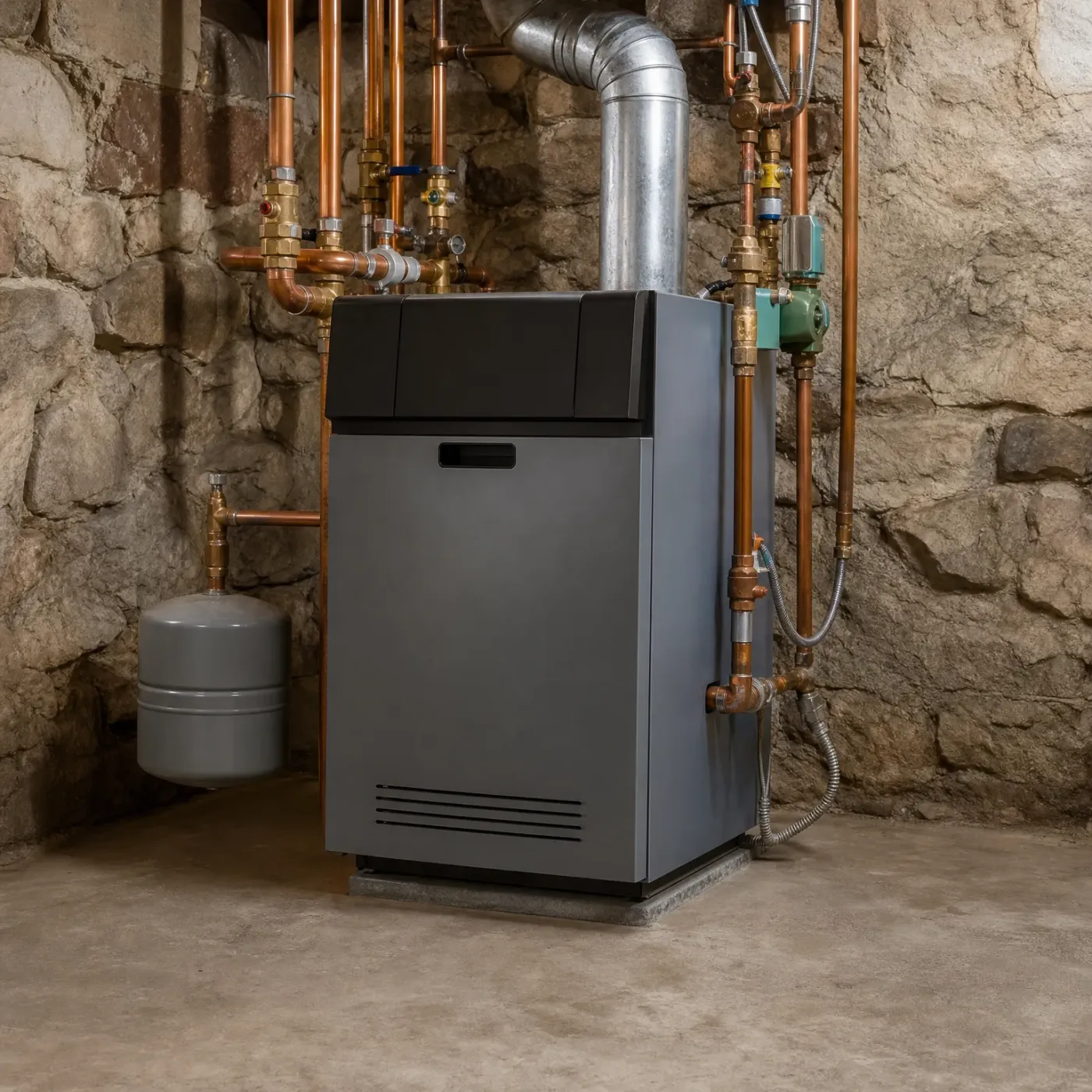
A gray residential boiler on a concrete pad in a basement with stone walls, connected to copper piping, brass valves, a circulator pump, an expansion tank, and a metal flue duct.
After you get your boiler maintenance

Why a power outage is the real risk

Rhode Island's power costs are among the highest in the country, and that's a separate problem from what happens when the power actually goes out. A gas boiler still needs electricity to run its igniter and circulator pump, so a blackout during a cold snap stops circulation even with a full tank of fuel. Once the pump quits, the water sitting in each loop has nothing moving it, and pipes along outside walls start losing heat fast. A battery backup or a generator keeps that pump running through an outage, which matters more here than the price of the electricity itself.

What a season of use wears down

A circulator pump runs for months straight once the heat goes on in the fall, and by spring the bearings and seals have taken on real wear. A weak pump can still push water through the easy loops while barely reaching the far end of a line along an outside wall, and that far section is exactly where freezing starts. The same goes for a thermostat that's drifted off calibration, it can read a room as warm enough when it isn't. Maintenance before winter catches a slowing pump or a bad sensor while there's still time to fix it.

Winter nights average 23°F statewide

23°F is the average overnight low here in December, January and February, and that's cold enough to put any unheated section of your house below freezing for hours at a stretch. A boiler running normally covers for that by keeping water moving. One that cuts out overnight doesn't.

NOAA nClimDiv 1991-2020 county normals weighted by homes

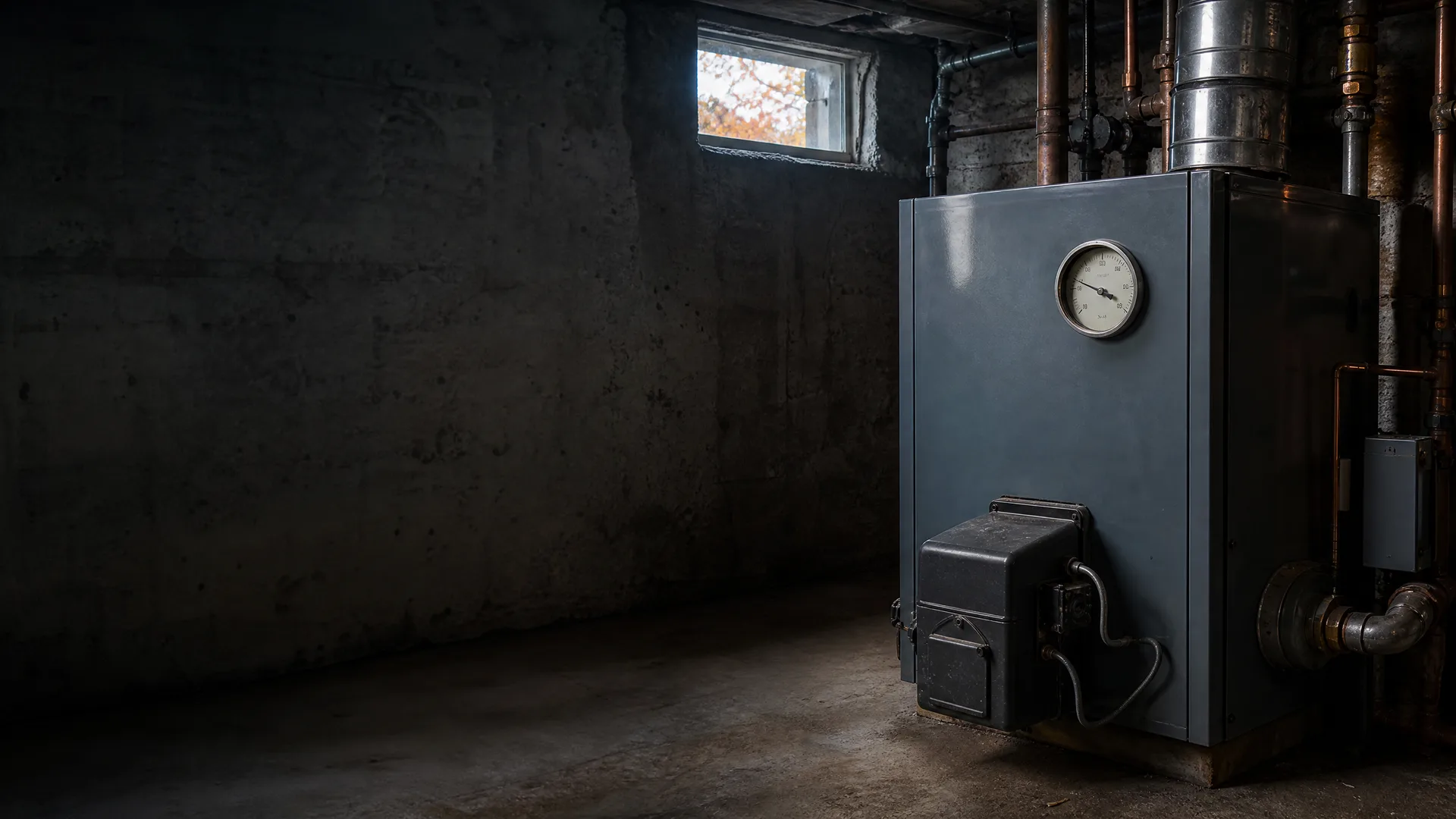
A gray boiler with a round pressure gauge and copper and metal pipes stands in a dim concrete basement lit by a small window.

You go down to check the thermostat setting and the basement smells faintly of oil, the way it does every October when the burner first kicks back on for the season. The gauge on the front of the boiler sits low, needle resting under where it usually runs. You tap the glass out of habit. It doesn't move. Upstairs the radiators are cold. Outside, the maple by the driveway has dropped half its leaves and the forecast is calling for the first real cold snap of the year. You stand there a second, hand still on the pipe, trying to remember if it did this last winter too, or if this is new.

Describe it once

Only one pro gets your request, so you hear from one company.

No charge to send it. You decide if you hire them.

Why a maintenance visit catches this

A boiler technician working in Rhode Island sees the same handful of things cause frozen pipes every winter. A clogged nozzle or a dirty flame sensor makes the burner shut down on a cold night when nobody's watching. A circulator pump that's starting to fail moves less water through the far loops, so the pipe in the coldest corner of the basement never gets its share of heat. A thermostat that's lost calibration keeps the boiler from firing when it should. None of these show up as a total breakdown. The boiler still runs, just not well enough to keep every pipe above freezing during the coldest stretch. Someone who services boilers all season checks the burner, the pump, the controls and the pressure before any of that turns into a cracked pipe.

Why it matters before the cold snap, not after

Once a pipe freezes, there's no maintenance call that undoes it. The visit that matters is the one before the cold snap, not the one after a pipe has already split. A technician who's in and out of Rhode Island basements all winter knows what a boiler running low on pressure sounds like, what a worn pump feels like under load, and which parts tend to go first on the units common here. That's different from waiting for something to fail and then searching for whoever can get out to your house fastest, calling a few plumbers, explaining the same thing three times, and comparing quotes while your pipes sit at risk. One licensed local contractor, already familiar with this equipment, means the call happens once.

A smiling bearded man in a navy sweater sits at a candlelit dinner table with a glass of red wine, a bowl of salad, and plates of food in the foreground.
A woman with dark hair in a bun reclines on a sofa with her eyes closed, wrapped in a cream fleece blanket, a closed blue hardcover book resting in front of her, with a lit lamp and a vase of dried flowers in the background.

Keeping Your Boiler Pipes Safe

  • A boiler keeps pipes from freezing by circulating hot water, so it only works if the burner keeps running and the power stays on.
  • Most frozen pipe calls in Rhode Island trace back to a dirty nozzle, a bad flame sensor, or a circulator pump that quit before anyone noticed.
  • An average overnight low near 23°F in January gives an unheated section of pipe hours to freeze once circulation stops.
  • A maintenance visit catches the nozzle, the flame sensor, and the circulator before a cold snap turns a small problem into a cracked pipe.
  • A gas boiler still needs electricity for its igniter and circulator, so a power outage stops it the same way a fuel outage does.
  • The basement feeling colder near the pipes than it did last year is worth checking before the temperature drops further.

Your boiler only protects its own pipes while it's running. Hot water moving through every loop is the thing standing between a normal January night and a cracked pipe, and that circulation depends on two things holding up: fuel and power. A dirty nozzle, a bad flame sensor or a circulator pump that's quit will all stop the burner the same way, usually without warning, often on the coldest night of the stretch. Rhode Island's average overnight low in January sits around 23°F, cold enough that an unheated section of pipe along a basement wall doesn't take long to freeze once the water inside stops moving. That's what makes a maintenance visit worth doing before the cold sets in rather than after. A technician checking the nozzle, the flame sensor and the pump catches the kind of small failure that otherwise shows up as a frozen or split pipe weeks later. None of this is about the thermostat setting upstairs. It's about whether the boiler itself keeps doing its job through the parts of winter nobody's watching it. If the basement feels colder near the pipes than it did last winter, or the boiler's been running rough, that's worth a look now. Once the water in a pipe freezes, the question isn't whether it'll cause damage, it's how much and where. A boiler that's been serviced and is burning clean, firing reliably and circulating water the way it's supposed to is what keeps that question from coming up at all.

A smiling woman with dark shoulder-length hair in a cream V-neck sweater sits at a marble counter with a glass of red wine, with a kitchen and softly lit living room behind her.
A woman in a dark green sweater laughs while seated at a marble kitchen island with a glass of red wine, with open shelving, cabinets and a living room visible behind her.
A woman with long dark hair in a cream knit sweater laughs while looking off to the side, seated at a counter with a glass of red wine, in a dimly lit living room with a sofa, lamp, framed pictures and houseplant behind her.
A smiling woman with long dark hair in a beige sweater sits at a marble kitchen counter with a glass of red wine, with a dimly lit living room behind her.

Boiler Maintenance

No phone calls to make

Your request stays with one local pro.

A black-framed smartphone standing upright against a plain white background, its screen filled with solid green.
Tune-up, service, or cleaningBoilerRhode Island
Step 1 of 2

What ZIP code is the job in?






