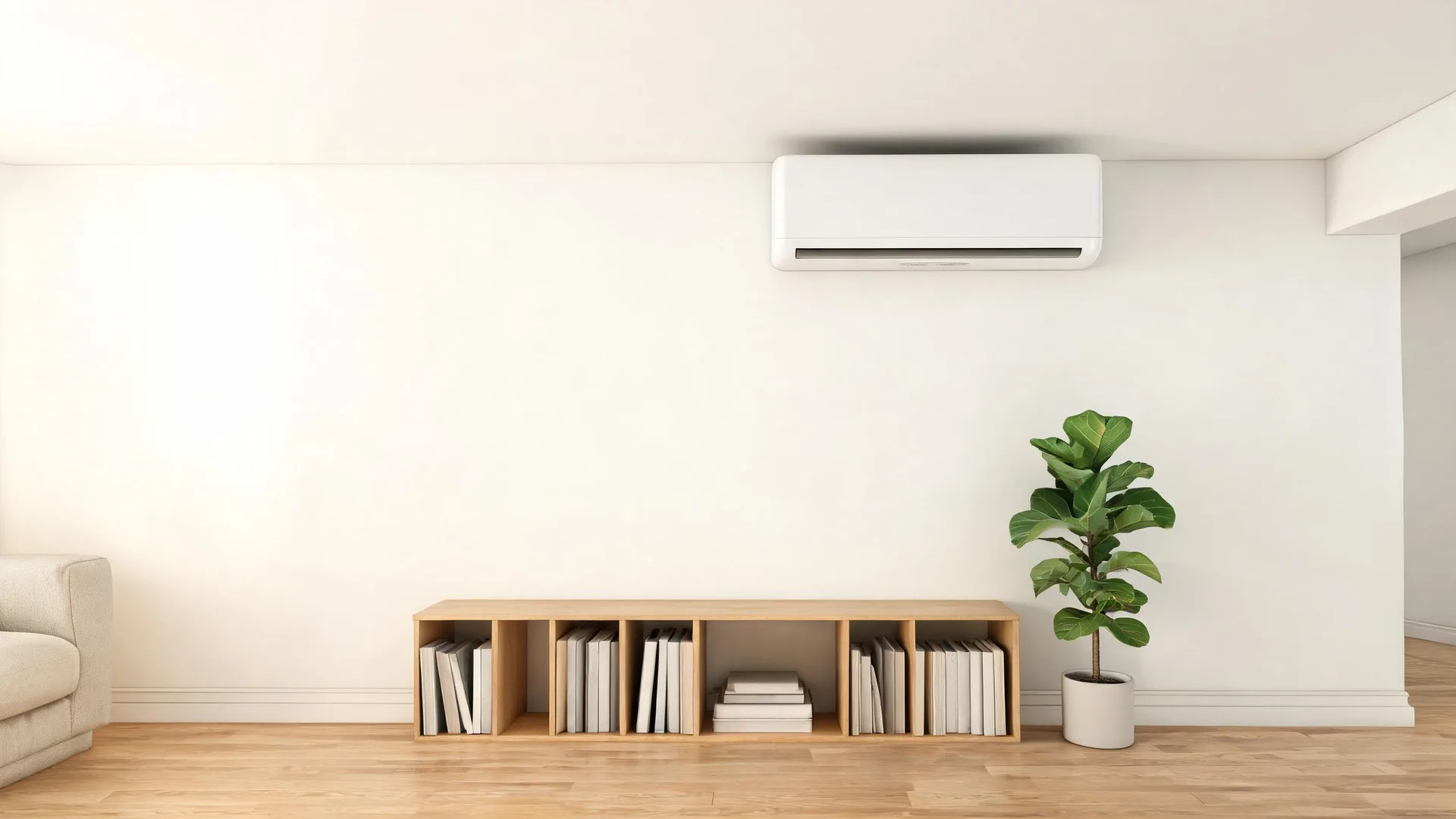
Electricity here runs 28.65 cents per kilowatt-hour
Rhode Island power costs more than it does in most states. A mini split that turns heat and cooling into comfort without wasting power matters more here than somewhere electricity is cheap.
Takes about a minute. No obligation.
Rhode Island power costs more than it does in most states. A mini split that turns heat and cooling into comfort without wasting power matters more here than somewhere electricity is cheap.
When you're looking at mini split systems for Warwick, the efficiency rating tells you more about your future bills than the price tag does. A unit that costs a bit more up front but runs more efficiently earns that back on every month you run it.
NOAA nClimDiv, 1991–2020 normals
Cooling in Kent County runs July through August.
Get a mini split installed before July and it's running on day one, not mid-heatwave.



Cooling here only has to carry two months, July and August, with afternoon highs around 80. That's not a hard season on a system. A mini split doing that job most of the year is heating, since this is a zone 5A climate where heating is the bigger load. So the pick isn't about chasing the highest cooling rating on the shelf. It's about a system built to heat well and hold up, since that's where it earns its keep. Wind is worth asking about too. Kent County gets hit with damaging wind often enough that it's worth checking what the outdoor unit's mounting can handle before you settle on one.
Kent County falls in zone 5A, and any mini split installed here has to meet 14.3 SEER2 and 7.5 HSPF2, the federal minimum for split-system heat pumps. A federal tax credit is available on qualifying equipment. That's one more number to weigh against the unit you're looking at before you decide.
Find a contractorA mini split works the same way once it's running, whether the house is old or new. What changes is what's already there for the installer to work with. Plaster walls take a line set different from drywall. The spot for the outdoor unit depends on what's already along that wall. If your system came with the house, it's worth checking what's behind the wall before a contractor quotes the job. Get that fit right and the unit runs the same way on day one that it does years in.
Every indoor head needs its own line set and its own spot on the outdoor unit's circuit board. A single zone cooling one room is a simpler job than a whole house split into separate zones, each with its own wall head or ceiling cassette, all tied back to one outdoor condenser sized to carry all of them at once.
The line set has to get from the outdoor unit to each indoor head, through a wall, up a chase, along a soffit. A straight run through one wall is a short job. A run that has to cross framing, drop through a closet, or climb to a second floor head takes more time and more material, and that work shows up in what the install runs.
The old system has to come out before the new one goes in, and what that takes depends on what's there now. A central system means disconnecting ductwork, pulling the old condenser, and capping lines that won't be used again. A window unit or baseboard heat is simpler to remove but leaves its own patch work behind, a gap in the siding, a spot on the wall where the paint doesn't match. Refrigerant in the old outdoor unit has to be recovered properly, not vented, so factor that step into the timeline. None of this touches how the new mini split gets mounted or run. It just has to happen first, cleanly, so the new line set and wiring aren't fighting with what's left of the old setup.
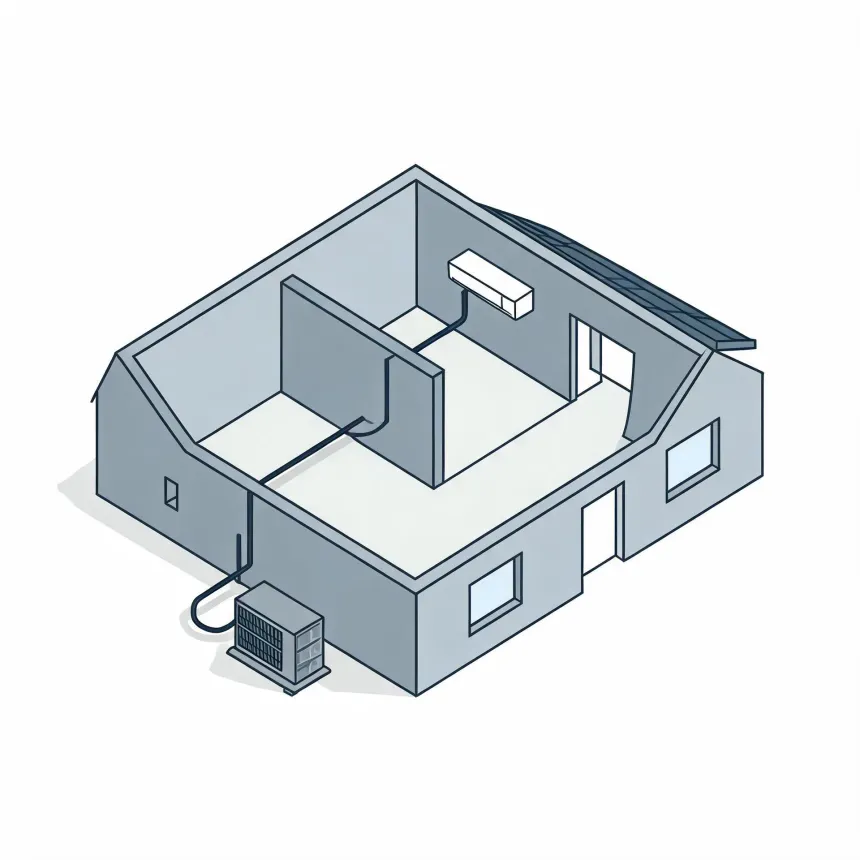
Install day starts with the outdoor unit and the indoor heads going up before any line set gets run between them. The installer mounts the outdoor unit on a pad or bracket, sets the indoor head on its plate, then drills through the wall for the line set, the refrigerant lines, the condensate drain and the electrical wiring, all bundled together. Those lines get connected at both ends, the system gets evacuated to pull moisture and air out of the lines, then charged with refrigerant. After that it's a leak check, a power-up, and running it in both modes to make sure every head is cooling and heating the way it should. Patching the wall where the lines pass through is usually the last step, not the first, since nothing gets sealed up until the connections are tested.